
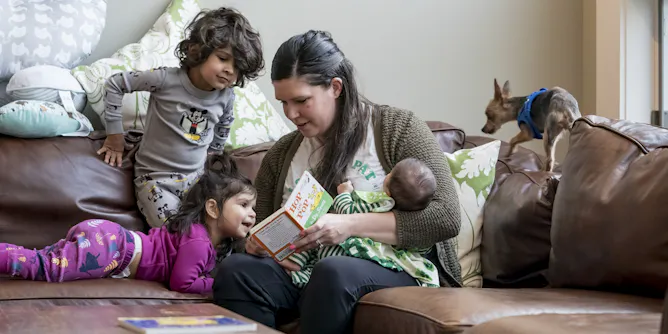
Polls have consistently found robust support for this benefit, with a growing share of the public approving of paid time off for dads.
Articles on Maternity leave
Displaying 21 - 40 of 59 articles

Designed to encourage an equal distribution of childcare duties, the government’s policy was flawed to begin with
If the plan is fully phased in as proposed, workers could get up to $4,000 a month for a total of 12 weeks in paid leave to care for a newborn, another loved one or themselves within 10 years.

Women and their careers benefit when men are allowed – and encouraged – by their employers to do more caregiving.

East Germany strongly encouraged mothers to participate in the labour market full-time, whereas West Germany propagated a more tradition male breadwinner model.

The student loans system is just another source of financial gender inequality.

Single mothers need more of a break than they get under current laws.

Stay-at-home parents have a hard time reentering the workforce after spending time away.

Forty percent of US babies are born to unmarried parents. But the new paid leave policy for most federal workers disadvantages single parents.
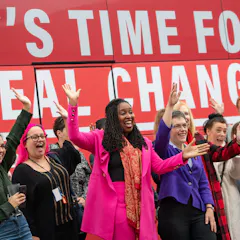
Labour and the Liberal Democrats go further than the current system but would still leave the UK lagging behind many of its international peers.

What about the dads?

Men are still expected to prioritise sport over their families.

Encouraging fathers to take paternity leave has positive, perhaps even surprising, results.

Excluding high earning dads from paid parental leave is not the answer.

The UK Court of Appeal ruled in late May that it is not sex discrimination for employers to enhance maternity pay but only provide the statutory rate of shared parental pay.

Tackling the gender pay gap must take into account the way that part-time workers are treated.

The transition to parenthood comes with plenty of stress. A psychology researcher suggests that paid family leave could help lift some of the burden – with positive health benefits down the road.

Most dads aren’t taking shared parental leave – new research reveals why.

Men under 35 want to take a more active role in caring for their children than older generations.

Under representation of women in the science and engineering career fields is a result of poor work life balance.
Top contributors
-

Senior Lecturer at York Business School, York St John University
-
Professor of Organisation Studies, University of Oxford; York University, Canada
-
Distinguished Professor of Sociology and Public Policy, UMass Amherst
-
Associate Professor in Law, University of East Anglia
-
Honorary Associate Professor, Australian National University
-
Professor of Law and John F. Kimberling Chair, Indiana University
-
Professor of Political Science and Chair of the South African Research Initiative in Gender Politics, Stellenbosch University
-
Associate research scientist, University of the Western Cape
-
Associate Professor of Human Resource Management, York University, Canada
-
Assistant Professor of Economics, Villanova University
-
Honorary Professor of Demography, Macquarie University
-
Senior Lecturer Human Resource Management, University of Newcastle
-
Professor of Consumption & Society, University of Manchester
-
Research Associate at the Global Institute for Women's Leadership, King's College London
-
Associate Professor Leeds University Business School, University of Leeds