
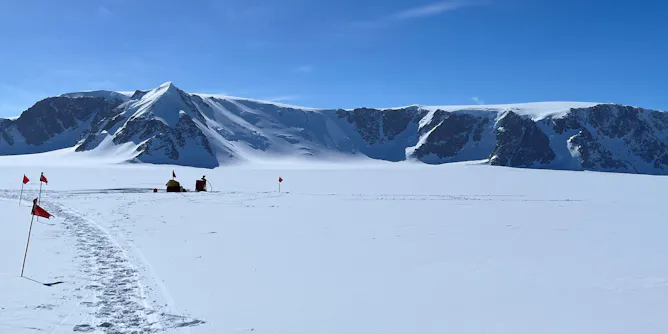
The Māori language describes 12 distinct types of snow. Researchers are identifying them in Antarctica as part of a project that connects Western science with Indigenous knowledge.
Articles on mātauranga Māori
Displaying all articles

Just as infection signals imbalance in Western medicine, in te ao Māori it indicates a deeper disharmony that requires restoring the relationships that sustain life.

About half of all New Zealanders can no longer see the Milky Way in winter due to light pollution from ever brighter cities and expanding satellite constellations.
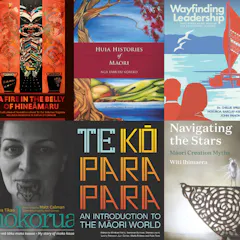
Māori have been writing about their experiences for two centuries. Here, the authors of a new book about that literary legacy pick ten of their must-read titles.

A policy that encourages engagement with Māori communities has made non-Māori researchers more open to consider mātauranga Māori as an equivalent, although different, knowledge framework.

Many datasets have gaps and biases due to how the information was gathered. Developers must account for this to avoid embedded wrong assumptions being carried across to train future AIs.
The newly signed global Treaty on Intellectual Property, Genetic Resources and Traditional Knowledge might improve the patent system, but is unlikely to improve protection of Indigenous knowledge itself.
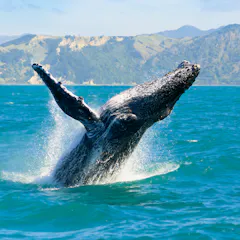
If a new declaration based on customary concepts of tikanga and mana is recognised by the courts, it could potentially give interest groups the legal standing to sue on behalf of whales.
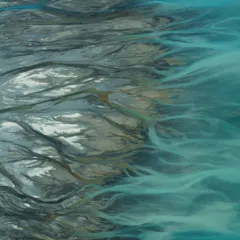
The concept of pūtaiao envisions a way of conducting science led by Māori and firmly embedded in the values of a Māori worldview. It offers a way towards decolonising the research system in general.

One key difference between kaitiakitanga and conservation is that the former considers people as part of the environment, while the latter manages nature as if people were separate from it.
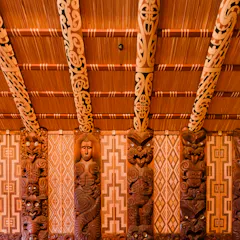
Te Wiki o Te Reo Māori is a time to celebrate Aotearoa’s Indigenous language. But we also need to acknowledge the limits of literal translation and pay attention to the deeper meanings of words.
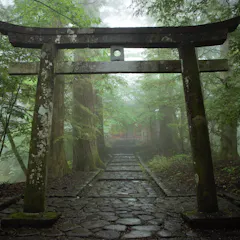
As New Zealand considers how and whether to incorporate traditional Māori knowledge in the science curriculum, what might we learn from the experiences of Japan?
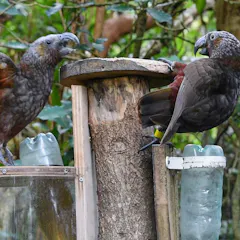
New Zealanders are increasingly concerned about the state of the environment, but
many don’t feel a strong enough connection to nature to become involved in conservation projects.

Ambiguous language and a rush to judgment have defined the debate about mātauranga and science. It’s time to slow down and stop talking past each other.
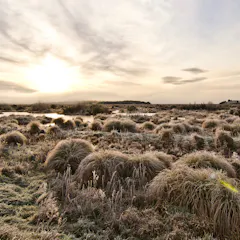
Western science often focuses on specific parts of complex ecosystems, but Indigenous knowledge systems consider all parts as interconnected and inseparable. This achieves better conservation results.
Top contributors
-

Senior Lecturer in Māori Studies, University of Auckland, Waipapa Taumata Rau
-
Research Fellow, Te Herenga Waka — Victoria University of Wellington
-
PhD Student, University of Canterbury
-
Professor in Biological Sciences, University of Auckland, Waipapa Taumata Rau
-
Professor of Freshwater Ecology, University of Canterbury
-
PhD Candidate, University of Canterbury
-
Social Scientist, Cawthron Institute; University of Canterbury
-
Senior Lecturer in Management, Te Herenga Waka — Victoria University of Wellington
-
Professor of Molecular Evolution, University of Auckland, Waipapa Taumata Rau
-
Senior Lecturer in Philosophy, University of Auckland, Waipapa Taumata Rau
-
Honorary Research Associate, Te Kunenga ki Pūrehuroa – Massey University
-
Professor of Development Studies, Te Kunenga ki Pūrehuroa – Massey University
-
Professor of Conservation Genomics, University of Canterbury
-
Associate Professor in Planning, Te Kunenga ki Pūrehuroa – Massey University
-
Professor of Commercial Law, Te Herenga Waka — Victoria University of Wellington