
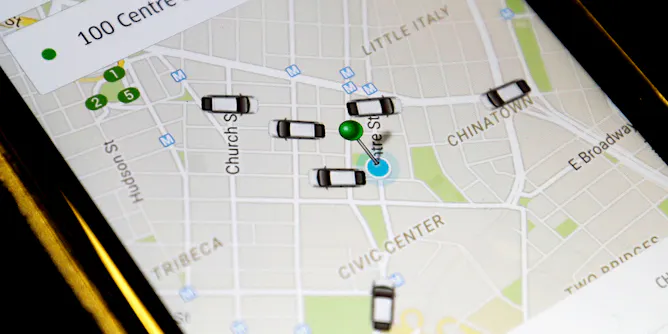
Uber’s IPO will value the company at more than $80 billion, yet the data it collects on its users may be worth even more – and creates the potential for dangerous manipulation.
Articles on Lyft
Displaying 21 - 34 of 34 articles
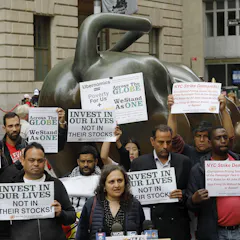
The Uber driver walkout raises questions about how workers can fight for better pay and benefits in the age of the gig economy – a topic frequently on the minds of Conversation scholars.
One of Uber’s selling points is that a driver is always available to pick up a rider within minutes. But the drivers who make this possible aren’t being compensated for the time they spend waiting.
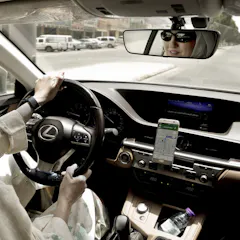
Canada is simply a consumer of ride-hailing services, and has not established any of its own Ubers or Lyfts, even as tiny countries like Estonia get in on the game. That needs to change.
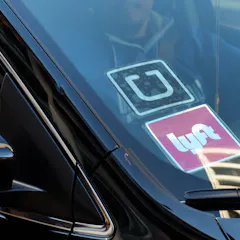
In many US cities, ride-hailing apps are luring riders away from public transit and increasing traffic congestion. But with the right rules, they could enhance public transit instead.
The California Supreme Court made it harder to classify workers as independent contractors. But it’s not quite the ‘game changer’ some observers claim it to be.
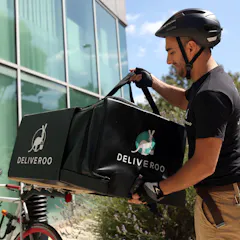
Today’s manifestations of the gig economy are tilted in favour of too few beneficiaries, and are not built to last.
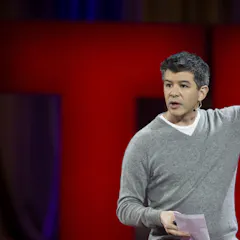
The CEO gets out as investor power triumphs.
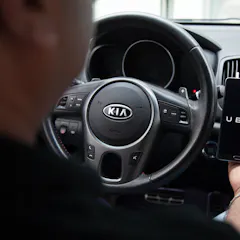
A study shows the reality of gig worker experiences is far more nuanced than enjoying flexible work or being exploited.

Cab drivers have long discriminated against African-Americans and other minority groups. New research suggests ride-hailing apps haven’t solved the problem.

To maximize the benefits while minimizing the risks, we need to know how ride-share companies will affect public transportation.
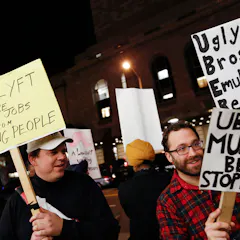
The deal, in which drivers won’t pursue their claim to be employees in exchange for the cash and other changes, raises more questions than it answers.

As our ever-increasing use of services like Uber, Lyft and AirBnB show, it’s safe to trust other Americans. Time for hitchhking to make a comeback.

With the momentum of the sharing economy growing, we’re only just starting to come to grips with what it means for the future of work.
Top contributors
-

Professor of Sociology, Boston College
-
Honorary Professor of Planning, The University of Queensland
-
Professor of Practice, Associate Dean, Warwick Business School, University of Warwick
-
Research Assistant, Industrial Relations, The University of Melbourne
-
Professor, Institute for Management & Innovation, University of Toronto
-
Associate professor, University of Sydney
-
Policy Director, 3 Revolutions Future Mobility Program, Institute of Transportation Studies, University of California, Davis
-
Associate Professor UTS Centre for Business and Social Innovation, University of Technology Sydney
-
Program Manager and Fellow, Kinder Institute for Urban Research, Rice University
-
Distinguished Blue Planet Prize Professor of Civil and Environmental Engineering and Founding Director, Institute of Transportation Studies, University of California, Davis
-
Distinguished Professor of Law and Sidney Reitman Scholar, Rutgers University - Newark
-
Ph.D. in Civil & Environmental Engineering, University of Washington
-
Professor in Innovation and Impact, UNSW
-
Associate Professor of Public Policy, Communication, and Information, UMass Amherst
-
Associate Professor in Managing People and Organisations, University of Sydney