

Three economists explore the viability of a UN-backed one-stop licensing ‘hub’ for making essential, often life-saving biotherapeutics and vaccines both affordable and more widely available.
Articles on low and middle income countries
Displaying all articles
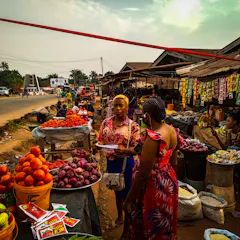
Agency is the single most important factor shaping women’s dietary quality, not food availability or household income.

Health inequality is not only about who reaches a health facility. It is also about what happens once patients are inside the consultation room.

As access to health care increases, there’s also a danger of getting too much of it.

Globally, most cancer patients die not because they don’t have access to newer drugs, but because they don’t have access to even basic treatments. Cancer groundshot aims to improve treatment access.

To prevent a shortage of health workers, public expressions of appreciation need to be backed by policies that provide dignity, decent working conditions, accountability and appropriate remuneration.

The Nigerian government must adopt a process that is open in implementing its social assistance programmes.
Top contributors
-

Development Geographer, Team Lead, Lagos Urban Studies Group (LUSG) & Senior Lecturer, Department of Geography, University of Lagos
-
Assistant Professor, Department of Health Policy and Management, Columbia University
-
Assistant Professor | NHMRC Emerging Leadership Fellow, Bond University
-
Senior Research Manager, University of Sydney and Honorary Assistant Professor, Bond University
-
Assistant Professor, Global Health Policy, University of British Columbia
-
Associate Professor of Oncology and Public Health Sciences, Queen's University, Ontario
-
Professor of Health Economics, Global Health Economics Centre, London School of Hygiene & Tropical Medicine
-
Professor of Health Economics, London School of Economics and Political Science
-
Assistant Professor of Nutrition-Sensitive Agriculture, London School of Hygiene & Tropical Medicine
-
Postdoctoral Fellow, Cornell University
-
Professor, Université de Lille
-
Professor of Economics, Université Clermont Auvergne (UCA)
-
Professor of industrial economics, EM Lyon Business School