

Western medicine has always split the mind and the body. Long COVID reveals just how damaging this approach has been.
Articles on Long COVID
Displaying 121 - 140 of 148 articles

Tracking the pandemic’s waves enables authorities and policy makers to take action to keep new waves at bay.

Regulators are currently reviewing the safety and efficacy data of the Pfizer vaccine for five to 11 year olds before deciding whether to approve its use in this age group.

A new study in the United States found school reopening in late 2020 was associated with an increase in COVID-19 cases and deaths. But this was mostly the case where masks weren’t required.

Sufferers collected evidence of their persistent symptoms, and advocated for themselves and for further research. Even the term ‘long COVID’ stems from this activism.

‘His natural odour used to make me want him; now it makes me vomit.’
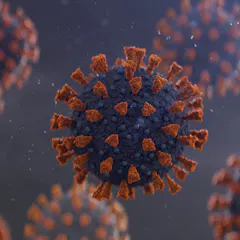
Reduced brain volume in people who have experienced COVID-19 resembles brain changes typically seen in older adults. The implications of these findings are not yet clear.

Want to avoid long COVID? Get vaccinated.
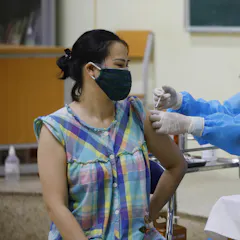
One study suggests getting vaccinated halves the risk of developing long COVID.
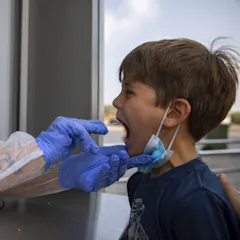
Children can get long COVID, but it seems to be less common than in adults. And they tend to recover quicker.

Fewer than 2% of children with COVID-19 still had symptoms after eight weeks.
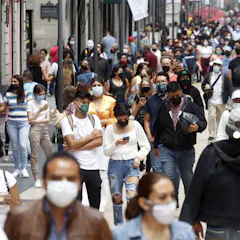
COVID-19 cases in Mexico are approaching the highest levels seen during the second wave in late January 2021, with about 22,000 new infections a day. A slow vaccine rollout is stunting progress.
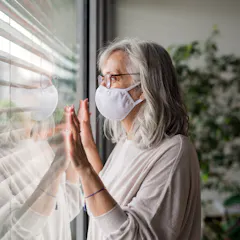
Researchers are piecing together clues to better understand the puzzling array of symptoms in those who never seem to fully recover from COVID-19.

It seems things have shifted slightly since earlier in the pandemic. A growing proportion of people hospitalised with the Delta strain are aged in their 30s or 40s.

While the Scottish government is funding long COVID research projects, specific funding has yet to be provided to develop assessment and rehabilitation services for the condition.

Patients with more symptoms during initial infection – particularly breathlessness, chest pain or abnormal heart sounds – appear more likely to experience lasting illness.
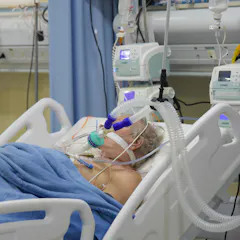
With the impact and cost of long COVID becoming ever more apparent, ongoing pandemic responses will need to be about protecting quality of life as much as saving lives.

How investigation into long COVID will help us create treatments.

COVID-19 will always be a very different disease to the flu. We should aim to stamp it out like measles, not let it spread.

Researchers around the world are using new and existing technology to develop potential treatments for those with COVID-19. Here’s what’s in development in Australia.
Top contributors
-

Professor of Public Health, Te Kunenga ki Pūrehuroa – Massey University
-
Research Associate Professor of Public Health, University of Otago
-
Professor of Public Health, University of Southampton
-
Professor of Public Health, University of Otago
-
Senior Research Fellow, The Perron Institute for Neurological and Translational Science, and Faculty of Health Sciences, Curtin University
-
Director and CEO, Burnet Institute
-
Professor of Immunology, RMIT University
-
Associate Professor, STEM | Health and Biomedical Sciences, RMIT University
-
Conjoint Professor, School of Medicine and Public Health, University of Newcastle
-
Clinical Epidemiologist, Washington University in St. Louis
-
Professor of Genomic Epidemiology and Hon Consultant Rheumatologist, King's College London
-
Research Fellow, The University of Western Australia
-
SHARP Professor, Vitalities Lab, Centre for Social Research in Health and Social Policy Centre, and the ARC Centre of Excellence for Automated Decision-Making and Society, UNSW
-
Associate Professor, Child and Adolescent Health, University of Sydney
-
Associate Professor and Chief Health Officer - COVID and Health Emergencies, Burnet Institute