
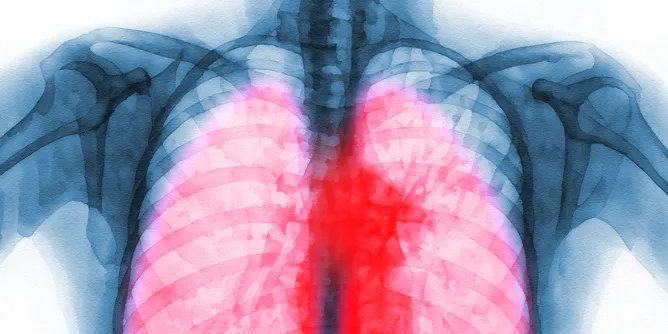
Researchers developed a new mouse model that replicates long COVID-19 more accurately than current models. Their findings could lead to new treatments.
Articles on Long COVID
Displaying 21 - 40 of 148 articles

We calculated lost productivity due to long COVID. The impacts were greatest among people aged 30 to 49.
A new study finds the risks of developing long COVID declined over the first two years of the pandemic. But unvaccinated adults were more than twice as likely to get long COVID compared with those who were vaccinated.
Chronic pain is often caused by a hyper-vigilant nervous system which exaggerates the pain signal even after damaged tissue has healed. Similar processes are at play in persistent fatigue.
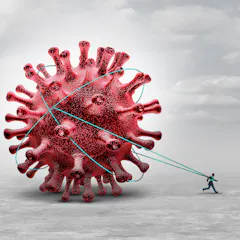
Although millions are navigating long COVID, four years into the pandemic both patients and their caregivers continue to face challenges accessing the information and care they need.
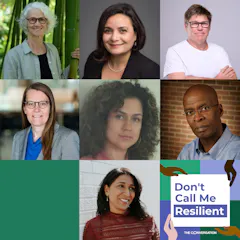
In this bonus episode, you’ll meet some of the producers who help make this podcast to revisit some of our favourite episodes from past seasons.

People with long COVID have already fought hard to become visible.

Two new high-profile studies add to the increasingly worrisome picture of how even mild cases of COVID-19 can have detrimental effects on brain health.

On the fourth anniversary of New Zealand’s first COVID case it’s clear this is not a normal pandemic. Despite fatigue and indifference, New Zealand must heed the evidence and improve its response.

Smell training is one of the few options for recovering a lost sense of smell – but can we make it more effective?

New research shows that for people living with long COVID and intimate partner violence, each was exacerbated by the other and services were inadequate.

These findings may provide insights into better ways of managing long COVID.

For most people, long COVID means not getting better after a COVID infection. So how has long COVID changed throughout the pandemic, and how likely are you to get it with this infection?

Participants recorded short videos about their daily lives, focusing on their symptoms, how they were coping, and any lifestyle changes they were making.

A promising collection of studies suggests taking antivirals such as Paxlovid during an infection could reduce the risk of developing long COVID.

People with adverse experiences during childhood − whether physical, emotional or sexual abuse − had higher rates of death and hospitalization decades later from COVID-19.

A recent study set out to investigate Australia’s long COVID guidelines, services and public health information.

Memorialising a pandemic that is still underway is a challenge. Official commemoration needs to be about remembrance and preparedness.

COVID isn’t the only respiratory disease to leave the patient with long-term symptoms. Colds and flu can do the same.
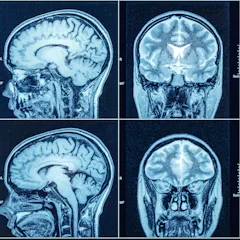
People who were hospitalised with COVID are 14 times more likely to have lung abnormalities than people who have never had COVID.
Top contributors
-

Professor of Public Health, Te Kunenga ki Pūrehuroa – Massey University
-
Research Associate Professor of Public Health, University of Otago
-
Professor of Public Health, University of Southampton
-
Professor of Public Health, University of Otago
-
Senior Research Fellow, The Perron Institute for Neurological and Translational Science, and Faculty of Health Sciences, Curtin University
-
Director and CEO, Burnet Institute
-
Professor of Immunology, RMIT University
-
Associate Professor, STEM | Health and Biomedical Sciences, RMIT University
-
Conjoint Professor, School of Medicine and Public Health, University of Newcastle
-
Clinical Epidemiologist, Washington University in St. Louis
-
Professor of Genomic Epidemiology and Hon Consultant Rheumatologist, King's College London
-
Research Fellow, The University of Western Australia
-
SHARP Professor, Vitalities Lab, Centre for Social Research in Health and Social Policy Centre, and the ARC Centre of Excellence for Automated Decision-Making and Society, UNSW
-
Associate Professor, Child and Adolescent Health, University of Sydney
-
Associate Professor and Chief Health Officer - COVID and Health Emergencies, Burnet Institute