

Paid social clubs promise connection with new people, with a lot of the complicated legwork handled. But here’s why they’re unlikely to fix our loneliness epidemic.
Articles on Loneliness epidemic
Displaying all articles

Loneliness affects one in five people worldwide. But a new global study also finds it varies between countries, reflecting more than individual circumstances.

A new research review shows live music isn’t just entertainment — it’s a proven way to boost feelings of belonging and community.

‘Loneliness’ is a modern word – but we have a lot to learn from how early modern nuns understood solitude.

Keir Starmer is right to highlight the decline of social cohesion, but wrong about the reasons for it.

A new study aims to understand how adults without friends experience and move through life.

Nomi AI is marketed as an “AI companion with memory and a soul”. But it has a much darker side which highlights the urgent need for enforceable AI safety standards.

We found physical isolation, represented by the number of lockdown days, did not significantly affect loneliness.

Loneliness comes in many forms and can strike at any time and at any age.

As far back as the dawn of the internet, scholars have discussed how AI might serve to replace (or supplement) human relationships.

Psychology researchers have focused on the idea that people form friendships with those who are similar, familiar and nearby. But how do individual people pick those who will become their friends?

For people who feel lonely, a trip to the supermarket could help – if only the store provided opportunities to chat at the checkout. A Dutch chain has done just that, and customers and staff love it.
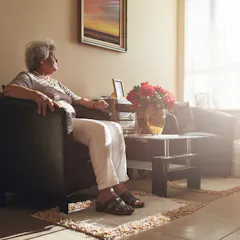
A systematic review of thousands of studies around the world has found many aspects of our cities affect loneliness. But people’s relationship with their environment is complex and highly individual.
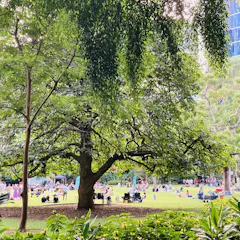
When the pandemic hit, green space was there for us at a time when others weren’t or couldn’t be. Urban greening might be the solution to the ‘lonelygenic environment’ that our cities have created.

Loneliness is everywhere - so how can we get better at making new friends? The answer: vulnerability, trust and time.
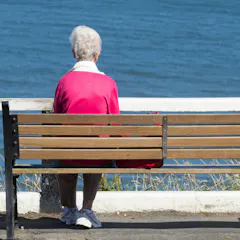
Over 130 hours of conversations with older people reveal the truth of what it’s like to get old and how to cope with loneliness.
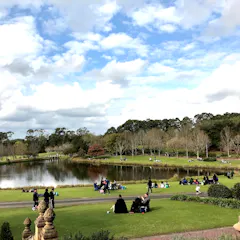
For the areas of cities with less than 10% green space, increasing that to 30% could cut the overall odds of residents becoming lonely by a quarter.
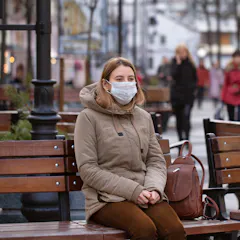
Humans are astonishingly flexible and resilient through times of crisis. We can find creative ways to connect with people while still reducing the immediate risk.

Stress, loss, loneliness and isolation are key factors in clinical depression, which affects millions. The US was unprepared for COVID-19 – will it remain unprepared for its medical aftermath?
Top contributors
-

Professor of Cities and Planetary Health, ARC Future Fellow in nature-based solutions for loneliness, University of Sydney
-
Professor of Urban Health and Environment, UNSW
-
Reader in Education with Psychology and Centre for Death and Society, University of Bath
-
Monash University
-
Associate Professor of Marketing, Tasmanian School of Business and Economics, University of Tasmania
-
Doctoral candidate, psychology, University of Washington
-
Senior Research Fellow, Matilda Centre for Research in Mental Health and Substance Use, University of Sydney
-
Professor of Belonging Science, School of Educational Psychology and Inclusion, Faculty of Education, Monash University
-
Associate Professor in Urban and Regional Planning, University of Sydney
-
Senior Lecturer, Management, University of Tasmania
-
Associate Professor, Department of Economics, University of Otago
-
Professor of Politics and Public Policy, University of Virginia
-
Clinical Psychologist, Lecturer and Research Supervisor, Graduate School of Health, University of Technology Sydney
-
Associate Professor, Sydney School of Public Health, University of Sydney
-
Professor & Director, Hub for Apple Platform Innovation (HAPI), School of Computing Technologies, RMIT University