This month, we're talking risk. Three experts give their perspective on how long you might live, how to deal with loneliness – and how to step outside your comfort zone.
Lucinda Beaman, The Conversation and Sunanda Creagh, The Conversation
Speaking with: Hugh Mackay on 2017, ‘a really disturbing year’
CC BY-ND81.5 MB(download)
Author and social researcher Hugh Mackay says fragmentation was among the key themes of 2017 – but he has some concrete suggestions on how we can do better in 2018.
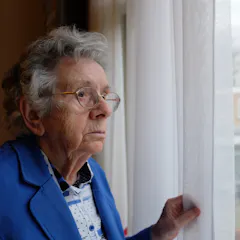
It seems loneliness among older people is expected – by everyone except the elderly themselves.
publicplaces
Individuals wearing virtual reality headsets often look isolated. But research shows they can experience profound emotions such as awe, which enhance their feelings of social connection and wellbeing.
(Shutterstock)
Loneliness shortens our life spans and some studies suggest it’s even more lethal than obesity. We are physiologically and psychologically primed for connection, so don’t shrug off your loneliness.
Friendship helps protect against loneliness even when oldsters do not have dementia. It can be especially beneficial for those who do.
sirtravelalot/Shutterstock.com
A recent study finds that friends ought not let friends with dementia be lonely. The surprising part? Why staying friends is good for the friend without dementia as well as for the one who has it.
It was supposed to bring us all together.
Rokas Tenys/Shutterstock.com
For many of the nation’s poor, food and shelter are more important than health care. Questions of insurance coverage loom broadly, but another question lingers: how to treat the poor we do not see.
Get immersed enough in a good show, and you’ll enter a ‘flow state.’
'Screen' via www.shutterstock.com
Don’t listen to the headlines linking binge watching to depression and loneliness. It can be a positive experience – but only if we think of it as a good thing.
Loneliness in adults is often a result of loneliness in childhood.
From www.shutterstock.com
Loneliness is a major cause of health problems, and many programs have aimed to alleviate it among the elderly. But it might be wise to treat loneliness at its roots, which for many is in childhood.
The unpleasant feelings of loneliness are subjective. Researchers have found they are less related to the amount of time spent alone and more related to the quality of relationships.