

Amid the controversy over Sydney’s lockout laws, a program that looked out for people at risk of harm in the city’s nightlife precincts more than proved its worth.
Articles on Lockout laws
Displaying all articles
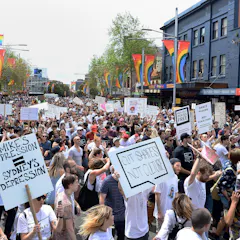
The collection and analysis of data used for making policy should be independent and open to ensure public trust in decision-making. The debate over alcohol licensing shows why this matters.

The good news is that the growth of live music continued under Queensland’s liquor licensing reforms. The bad news is that venues rely on late-night alcohol sales to cover costs.

Ultimately, most regulatory interventions in nightlife precincts are about imposing particular ideas of social and moral order not only within these spaces but also in the city more broadly.

A new study exploring the number of alcohol-related injuries treated at Sydney emergency department has found the lockout seem to be having an impact.
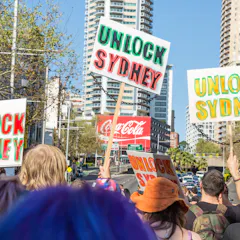
Analysis of rents in Sydney shows that local residents are benefiting from the lockout laws, thanks to new entertainment hubs and nightlife.

Policy changes such as the ‘lockout laws’ have had profound impacts on inner Sydney nightlife. Transport data help us see whether these have caused problems to spill over into neighbouring areas.

Banning orders can encourage personal responsibility and demonstrate that anti-social behaviour will not be tolerated.

A review of Sydney’s lockout laws found the objective of reducing alcohol- and drug-related assaults and anti-social behaviour remain valid, and the measures introduced are achieving this.
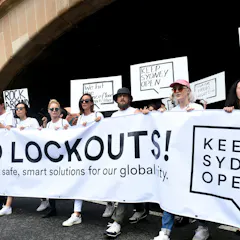
Heightening liquor regulation has for centuries been the immediate response of urban policymakers when confronted with people and behaviours deemed socially undesirable.

Since the earliest days of British colonisation, authorities have sought to limit the problems associated with alcohol by licensing its sale and limiting the times and places where it is drunk.
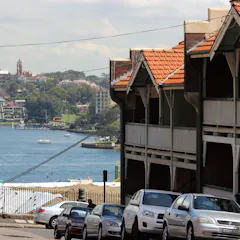
The NSW government agenda would deny the ‘right to the city’, that network of diverse communities, practices and places which give rise to the convivial and inclusive potential of cities.
Top contributors
-

Professor, Director of Research and Statistical Support Service and Program Leader for Substance Use and Mental Health, Centre for Health Services Research, The University of Queensland
-
Senior Lecturer in Criminology, UNSW
-
Professor of Violence Prevention and Addiction Studies, Deakin University
-
Research Fellow, Deakin University
-
Research Fellow, Deakin University
-
Associate Professor of Economics, University of Technology Sydney
-
Diana Egerton-Warburton is a Friend of The Conversation.
Professor, Monash University
-
Research Fellow, School of Communication, Society & Culture, Macquarie University
-
Director, UWA Public Policy Institute, The University of Western Australia
-
Professor of History, The University of Melbourne
-
Lecturer in Historical Crimininology, University of New England
-
Professor of Law, University of Wollongong
-
Honorary Research Fellow, Federation University Australia
-
Professor of Health Research Economics, University of Newcastle
-
Professor and Deputy Director at National Drug and Alcohol Research Centre, UNSW