
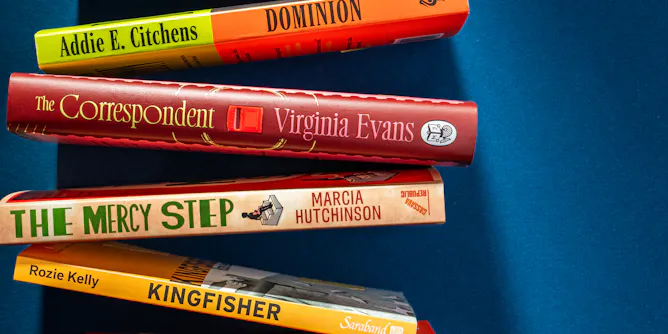
Six books that explore the various joys and challenges of womanhood.
Articles on Literary Prizes
Displaying 1 - 20 of 41 articles
New perspectives on history, complicated family relationships and a creative approach to health.
Australia’s laws are inconsistent when it comes to taxing winnings – and most artists and writers are the losers.

Six works of literary fiction at its most adult.

Translations will expand the reading worlds of children.
Chris Masters’ book on Ben Roberts-Smith was chosen to win the Australian War Memorial’s Les Carlyon Prize for Military History. But the prize wasn’t awarded. Why?
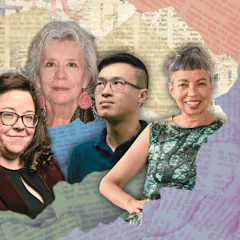
The six inventive books shortlisted for the 2025 Miles Franklin explore ideas of identity, self and nationhood – and play with both ideas and form.
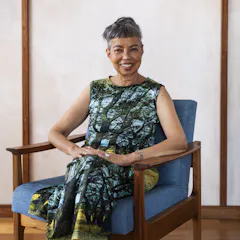
Michelle de Kretser has won the Stella Prize for the first time. Her winning novel, Theory & Practice, is currently longlisted for the Miles Franklin.
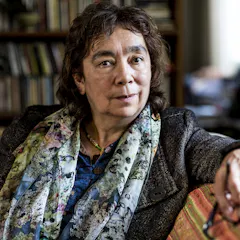
Is Alexis Wright’s Praiseworthy the great Australian novel? Beejay Silcox, chair of the Stella Prize judging panel that selected it as this year’s winner, thinks it might be.
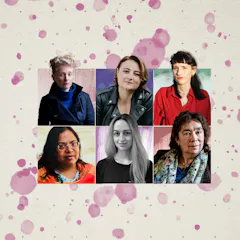
This year’s shortlist doesn’t offer much in the way of consolation, but it might shake up how you see the world.
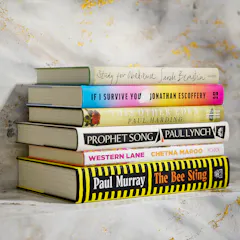
From a longlist of 12, six novels have been shortlisted for the 2023 Booker prize.

Melbourne writer Alex Skovron has been recognised with a national award at 75. Alongside his own work, Skovron’s quiet impact on poets and poetry in Melbourne has been immense.

The 6 books on this year’s Stella Prize shortlist – including poetry, memoir, fiction and reportage – are idiosyncratic, activist and compelling.
The winners of the Prime Minister’s Literary Awards have been announced. The awards are contentious – but are fought over precisely because of their symbolic and enduring cultural function
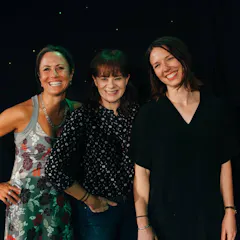
As conversations about literary representation evolve, so does the Stella Prize. Five of the 12 authors on the tenth Stella Prize longlist are Indigenous, one is non-binary, and genre is in the mix.
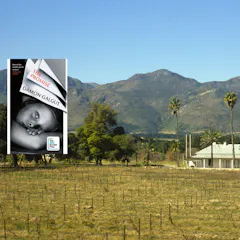
Damon Galgut joins a distinguished line of South African authors, who are grappling with the complex dynamics of the country’s white community in their writing.
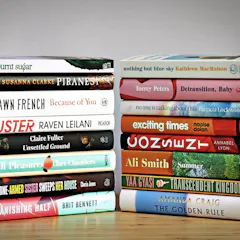
This separation or segregation of women’s writing should be understood as part of the patriarchal control of what and who matters – and, historically, women have not.

There is something beautiful about African languages carrying science, fictionalised of course, into imagined futures.

African literary prizes are slowly becoming more relevant and richer, thanks to writers organising on the continent.
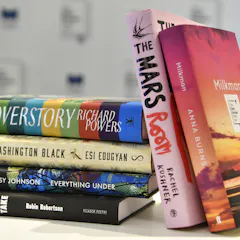
Rules for the UK’s most prestigious and lucrative literary prize effectively mean it is dominated by big publishers.
Top contributors
-

Distinguished Professor Emerita of Creative Practice, Faculty of Arts and Design, University of Canberra
-
Associate Professor of English, Australian National University
-
Professor of Modern Literatures in English, University of Bristol
-
Reader in Asia Pacific Studies, Co-Director of the International Institute of Korean Studies, University of Lancashire
-
Associate Professor of Postcolonial and Global Literatures, Nottingham Trent University
-
Pro-Vice-Chancellor for Cultural Engagement, Professor of English Literature, University of Liverpool
-
Professor of English Literature, University of Westminster
-
Senior Lecturer in Children's and Adolescent Literature, Queensland University of Technology
-
Lecturer in African and Postcolonial Literatures, University of Leeds
-
Research Student in 20th and 21st Century Literature, King's College London
-
Lecturer in American Literature, University of York
-
Associate Professor, School of Languages, Literatures, Cultures and Linguistics and Fellow of the Australian Academy of Humanities, Monash University
-
Lecturer In Linguistics, Bournemouth University
-
Flinders University
-
Professor in Politics and Journalism, University of Notre Dame Australia