
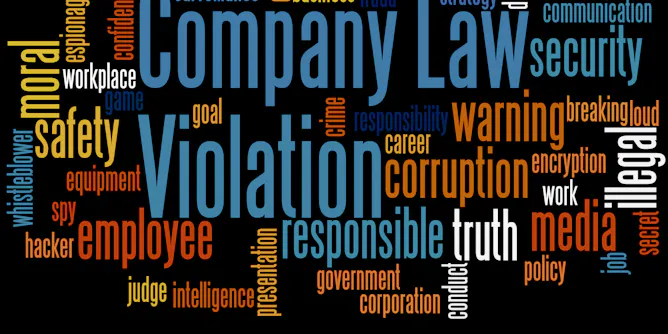
Are whistleblowing frameworks at the root of employee silence on legal, ethical or financial misconduct? A free tool for integrity professionals seeks to improve channels for encouraging employees to speak up.
Articles on Legal ethics
Displaying all articles

Some Department of Justice attorneys have recently been fired or have resigned, refusing to follow directives from the Trump administration that they felt violated the law, legal ethics or both.

Australia’s highest court has ruled judges are immune from being sued for damages. Is it good public policy?

Trump appointed Cannon to the bench, but that alone is not a good enough reason for her to recuse herself from the case.

The FBI and Treasury Department frown on the idea of paying off cyber attackers. But there is sufficient ethical and legal gray areas to make it a real moral quandary for business leaders.

If Zoom courts are here to stay, we must ensure virtual courts function as well as possible by identifying and promoting best practices.
Pediatric epigenetic clocks have the potential to accurately assess biological age. However, possible applications in law enforcement and immigration raise ethical issues.
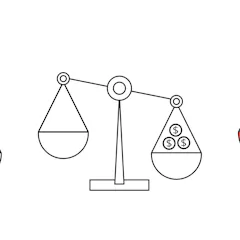
How much is your suffering worth in court? Often, it depends on the judge. But justice may be better served by letting victims choose between monetary compensation and a more restorative remedy.

How do jurors use different kinds of information about mental illness when making sentencing decisions? An experiment finds that neurobiological evidence could harm or help defendants.
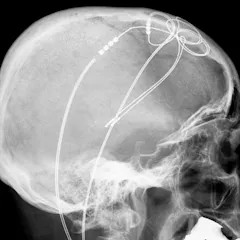
Where does responsibility lie if a person acts under the influence of their brain implant? As neurotechnologies advance, a neuroethicist and a legal expert write that now’s the time to hash it out.

If Trump is lying to his own lawyers about Russia, he is risking Bill Clinton’s fate.

The Channel 7 show Million Dollar Cold Case has seen Victoria Police dispense with the practice of not naming suspects until they are charged – a potentially fraught strategy.

The court found that parents have a strong interest in a “genetic affinity” with their children, one that can merit compensation if subverted.
Top contributors
-

Visiting Research Fellow, Centre for Biomedical Ethics, National University of Singapore
-
Professor of law and ethics, Georgia State University
-
Dean, School of Law, Deakin University
-
Assistant Professor in Biomedical Ethics, National University of Singapore
-
Research Fellow with Centre for Biomedical Ethics, National University of Singapore
-
Senior Assistant Director at the Centre for Biomedical Ethics, National University of Singapore
-
Associate Professor of Law, Michigan State University
-
Associate Professor of Neuroethics, Penn State
-
Ph.D. Candidate in Neuroscience, Georgia State University
-
Postdoctoral Fellow, Center of Genomics and Policy, McGill University
-
Associate Professor, Information and Media Studies, Western University
-
Assistant Professor of Sociology and Science, Technology, and Society, California Polytechnic State University
-
Associate Professor of Psychology, Philosophy, and Neuroscience, Georgia State University
-
Research Affiliate at the Ostrom Workshop for Cybersecurity and Internet Governance, Indiana University
-
Postdoctoral Researcher in Law and Economics, ETH Zurich