

The Flint water crisis made the country aware of the dangers of lead. But why, exactly, is this element so toxic and what does it do to the body?
Articles on Lead poisoning
Displaying 21 - 40 of 50 articles
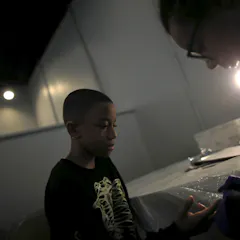
The children who suffered lead poisoning as a result of the Flint water crisis of 2014 are likely to struggle academically and socially as a result, an expert on treating lead-poisoned children argues.

The history of dangerous cosmetics shows us the harms that women have suffered to meet expectations of what is beautiful.
If you have bought an Aldi “The Spiral Spring Mixer Tap” you should not use water from it for drinking or cooking until investigations of reported lead contamination is complete. What we know The media…

A new report from the Environmental Defense Fund raises concerns about lead in our food supply. Here are some things you should consider.

Millions of people who shoot, for work or leisure, risk lead poisoning, according to new research.
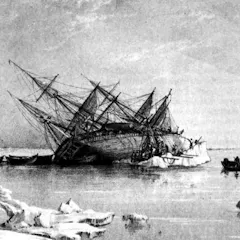
168 years on, experts are finally uncovering the secrets of the Royal Navy’s tragic expedition to the Northwest Passage.

High blood lead levels in children in Flint, Michigan were obscured in part because of an outdated method of studying public health – the ZIP code. Here’s why we need to make use of a better way.
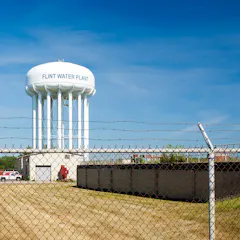
By tapping into diverse data sources in Flint, researchers can predict vulnerable homes and even have found that home water service lines may not be the biggest contributor to lead poisoning.
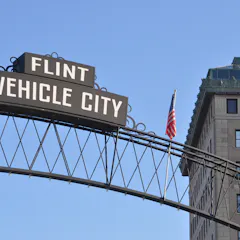
A lead poisoning crisis caused by corroded pipes has made Flint, Michigan a symbol of American inequality.

The Flint water crisis has left people across the country wondering if lead poisoning is a problem in their community. But it’s very hard to find out how widespread this problem is.

Virginia Tech University engineering students blew the whistle on Flint, Michigan’s toxic drinking water. Hailed as heroes, they’ve also learned that it isn’t easy to do science for the public good.
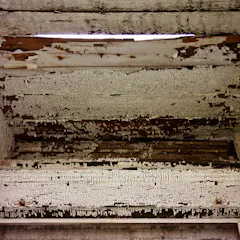
How did lead poisoning become a persistent threat in U.S. cities? Lead paint and slumlords played key roles, but so did postwar housing policies that trapped minorities in crumbling inner cities.
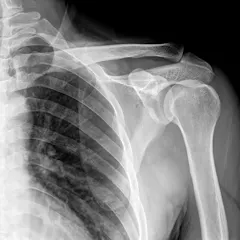
Lead might not be in paint or gasoline anymore, but since it doesn’t break down in the home or the environment it remains a problem throughout the U.S.

Children exposed to lead are at elevated risk for learning delays and academic issues.

Treating municipal water, particularly from rivers, is difficult technically and cash-strapped municipalities like Flint don’t always know the latest science.

The University of Michigan-Flint puts experts from academia in the same room as Flint community members, an innovative model for educating the community and forming the public health response.

A new model of citizen-led science is emerging – as in the case of Flint, Michigan’s poisoned water. Rather than simply supporting scientists, citizens ask their own questions and set the research agenda.

A wake-up call from Flint: the U.S. has made great gains in reducing lead exposure, but the country is still saddled with millions of miles of water-carrying lead pipes.
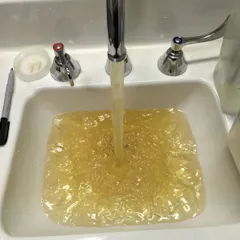
If Flint, Michigan were an affluent suburb, would residents have been exposed as long to drinking toxic water? Pioneering scholar Robert Bullard calls Flint’s crisis a classic case of environmental discrimination
Top contributors
-

Honorary Professor, School of Natural Sciences, Macquarie University
-
Professor of Earth Sciences and Executive Director, Environmental Resilience Institute, Indiana University
-
Professor of Children's Environmental Health, Simon Fraser University
-
Professor of Avian Behavioural Ecology, Macquarie University
-
Professor of Advanced Technology Transitions, Arizona State University
-
PhD Candidate, School of Natural Sciences, Macquarie University
-
Professor Emeritus, Department of Integrative Biology, University of Guelph
-
Professor of Public Health and Health Sciences, University of Michigan
-
Associate Professor in American and International Politics, University of Birmingham
-
Assistant Professor of Marketing, Ross School of Business, University of Michigan
-
Robert Wood Johnson Clinical Scholar, Internal Medicine and Pediatrics, University of Michigan
-
Associate Professor in Literary Studies, Monash University
-
Associate Professor of Public Health, William Paterson University
-
SUNY Distinguished Professor of History, Stony Brook University (The State University of New York)
-
Professor, Environmental Science, UNSW