
New research finds that tap water avoidance is on the rise in the US, especially among minorities. An expert on water and health calls for better public education about water quality and testing.
Articles on Lead
Displaying 41 - 60 of 78 articles
Like rings in tree trunks, the layers of our teeth carry a detailed record of our growth — and reveal lead contamination is common.

Technical advances are reducing the volume of e-waste generated in the US as lighter, more compact products enter the market. But those goods can be harder to reuse and recycle.

The EPA has just adopted a rule that limits what kinds of science regulators can use in setting rules. A scholar explains how this shift could impede his work mapping child lead poisoning.
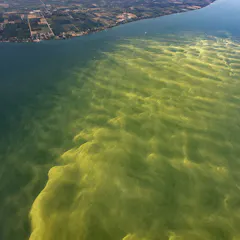
The Great Lakes contain reservoirs of legacy contaminants, mostly in their sediments, that are vulnerable to resuspension.
An investigation showed that five Canadian cities had lead levels in their water on par with those in Flint, Mich. during its peak period of water contamination.

Newark is the latest US city to struggle with high lead levels in drinking water. Ending this public health crisis will require more money and enforcement, plus stricter water testing standards.
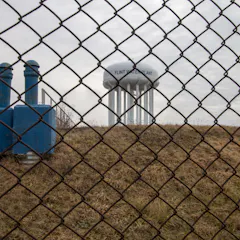
Flint’s highest recorded lead levels were typical for water systems that report problems. What’s more, a number of cities haven’t reported their lead issues.
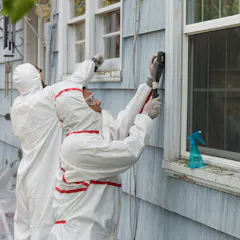
The Flint water crisis made the country aware of the dangers of lead. But why, exactly, is this element so toxic and what does it do to the body?

Even the tidiest space has some dust. Researchers are investigating just what these indoor particles are made of and their possible implications for human health.
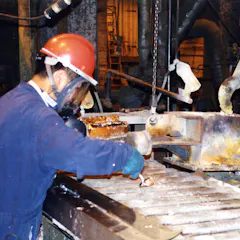
Lead contamination is not just a problem for Flint, Michigan. It is an issue in many regions. One epidemiologist figured out how to measure past lead exposure using treasured biological samples.

Lead and zinc smelting may be big business in Port Pirie, but it’s making the kids who live there sick. Something needs to change.

Urban pollutants are a health concern in growing cities. Scientists are turning to honey bees to help monitor contaminants in soil, water, air and plants.
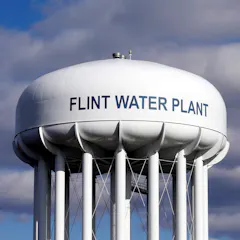
If Elon Musk can help achieve safe drinking water more quickly for every home in Flint, Mich., then he should be lauded. Water is life.

Michigan officials have ended distribution of free bottled water in Flint, but many residents believe the city’s water crisis is not over and have lost all trust in government.
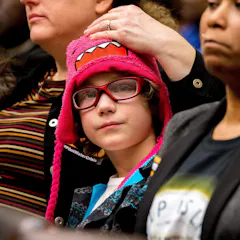
Reduced lead exposure has made us smarter and healthier. Could changes in regulatory agencies across North America endanger this?

A new report from the Environmental Defense Fund raises concerns about lead in our food supply. Here are some things you should consider.

Lead contamination remains a persistent issue in urban soils.
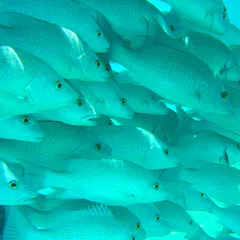
Renewable resources are being exploited to the extent that there is a loss of species and future generations are threatened.

The Flint water crisis has left people across the country wondering if lead poisoning is a problem in their community. But it’s very hard to find out how widespread this problem is.
Top contributors
-

Honorary Professor, School of Natural Sciences, Macquarie University
-
Professor of Earth Sciences and Executive Director, Environmental Resilience Institute, Indiana University
-
Postdoctoral research fellow, Macquarie University
-
Professor, Physics and Astronomy, McMaster University
-
Professor of Children's Environmental Health, Simon Fraser University
-
Professor of Advanced Technology Transitions, Arizona State University
-
Professor of Medicine, Monash University
-
Distinguished Professor of Pharmacy Practice, University of Connecticut
-
PhD Candidate, Macquarie University
-
Professor, Environmental Science, UNSW
-
Associate Professor, Colorado State University
-
QA/QC Scientist, National Ecological Observatory Network; Department of Chemical and Environmental Engineering, University of Arizona
-
Program Director Master of Environmental Planning, Macquarie University
-
Research Assistant Professor, Center on Urban Poverty and Community Development, Case Western Reserve University
-
Professor Emeritus, Department of Integrative Biology, University of Guelph