

The recently introduced English Language Bill will change little, but highlights a deeper
issue. NZ still lacks a coherent framework for language policy.
Articles on Language
Displaying 41 - 60 of 853 articles

Bad Bunny’s naming of ‘Canadá’ at the Super Bowl exposed Canada’s tendency to imagine itself as peripheral to Latin America, when its people and culture are central to its reality.

Speaking a second language doesn’t impact moral decisions as much as previously thought.

Some dogs can remember the names of hundreds of objects.

Seemingly meaningless adolescent slang isn’t “brain rot,” it’s linguistically normal, developmentally appropriate and a way of belonging.

From Pig Latin to Punch Buggy, kids have long used nonsensical language, gestures and games to carve out cultures of their own.

Artificial brains, humanoid robots and ‘assistants’ are misleading myths – and they directly affect how we use AI.

The search for Apongo is a small part of historians’ ongoing work to recreate the lives of Africans taken in the transatlantic slave trade.

Esol education has become politicised as part of the wider discussion on migration.

Here are five practical, research-informed tips to help families build kids’ skills in their home language.

Significant time is spent on tracking the usage of words throughout the year before making decisions on contenders.

Idioms are an often invisible barrier to understanding and inclusion for second-language speakers because their meanings rely on shared culture as well as language.
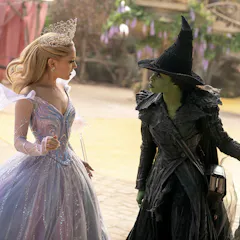
Elphaba’s insistence on correctness speaks to a broader challenge facing anyone positioned as an outsider: having to work that much harder to be accepted.

Many Native American languages only have a few native speakers left.

AI-fueled technologies make communicating in other languages easier than ever, but it still can’t replace the transformative value of learning a new language.

The language you learn as a child becomes the lens through which you understand the world. A team of researchers from over 30 countries has found it also affects how you read in your second language.

Why is your ankle named after a Greek hero and your uterus after a Renaissance anatomist? The answer says as much about power and memory as it does about medicine.

Puerto Ricans like Bad Bunny complicate the administration’s campaign to portray America as an English-speaking, homogenous nation.

The findings of a new study about communication between birds also offer key insights into the origins of language.

This now-extinct tongue was probably spoken somewhere in Eurasia as many as 8,000 years ago. But how do we know Proto-Indo-European must have existed?
Top contributors
-

Senior Lecturer in Linguistics, Monash University
-
Professor of Linguistics, Monash University
-
Roger J. Kreuz is a Friend of The Conversation.
Associate Dean and Feinstone Interdisciplinary Research Professor, University of Memphis
-
Honorary Associate Professor in Writing, The University of Queensland
-
Professor of Linguistics, University of York
-
Professor of English Language and Literature, University of Oxford
-
Associate Professor in Linguistics, Macquarie University
-
Professor of African Language Studies, University of the Western Cape
-
Senior Research Fellow of Linguistics, University of Colorado Boulder; Griffith University; University of New England
-
Associate Professor of Linguistics and Director of Language Lab, The University of Western Australia
-
Associate professor, Universidad Nebrija; UCL
-
Associate Professor in Language, Literacy and TESL, University of Canberra
-
Postdoctoral research fellow (Forensic Linguistics/ Language and Law), University of the Western Cape
-
Professor of Linguistics and English, Florida International University
-
Director, Office of Scholarly Communication and Publishing, University of Pittsburgh