
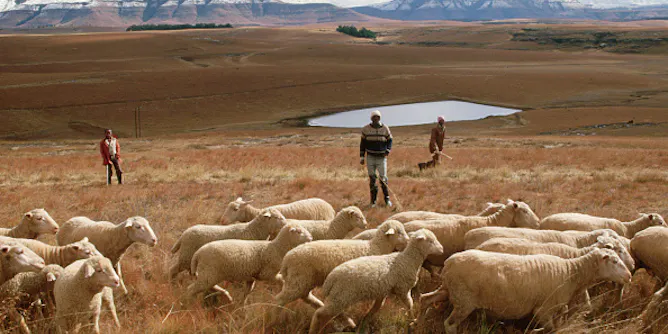
An agency could accelerate land reform by removing the process from political and bureaucratic control.
Articles on Land reform
Displaying 21 - 40 of 85 articles
The judgment highlights the lack of interest by successive government ministers in curtailing the self-interested actions of rural elites.

In the country’s insider politics, the majority who try to survive outside the formal economy are talked about, but are never heard.

The legitimacy of SWAPO, the former liberation movement that has governed since 1990, has been eroded amid growing corruption and a deepening economic crisis.

Nyachae always served at the intersection of politics and administration. Nevertheless, he was more of a firm manager than a politician.
The proposed new law has a long history. The country has been trying for almost 12 years now to come up with expropriation legislation that is in line with the constitution.
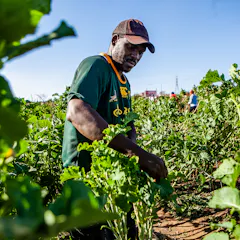
The new initiative reproduces the core weaknesses of post-apartheid state land and agricultural policy. These have done little to improve the livelihoods of the poor.
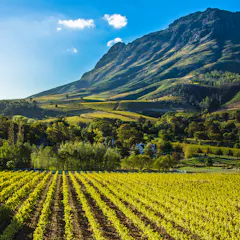
South Africa’s that current land reform strategies focus too narrowly on agricultural outcomes and transferred ownership - this undermines equitable and sustainable land reform.

Zimbabwe wants to issue a sovereign bond to raise $3.5 billion it has agreed to pay as compensation to white farmers, but the economic and political conditions aren’t conducive to such an issuance.
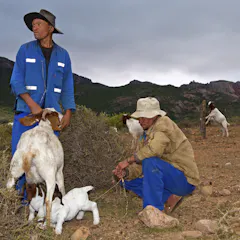
When South Africa eventually emerges from the fog of the COVID-19 crisis, structural reform, including land reform, will be high on the political agenda as never before.
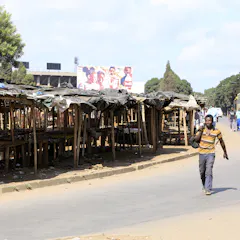
The current lockdown in Zimbabwe is going to provide a stern test for its informal economy, which is the country’s dominant economy and employs 90% of people.
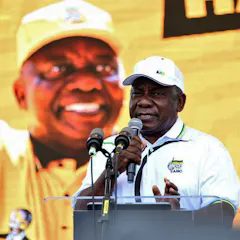
The year ahead promises to be a very difficult but also a very decisive year for South Africa. Is President Ramaphosa equal to the challenge?
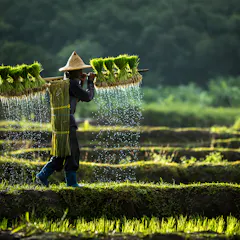
Land reform has always been closely tied to shifts in the wider political economy of countries.
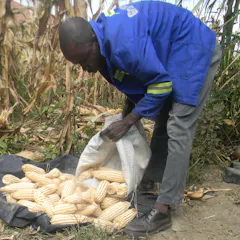
Zimbabwe’s food insecurity is not just about food production, but access too. It is affected by, among others, the value of assets when sold and social and cultural dimensions that go into exchange.

It’s time for a new approach as it becomes increasingly clear that protests won’t topple the Zanu-PF government.

Colonialism and apartheid sought to make traditional leaders accountable to white officials by tying them to land.
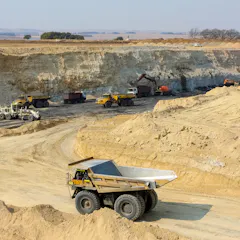
South Africa’s rural communities where mining licenses have been granted are often excluded from consultations and bear the brunt having their environment and livelihoods destroyed.
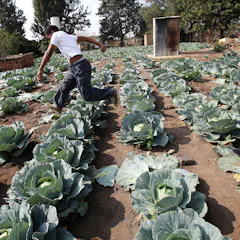
The abandonment of crop farming fields isn’t new. But some researchers say it’s accelerated in the last two decades.
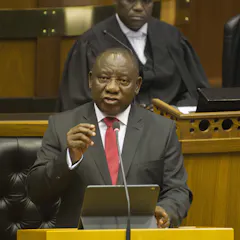
Ramaphosa offered five simple yet bold goals for the next ten years that cut across the social and economic structural constraints that inhibit South Africa’s potential.
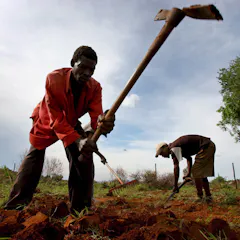
Land reform programme has done very little to improve access to land for black South Africans.
Top contributors
-

Professorial Fellow, Institute of Development Studies
-
Senior Fellow, Department of Agricultural Economics, Stellenbosch University
-
Professor of Political Studies, University of Johannesburg
-
Director of the Bureau for Economic Research, Stellenbosch University
-
Emeritus Professor, Poverty, Land and Agrarian Studies, University of the Western Cape
-
Associate Professor, Sociology, University of Fort Hare
-
Associate Professor, Centre for Sustainability Transitions, Stellenbosch University
-
Professor & Research Chair in Interdisciplinary Science in Land and Natural Resource Use for Sustainable Livelihoods, Rhodes University
-
Associate Professor of Sociology & Director of the Centre for Data Ethics at the Institute for Intelligent Systems, University of Johannesburg
-
Lecturer in Law, University of Aberdeen
-
Professor of Sociology, University of the Witwatersrand
-
Emeritus Associate Professor in Public Law, UCT. Visiting Adjunct Professor, WITS School of Governance; Director, Africa Programme, University of Cambridge Institute for Sustainability Leadership, University of Cambridge
-
Oppenheimer-Jamma Research Chair in African Wildlife Economies, Stellenbosch University
-
Research Director, North-West University
-
Post-Doctoral Fellow, Rhodes University