

Two concepts can help explain why society seems increasingly unable to agree on basic facts.
Articles on Knowledge
Displaying 21 - 40 of 79 articles

The UN estimates the global population will pass 8 billion people on Nov. 15, 2022. From the Stone Age to today, here’s how things spiraled out of control.
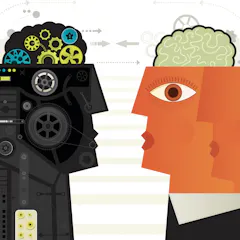
To build a true artificial mind, first map out how thinking works. Enter the Common Model of Cognition.

The decolonisation of science is an essential step for the academic community in Indonesia to find their voice.

Our age of agnosis is increasingly coming into contact in ways beyond historical standards and recorded memory. Empathy, not apathy, is needed now more than ever before.

People often try to seem confident and certain in their message so it will be trusted and acted upon. But when information is in flux, research suggests you should be open about what you don’t know.

Ecology is dominated by colonial notions and knowledge that doesn’t consider local knowledge. This needs to change.

Receiving a pay raise will make you feel happier only if it was bigger than what you had expected. Why? Because it helps you learn.

Cognitive shortcuts help you efficiently move through a complicated world. But they come with an unwelcome side effect: Facts aren’t necessarily enough to change your mind.

We know that pigs or dogs will never understand prime numbers. Some philosophers think that concepts like consciousness are similarly inaccessible to humans.

A recent article in The Atlantic called for a “new science of progress” - this is dangerous and ignores the academic study of the history of human development.

Some people argue the absence of evidence is not evidence of absence, you just need to keep looking. But there are occasions where finding no evidence is all you can do.

Conducting research and contributing to knowledge creation might be the only way for academics to sustain their jobs.

In the past few decades, there’s been more critique of global knowledge inequalities and the global North’s dominance.
Science is not the absolute truth. Scientific findings are the beginning, not the end, of the quest for truth.

Research suggests people intuitively draw a distinction between what is known and what is believed. Recognizing the difference can help in ideological disagreements.
Globally, the scholarly publishing system is in dire need of financial and legislative change.

Madrasas, or Islam-centered schools, have long spread knowledge and literacy throughout the Muslim world. However, can they prepare students for today’s tech-based economies?

If you’re committed to a belief, it’s hard to let go. Psychology and philosophy provide different ways to think about how skeptics respond to counterevidence.

Writing groups provide a space where the “rules of the game” of academia become clear.
Top contributors
-

Emeritus Professor of Education, University of Derby
-
Senior Lecturer in Philosophy and Education; Curriculum Director, UQ Critical Thinking Project, The University of Queensland
-
Editor-in-Chief of the South African Journal of Science and Consultant, Vice Principal for Research and Graduate Education, University of Pretoria
-
Associate Dean (Education & Student Experience) Faculty of Business & Law, Royal Holloway, University of London
-
Professor of Philosophy of Science, Durham University
-
Associate Professor, Graduate School of Business, University of Cape Town
-
Researcher, University of Pretoria
-
Director Internationalisation., Rhodes University
-
Research Associate and Laboratory Manager, University of British Columbia
-
Professor of Higher Education, Rhodes University, South Africa, Rhodes University
-
South African Research Chair in Teacher Education; Director of Centre for International Teacher Education (CITE) & Professor of International Education and Development Policy (University of Sussex, UK), Cape Peninsula University of Technology
-
Senior lecturer, Rhodes University
-
Professor of Science and Society, Co-Director of the Consortium for Science, Policy and Outcomes, Arizona State University
-
Fulbright Scholar, Institute for Governance and Policy Analysis, University of Canberra
-
Dean of Business, Government and Law, University of Canberra