

Our minds are wired to anticipate what’s coming next – and fill in the gaps when we don’t have all the information.
Articles on Knowledge
Displaying 41 - 60 of 79 articles

It’s time to (do more than) talk about knowledge. Universities must take leadership in helping develop students capacity to recognise different kinds of knowledge and work flexibly.
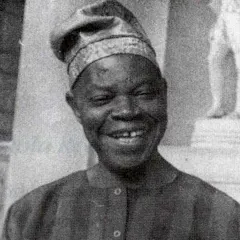
Amos Tutuola has contributed significantly to the resilience of ways of life and worldviews that could easily have disappeared under the weight of colonialism, globalisation and the market economy.

If access to information online becomes more difficult, then it will be the communities on the fringes that lose out.

Khanya College’s curriculum was quite different from the one taught at other universities of the time. Its students studied oral African literature and history alongside Western literature.

Society needs more research that is both excellent and useful. We can achieve this by shifting the academic culture toward research that is Highly Integrative Basic and Responsive (HIBAR).

The process of decolonising research methodology is an ethical, ontological and political exercise rather than simply one of approach and ways of producing knowledge.

It’s not what you think you know, but how you can justify your knowledge that is most important.

The changing nature of work means the knowledge capabilities of cities are more important than ever. Here’s what the new Knowledge City Index tells us about 25 Australian cities.

Critical decolonisation means accepting risk of error. It means considering whether indigenous knowledge systems might contain truths that western science hasn’t accessed.

Phrases like “knowledge production” conceal the fact that knowledge answers to something beyond itself and beyond us. To produce knowledge is to find out about something.
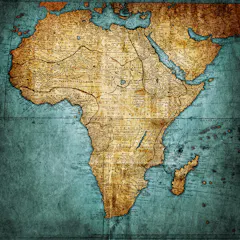
It’s important to shift educational discourse in and around Africa in a more equitable, representative direction.
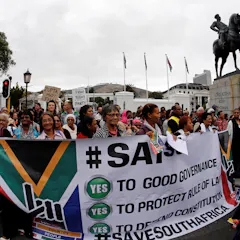
South Africa celebrates Freedom Day this week amid growing discontent over misrule by President Zuma and the ANC. This has led to increased calls for ethical and caring leaders.

When it comes to facts versus opinions, just remember that not all facts have been true, and not all opinions should be dismissed either.

Ten questions. On your marks. Get set. Go.

It’s important that South African teachers, lecturers and professors develop curricula that build on the best knowledge skills, values, beliefs and habits from around the world.

There are a few questions that can be posed and unpacked if universities are to move towards genuine decolonisation.

Knowledge is power. If you own it, you can control those without it. Since so much knowledge about Africa doesn’t sit on the continent, it’s apparent that Africa lacks power in this regard.

The decolonisation debate in South Africa’s universities raises critical issues about the relationship between power, knowledge and learning.

The world around you might be an illusion and you’re really a brain in a vat connected to a supercomputer. Sounds preposterous? But can you prove it’s not true?
Top contributors
-

Emeritus Professor of Education, University of Derby
-
Senior Lecturer in Philosophy and Education; Curriculum Director, UQ Critical Thinking Project, The University of Queensland
-
Editor-in-Chief of the South African Journal of Science and Consultant, Vice Principal for Research and Graduate Education, University of Pretoria
-
Associate Dean (Education & Student Experience) Faculty of Business & Law, Royal Holloway, University of London
-
Professor of Philosophy of Science, Durham University
-
Associate Professor, Graduate School of Business, University of Cape Town
-
Researcher, University of Pretoria
-
Director Internationalisation., Rhodes University
-
Research Associate and Laboratory Manager, University of British Columbia
-
Professor of Higher Education, Rhodes University, South Africa, Rhodes University
-
South African Research Chair in Teacher Education; Director of Centre for International Teacher Education (CITE) & Professor of International Education and Development Policy (University of Sussex, UK), Cape Peninsula University of Technology
-
Senior lecturer, Rhodes University
-
Professor of Science and Society, Co-Director of the Consortium for Science, Policy and Outcomes, Arizona State University
-
Fulbright Scholar, Institute for Governance and Policy Analysis, University of Canberra
-
Dean of Business, Government and Law, University of Canberra