
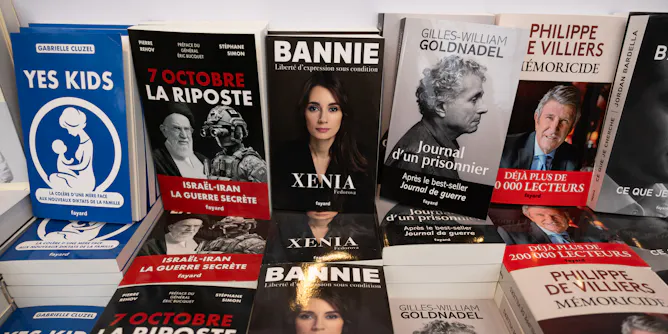
The Fedorova case is emblematic of a rhetorical method used by Russian propaganda: appealing to the targeted public’s critical thinking to convince them to disregard sources seen as “official” and “dominant.”
Articles on Epistemology
Displaying 1 - 20 of 25 articles

Do you actually know how a bicycle or a zipper work, or what a penny or a common brand logo look like? Intellectual humility can help reduce overconfidence in what you don’t understand.

Everyone likes being told they’re clever, even if it’s coming from an AI chatbot. But their sycophancy has serious consequences for truth and trust.

Critical thinking is an essential skill students should be encouraged to develop as part of their science learning. NZ’s draft science curriculum fails the test.

We need to understand what AI means for how knowledge is created.

Words have power, and what vocabulary you have at your disposal to describe your relationships with other people can shape what directions those relationships can take.
Decades ago, the international community codified science as a cultural right and protected expression of human creativity. Reaffirming science’s value can help it better serve humanity.

A Steller’s sea eagle, native to the Asian Arctic, has traveled across North America since 2021. A scholar questions whether the bird is lost – and how well humans really understand animals’ actions.
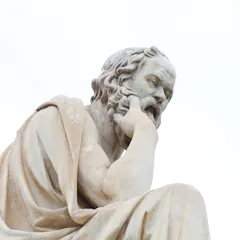
Athens was deeply polarized over big-picture questions, and Socrates was never hesitant to question both sides’ assumptions – or his own.

Two concepts can help explain why society seems increasingly unable to agree on basic facts.
A philosopher unpacks the ‘ethics of belief’ for an age awash in bad information.

Astrology and astronomy were once practiced side by side by scientists like Galileo and Kepler. And they’re more similar than you might think.

Those with strong beliefs tend to be admired.
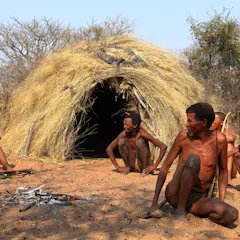
Modern western science must be stripped of the epistemological and methodological privileges it enjoys.
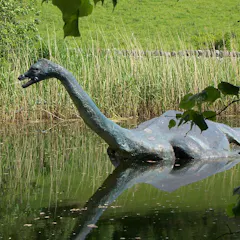
If you’re committed to a belief, it’s hard to let go. Psychology and philosophy provide different ways to think about how skeptics respond to counterevidence.

It’s time to (do more than) talk about knowledge. Universities must take leadership in helping develop students capacity to recognise different kinds of knowledge and work flexibly.
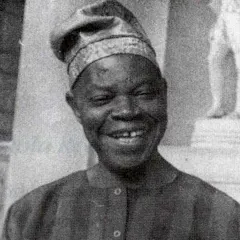
Amos Tutuola has contributed significantly to the resilience of ways of life and worldviews that could easily have disappeared under the weight of colonialism, globalisation and the market economy.

Dr Joe Gumbula was a master-singer of Manikay, the exquisite Yolŋu tradition of public ceremonial song. While the songs contain incredible knowledge, scholars have rarely treated them as an intellectual tradition.
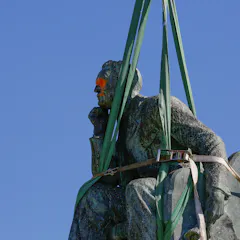
The process of decolonising research methodology is an ethical, ontological and political exercise rather than simply one of approach and ways of producing knowledge.

Asking whether machines can really understand us is meaningless.
Top contributors
-

Professor and Inaugural Director, Indigenous Knowledge Institute, The University of Melbourne
-
Professor of Anthropology and Museum Studies, Lawrence University
-
Professor of Philosophy of Science, Durham University
-
Chercheuse en développement durable, sciences sociales et technologie, GEM
-
Professor of Philosophy, University of Hertfordshire
-
Professor and Chair of Epistemologies of the Global South, University of Bareuth, Germany, University of South Africa
-
Professor of Computer Science and Communications, Lancaster University
-
Full professor, GEM
-
Associate Professor of Philosophy of Education, University of Birmingham
-
Visiting Postdoctoral Researcher in Philosophy, USC Dornsife College of Letters, Arts and Sciences
-
Professor, Social Anthropology, University of Cape Town
-
Associate Professor of Sociocultural Anthropology, Washington University in St. Louis
-
Professor of Philosophy and Philosophy-Neuroscience-Psychology, Washington University in St. Louis
-
Professor of Metaphysics and Epistemology, University of Leeds
-
Senior Lecturer in Philosophy and Education; Curriculum Director, UQ Critical Thinking Project, The University of Queensland