

Elections in Kenya are never just a matter of casting ballots. Historically, they have been marred by ethno-political violence, exacerbated by vigilantes and militias deployed by politicians.
Articles on Kenya elections
Displaying 41 - 60 of 69 articles
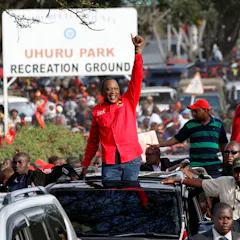
While Kenya’s political leaders often adopt a populist approach to politics, it’s not unimaginable that the courts could also pursue a populist path by claiming to speak for the people.
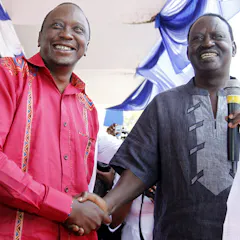
Democracy doesn’t seem to work within societies governed by politics of ethnicity. Instead, elections continue to offer up the hard choice between electoral credibility and political stability.
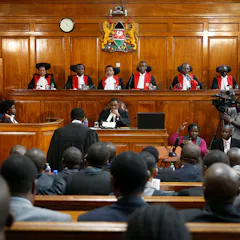
Kenya’s electoral commission faced many legal challenges before the general election, and yet another after the poll. But how will the Supreme Court’s historic ruling impact the country’s democracy?
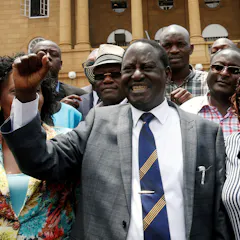
Kenya’s Supreme Court landmark ruling has opened the door to robust conversation around the country’s nascent democracy, paving the way for rule of law and stronger institutions.
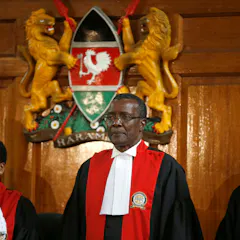
For decades, power in Kenya has lain with the government and administrative organisations that serve it. The Supreme Court’s decision calling for a new election suggests that this may have changed.
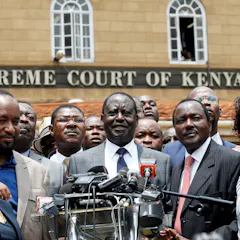
By failing to provide details on what invalidated Kenya’s election, the country’s Supreme Court has created an impossible timeline for organising re-elections within 60 days.

Kenya has published hate speech guidelines that target WhatsApp groups administrators, holding them responsible for offensive content.
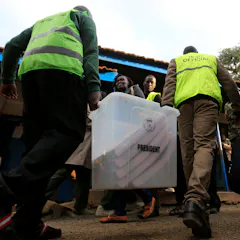
One way to diffuse the tension when Kenyans choose a head of state is to take that decision out of their hands. This could help achieve ethnic cohesion.

Fake news has intruded on every aspect of life. Audiences need to counter its appeal, as the media alone is incapable of debunking false information.

Some might see Kenya’s presidential election petition as ‘nuisance legislation’. But legal arbitration must be encouraged as an audit to the democratic process.
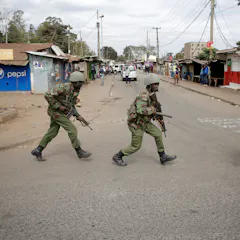
Kenya’s press has admitted to self-censorship after the August 8th poll to avoid a repeat of 2008’s post-election violence. But by refusing to inform the public has the media lost credibility?
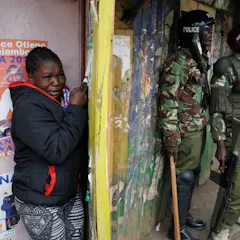
Much international media focus has been on Kenya’s election being a trigger for violence, but that’s only part of the story. The ongoing grievances of Kenyans must be addressed.
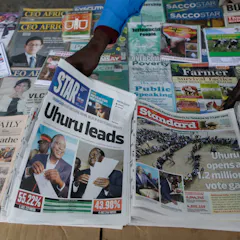
Kenya has just gone through a charged campaign period, followed by a contested election result. The media has been out in force covering it all. But did they do a good job?
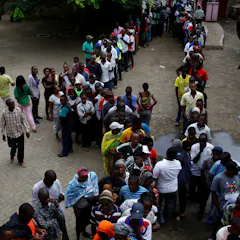
Despite concerns about corruption, the high cost of living and a stagnating economy, Kenyans may have handed Uhuru Kenyatta a second term.
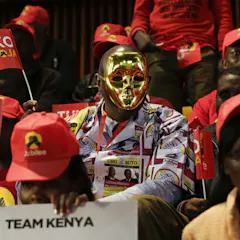
In Kenya, the overwhelming majority of political contributions come from a tiny number of individuals. This model of financing turns politics into a high-stakes game that very often turns violent.
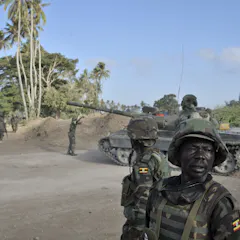
It’s unclear exactly when Kenya’s next president will begin the process of withdrawing troops from Somalia. If it’s too rushed, the move might destabilise the region.
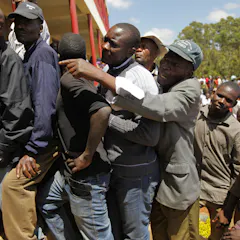
Kenya’s history of electoral problems is interwoven with a political drama which pits one dynasty against another in a rivalry that goes back more than 50 years.
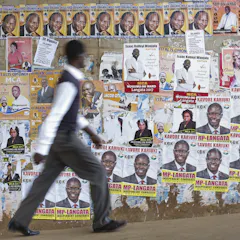
The two main candidates in Kenya’s election are incumbent Uhuru Kenyatta and the opposition’s Raila Odinga. Polls have them neck-and-neck. Here’s what you need to know about the key issues.

Integration within the East African Community has been sticky. The fact that Kenya’s main political parties haven’t spelled out their policies on the community in their manifestos is a worry.
Top contributors
-

Professor of Democracy, University of Birmingham
-
PhD Candidate, Department of Political Science and Public Administration, University of Nairobi
-
Professor of Comparative Politics, University of Warwick
-
Lecturer, School of Journalism, University of Nairobi
-
Researcher, African and African Diaspora Studies, National School of Anthropology and History
-
Professor of Media Industries, University of Nottingham
-
Professor of History, Durham University
-
PhD Candidate in Political Economy, SMC University
-
Research Professor, Institute for Development Studies (IDS), University of Nairobi
-
Postdoctoral Researcher, Faculty of Law, University of Oxford
-
Associate Professor of Political Science, University of California, Riverside
-
Associate Professor, Political Science, College of the Holy Cross
-
Associate Professor of International Studies, University of Nottingham
-
Lecturer, Information Technology and the Law, Daystar University
-
Postdoctoral Research Associate, University of Cambridge