
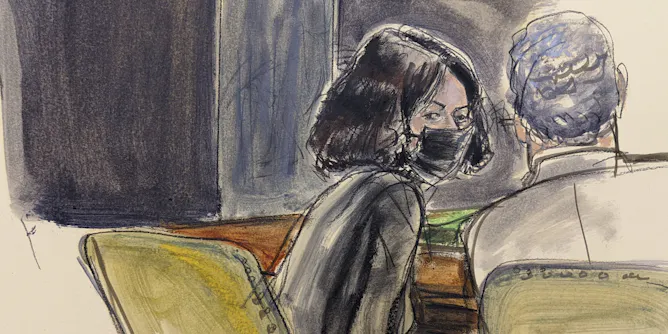
After five days of deliberations, a jury found Ghislaine Maxwell guilty of five counts relating to the sexual abuse of girls.
Articles on Juries
Displaying 21 - 38 of 38 articles
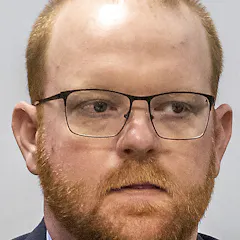
Experts help explain the context around the murder trial and convictions of Greg McMichael, Travis McMichael and William Bryan.

There’s a divergence in how a trial is conducted, what rules govern it – and the larger issue of racial justice. That divergence affects the legitimacy of any verdict.

Cognitive scientists are investigating the ways relative factors like new options and the order they’re presented influence your choices and beliefs.
Victoria and the ACT just joined other states in implementing judge-alone trials during the pandemic. Such a significant change deserves much more public scrutiny than it has received.
The appeal may lead to a loss of public confidence in the jury system, but that’s how the justice process works.

When prosecutors introduce lyrics, they’re asking juries to suspend the distinction between author and narrator, reality and fiction, and to read them as literal confessions of guilt.
To address low conviction rates in child sex abuse cases, reforms were made to allow juries to hear about the past sex crimes of defendants. Not all lawyers agree the changes are good.

Does a fair trial exist in the social media age? The Tasmanian Law Reform Institute has released recommendations around juries and their smart devices.

As the Harvey Weinstein trials start, a psychology scholar explains why jurors may be biased on the question of consent. While the situations examined in these studies are not equivalent to sexual assault, they illustrate a pervasive psychological bias.
Should all-white juries be permitted in death penalty cases involving black defendants?
In many places across the US, law prohibits people with felony convictions to serve on juries. Research puts the thinking behind these laws to the test.

Most people on juries assume suspects only confess when they are guilty, and the consequences can be disastrous.

Racial bias likely played a role in the Gerald Stanley case. This article explains how racial dynamics and process failures enabled systemic racism to play a part in Stanley’s acquittal.

The Canadian government’s criminal justice bill would abolish what are known as peremptory challenges. Here’s why that’s long overdue.

The principle argument as to why women should remove the niqab in court seems compelling, but it is based on flawed assumptions.

We live in a probabilistic world. The courts need to catch up – and start training juries in statistics.
Do women in the Oval Office or the courtroom make a genuine difference? Research from English juries suggest they do.
Top contributors
-

Lecturer in Psychology, Glasgow Caledonian University
-
Emeritus Professor in Law and Criminal Justice, Adelaide University
-
Chancellor's Professor, Psychology, Carleton University
-
Associate Professor of Domestic and Family Violence, Queensland Centre for Domestic and Family Violence Research, CQUniversity Australia
-
Associate Professor in Law and Criminal Justice, University of Birmingham
-
Professor of Liberal Arts, University of Richmond
-
Associate Professor of Quantitative Psychology, University of Montana
-
PhD Candidate, University of Glasgow; University of the West of Scotland
-
Senior Lecturer, Department of Modern Languages, University of Birmingham
-
Professor of Economics, University of Gothenburg
-
Program Convenor, Criminology, University of Newcastle
-
Professor of Philosophy, University of Connecticut
-
Associate Professor of Psychology, Vanderbilt University
-
Professor of Law, Harvard University
-
Associate professor, University of Glasgow