

The Supreme Court created a test 40 years ago to root out racial bias in jury selection. Here, a death penalty scholar explains why it’s not working.
Articles on Jury
Displaying 1 - 20 of 26 articles
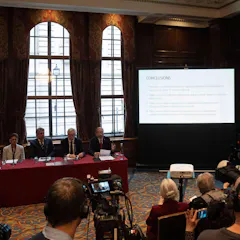
As an expert in both criminal and medical law, I am concerned with how prosecution teams gather expert evidence in these cases.

In the age of social media and evolving expert evidence, judge-only trials have become more popular. But there are simple things that can be done to improve and safeguard trials by jury.

In criminal trials, a majority of jurors make up their minds about a case after hearing the opening arguments from lawyers.
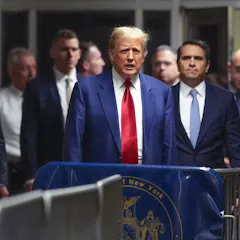
Despite several efforts to delay the case involving hush money payments to a porn star, Donald Trump becomes the first former US president to go on trial on criminal charges on April 15, 2024.

Educating mock jurors about what kinds of statements are appropriate − or not − led to more critical assessments of forensic testimony and improved the quality of their decisions.

Like all criminal defendants, Trump will enjoy the protection that a jury will offer from abuse by government prosecutors.

In the end, we must accept there are flaws in jury processes. But finding alternatives has proved difficult, hence the reluctance of governments to abandon the status quo.

The dangers of allowing extraneous “research” are twofold. First, such evidence is not subject to the rules of admissibility. Second, it isn’t subject to the rigours of cross-examination.
Finding out what goes on behind jury decisions and the biases that influence them is hugely important if the criminal justice system is to work properly.
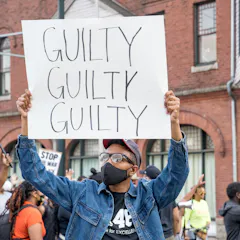
How does pretrial publicity affect jury verdicts? What kind of verdicts are made when the jury is racially diverse? An expert on juries answers questions raised in the wake of the Chauvin verdicts.
Cognitive scientists are investigating the ways relative factors like new options and the order they’re presented influence your choices and beliefs.

In March jury trials in England and Wales were suspended in response to COVID-19. Here’s how remote criminal trial might work – and what might not.
The appeal may lead to a loss of public confidence in the jury system, but that’s how the justice process works.
If existing trials are halted, it may not be as simple as picking up where they left off.

As the Harvey Weinstein trials start, a psychology scholar explains why jurors may be biased on the question of consent. While the situations examined in these studies are not equivalent to sexual assault, they illustrate a pervasive psychological bias.
A hung jury does not necessarily undermine a verdict in a subsequent trial – it more likely means some of the jurors from the first trial agreed with the final verdict.
Because judges have a secondary audience when issuing jury directions - appeal court judges - the language used has become too wordy and confusing. It needs to change.

A history of how jurors have faced trial themselves for getting it wrong, or slipping up in court.
The Canadian government’s criminal justice bill would abolish what are known as peremptory challenges. Here’s why that’s long overdue.
Top contributors
-

Emeritus Professor in Law and Criminal Justice, Adelaide University
-
Professor of Law, Harvard University
-
Assistant Professor, Northumbria University, Newcastle
-
Assistant Lecturer Forensic Psychology/PhD Candidate, Birmingham City University
-
Professor and Chair of Intercultural Communication, Heriot-Watt University
-
Associate Professor, School of Psychology, The University of Queensland
-
Psychology Lecturer, The Open University
-
Associate Professor, Monash University
-
Senior Cognitive Neuroscience Researcher, UCL
-
Professor of Organizational Behavior, Cornell University
-
Professor of Law, University of Toronto
-
Assistant Professor, Criminal Justice and Criminology, Texas State University
-
Foundation Professor of Law and Political Science, Arizona State University
-
Professor of Psychology, Florida International University
-
Assistant Professor of Psychology, Florida International University