

The Supreme Court created a test 40 years ago to root out racial bias in jury selection. Here, a death penalty scholar explains why it’s not working.
Articles on Jury trial
Displaying all articles
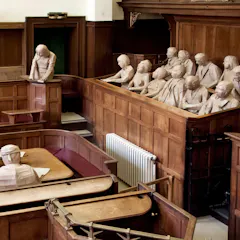
If a judge makes a decision on their own, only their own biases will influence the verdict. In a jury, consensus needs to be reached.

Empirical evidence from other jurisdictions shows that more diverse juries are fairer to black defendants.

The right to jury trial is a symbolic cornerstone of justice in England and Wales.

As an expert in both criminal and medical law, I am concerned with how prosecution teams gather expert evidence in these cases.
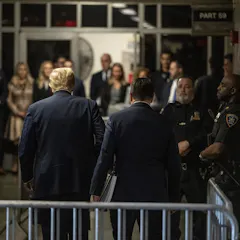
What I teach Harvard Law School students about the importance of opening arguments and how a majority of jurors make up their minds about a case after hearing them.

In criminal trials, a majority of jurors make up their minds about a case after hearing the opening arguments from lawyers.
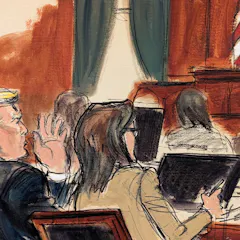
A retired federal judge sheds light on what’s going on in Judge Lewis Kaplan’s courtroom during the latest trial involving former President Donald Trump.
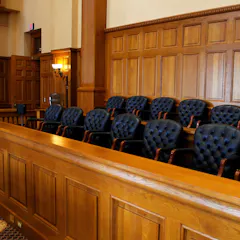
Trump’s lawyers, and those prosecuting him, aren’t the only ones grappling with the problem of finding unbiased jurors in the age of social media.
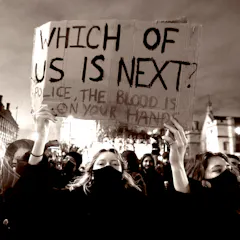
In England and Wales perpetrators of one of the gravest violent crimes, which carries a maximum penalty of life imprisonment, are very unlikely to receive any punishment at all

In the end, we must accept there are flaws in jury processes. But finding alternatives has proved difficult, hence the reluctance of governments to abandon the status quo.

The dangers of allowing extraneous “research” are twofold. First, such evidence is not subject to the rules of admissibility. Second, it isn’t subject to the rigours of cross-examination.
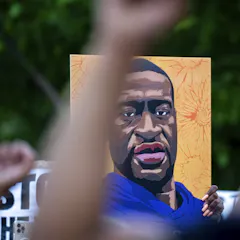
Video evidence can be powerful at a trial – but it does not always lead to a fair rendering of justice.

Cognitive scientists are investigating the ways relative factors like new options and the order they’re presented influence your choices and beliefs.

Victim impact statements give survivors a voice in the criminal justice process. But research shows their wrenching personal testimonies may not bring closure and can add racial bias into sentencing.
Top contributors
-

Emeritus Professor in Law and Criminal Justice, Adelaide University
-
Professor of Law, Harvard University
-
William Nelson Cromwell Professor of Jurisprudence and Political Science, Amherst College
-
Associate professor, University of Glasgow
-
PhD Candidate, University of Glasgow; University of the West of Scotland
-
Lecturer in Psychology, Glasgow Caledonian University
-
Associate Professor of Psychology, Vanderbilt University
-
Senior Lecturer in Criminology & Criminal Justice, Brunel University of London
-
Senior Lecturer in Police Studies, University of Portsmouth
-
Professor of Law, University of Dayton
-
Assistant Professor in Media Studies, University of Colorado Boulder
-
Associate Professor in Criminal Law and Criminal Justice, Adelaide University
-
Professor of Law, University of Liverpool
-
President, Dickinson College
-
Associate Professor in Law and Criminal Justice, University of Birmingham