
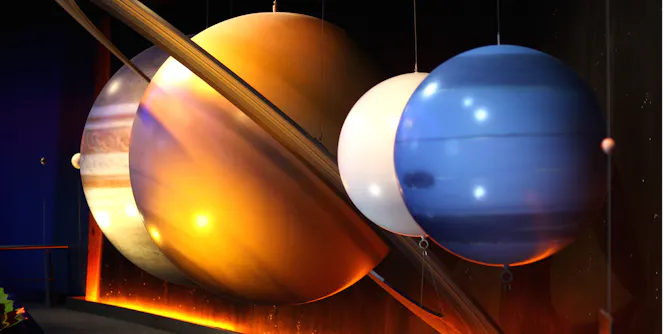
The five planets visible to the naked eye since ancient times are putting on a dazzling display this month, in a night-sky dance along with the Moon.
Articles on Jupiter
Displaying 41 - 60 of 80 articles
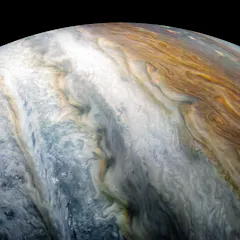
Jupiter’s bands are one of its most striking features – and can be seen from Earth – but they only go so deep within the giant planet. Now scientists think they know why.
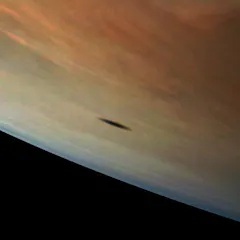
Jupiter now has at least 79 moons, the most for any known planet. But where did these newly discovered moons come from?
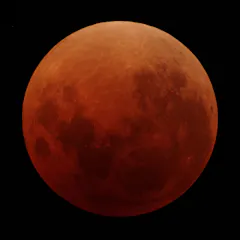
All five five planets visible to the naked-eye are on show in the night skies over Australia, and a Blood Moon on the way too.
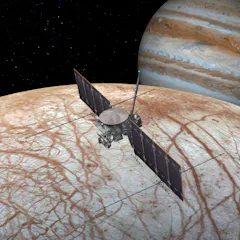
We could find evidence of life on Europa within a couple of decades.
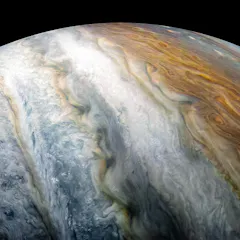
Now’s a great time to see Jupiter as it’s about to be the closest to Earth for some time. Time too to catch up with the latest on the Juno mission, exploring the largest planet in our Solar System.
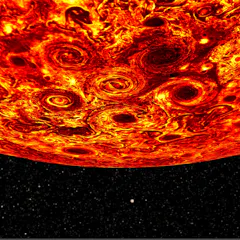
Surprising new results from the Juno mission may us help work out what’s going on at Saturn and other gas giants, too.
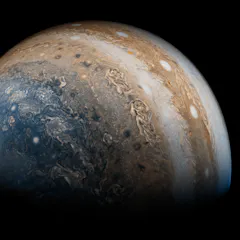
New experimental results on methane may help us to uncover whether Uranus really is the coldest planet.
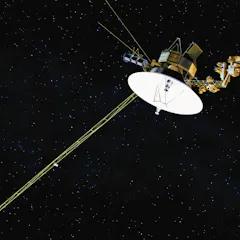
The Voyager space probes sent back some amazing images of the planets in the outer Solar System, and they’re still talking to Earth every day via Australia’s tracking station.
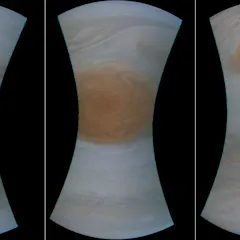
The images are in from the Juno probe’s closest flyby so far of Jupiter’s Great Red Spot. Citizen scientists are now getting involved in processing those images.
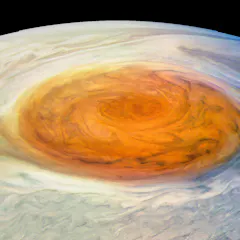
Juno has flown closer to the solar system’s most famous storm than any other spacecraft to take the most detailed images to date. They may help scientists reveal some of the spot’s best-kept secrets.
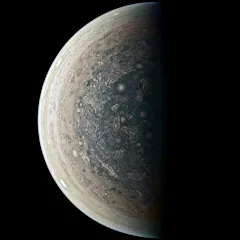
We may need to re-think our models of Jupiter’s formation thanks to the first results from Juno probe orbiting the planet, and new observations from Earth.
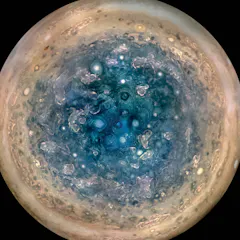
Measurements suggest Jupiter’s core may be fluffy rather than dense and that its magnetic field is much stronger than previously thought.
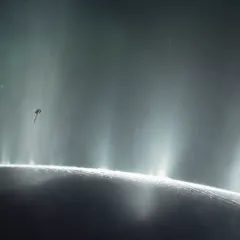
Earth is a relatively dry planet compared to some of the other ocean worlds in our Solar system. Life needs water so what about life on these other places?
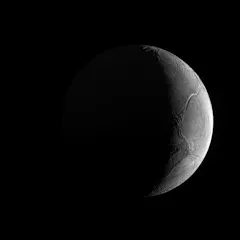
There has been much excitement this week about the possibility of water – and life – on some newly discovered exoplanets. But we can look closer to home for evidence of ET.

Several of the newly-discovered exoplanets orbiting a small star appear to be locked in an intricate dance that hints at how such planetary systems can form.

From the discovery of gravitational waves, to the Pokémon Go phenomenon to the Census debacle, it’s been a big year in science and technology.
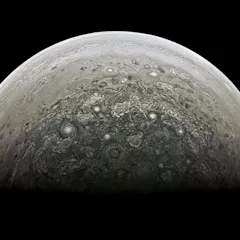
NASA’s Juno spacecraft has faced a series of challenges during its first 150 days.
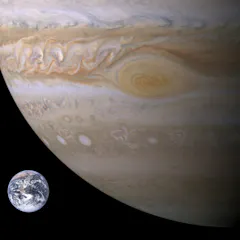
New research solves enigma of strange hotspots in Jupiter’s atmosphere.
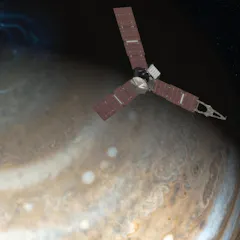
Juno’s visit to Jupiter promises to pick up on many of the unsolved mysteries that still remain in understanding of the Jovian system.
Top contributors
-

Associate Professor in Planetary Sciences, University of Leicester
-
Professor (Astrophysics), University of Southern Queensland
-
Senior Curator (Astronomy), Museums Victoria Research Institute; The University of Melbourne
-
Postdoctoral research associate, University of Oxford
-
Professor of Physics, Deputy Director (Solar System) at the Mullard Space Science Laboratory, UCL
-
Program Manager / Adjunct Research Fellow, Swinburne University of Technology
-
Professor of Planetary Geosciences, The Open University
-
Research Fellow/Reader in Planetary Physics, Lancaster University
-
Teaching Professor of Astronomy & Astrophysics, Penn State
-
Pro Vice-Chancellor Flagship Initiatives, Swinburne University of Technology
-
Senior Instrument Scientist, Australian Nuclear Science and Technology Organisation
-
Professor of Antarctic Science, University of Tasmania
-
Professor, National Astronomical Observatories, Chinese Academy of Sciences
-
Professor of Planetary Plasma Physics, University of Leicester
-
Professor of Astrophysics, University of Sydney