
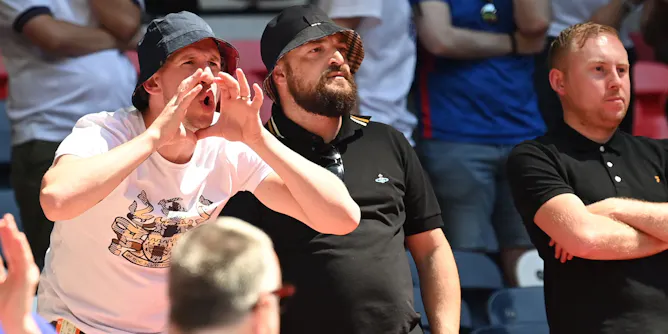
Over time, inappropriate behaviour at junior sports can become normalised. Leagues and clubs need to ensure this doesn’t happen.
Articles on Junior sport
Displaying all articles
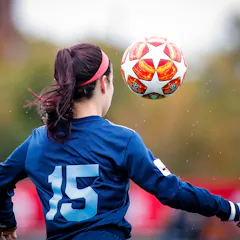
Girls who are 15 now will be about 21 when Brisbane 2032 rolls around. But many will have walked away from sports by then.

What’s the best way to handle things if your young athlete reaches the next level in their sporting endeavours?
Strong soccer countries invest heavily in elite player development, coach education and high performance infrastructure. Australia must do similarly.
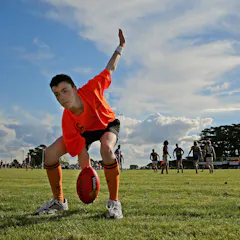
One senior community football umpire said: ‘I was threatened with my life this year and the league did nothing about it.’ Here’s what needs to change.
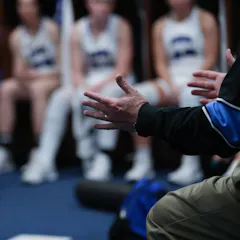
The line between abuse and acceptable behaviour is blurred in many sports, so parents and youth athletes must be vigilant.

Neck strengthening doesn’t require expensive equipment or extensive time commitments, but it can help reduce concussion risks.
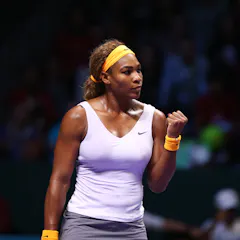
Experiencing different sports reduces the risk of overuse injuries and increase the likelihood of sporting excellence later in life.
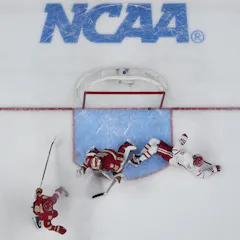
A new NCAA rule allowing CHL players to participate is set to have significant impacts on the Canadian hockey landscape.
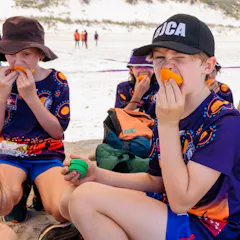
It’s not clear why oranges are such a staple during sports events but there are good reasons to eat them during competition.
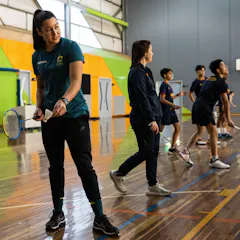
Many athletes dream of reaching the Olympics but very few reach it. What is the process for identifying and developing athletic talent?
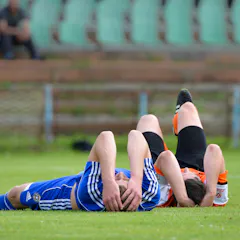
Many elite athletes are encouraged to have baseline concussion tests, so should children playing junior sports do the same?
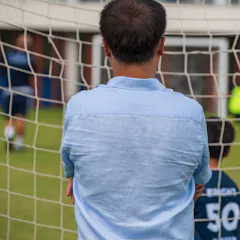
A lack of support from parents is a major reason why some junior coaches quit. So, what can coaches do to build better relationships with parents?
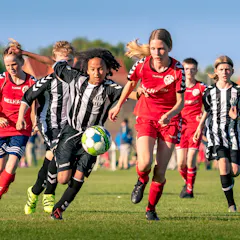
We found 81% of gender-diverse people reported experiencing violence from a coach.

New research has found that racial vilification is a common occurrence in junior sport in Australia – and is rarely punished when it happens.
Top contributors
-

Associate Professor of Skill Acquisition, The University of Queensland
-
Associate Professor, Sport Pedagogy and Coaching, The University of Queensland
-
Head, School of Social and Political Sciences and Professor of Sociology, The University of Melbourne
-
Associate professor, Victoria University
-
Associate professor, Monash University
-
Senior Lecturer/Head of Course (Undergraduate Psychology), Research Fellow, Manna Institute, CQUniversity Australia
-
Associate Professor Mathematics, Acting Head of the School of Education (Victoria) Australian Catholic University, Australian Catholic University
-
Professor, Institute for Health and Sport, Victoria University
-
Adjunct Research Fellow in Sports Coaching, The University of Queensland
-
Lecturer in Health and Physical Education, University of Tasmania
-
Senior Lecturer in Health Sciences and Nutrition, University of Tasmania
-
Senior Lecturer in Health and Physical Education, University of Tasmania
-
Associate Professor of Education, Charles Sturt University
-
Assistant Professor, Sport Management, Brock University
-
Senior Research Fellow, The Perron Institute for Neurological and Translational Science, and Faculty of Health Sciences, Curtin University