
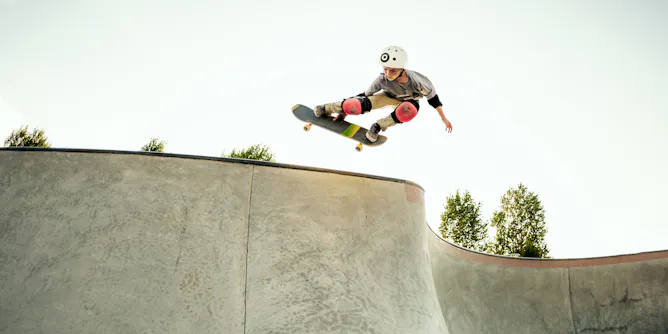
An expert in traumatic brain injuries explains why you need to protect your noggin.
Articles on Youth concussions
Displaying all articles
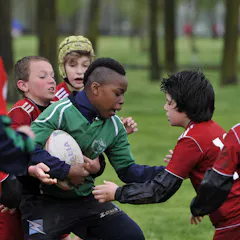
New research has backed the call to delay tackling in junior sports before the age of 12 due to the risk of sports-related concussions.

Neck strengthening doesn’t require expensive equipment or extensive time commitments, but it can help reduce concussion risks.
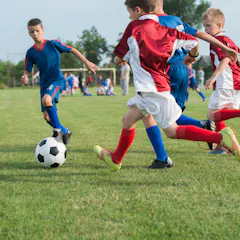
The largest study examining the long-term cognitive outcomes of sports-related concussions has delivered some surprising results.
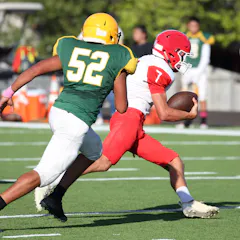
Young athletes may be uncertain if they are experiencing a concussion or might not think the injury is serious or bad enough to warrant telling someone.
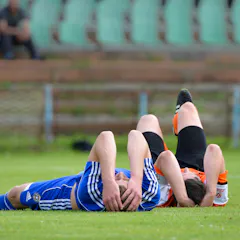
Many elite athletes are encouraged to have baseline concussion tests, so should children playing junior sports do the same?
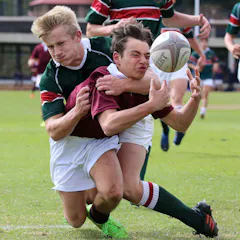
Young or old, men or women. All can be at risk of concussion while playing contact sport. Here’s what we know happens in the brain.
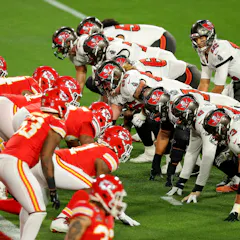
Millions of sports-related concussions occur in the US every year. Many of them happen to high school and college athletes.
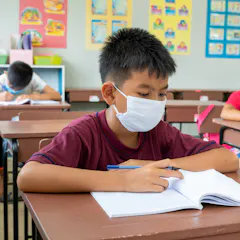
When a student suffers a concussion, their school typically offers certain accommodations – lighter workload, rest breaks, more time to complete tests. Do kids with long COVID need the same?
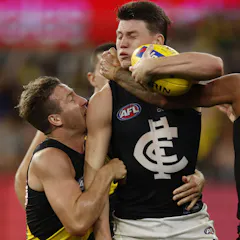
Rocked by recent events on the dangers of concussion at the elite level, the AFL has a perfect opportunity to adopt a wider lens and mobilise its network to keep footy safe, especially for the kids.
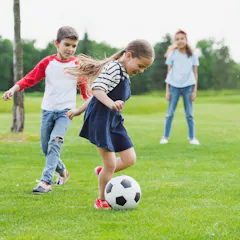
Many educators receive little or no training in how to spot brain injuries resulting from a concussion. There are ways to improve collaboration.

Cognitive behavioural therapy for insomnia provided remission of insomnia in 80 to 90 per cent of adolescents in a research trial, and improved their overall concussion recovery.
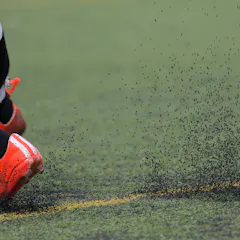
Artificial turf has become popular for kids’ sports as well as for professional players. The little black crumbs that help support the blades of fake grass may not be so harmless.
Top contributors
-

Senior Research Fellow, The Perron Institute for Neurological and Translational Science, and Faculty of Health Sciences, Curtin University
-
Professor, School Psychology, University of Dayton
-
Associate Professor of Psychology, University of Dayton
-
Professor of Kinesiology, Neurology, Physical Medicine and Rehabilitation, University of Michigan
-
Assistant Professor, Faculty of Law, Bond University
-
Professor and Chair, School of Kinesiology and Health Science, York University, Canada
-
Associate Professor, Canada Research Chair in Mental Health and Intersectionality, University of British Columbia
-
Assistant Professor, Department of Recreation and Leisure Studies, University of Waterloo
-
Associate professor, School of Health Studies, Western University
-
Professor of Sport Management, Western University
-
Adjunct Professor (Psychology) and Pediatric Neuropsychologist, University of Calgary
-
Conjoint Lecturer, UNSW
-
Professor of Sport & Exercise Science, University of Southern Queensland
-
Lecturer Strength and Conditioning, University of Southern Queensland
-
Lecturer, Sport Development and Exercise Science