

Incarcerated in rough barracks surrounded by barbed wire and armed soldiers, Japanese Americans made functional and beautiful items to ease their suffering.
Articles on Japanese Americans
Displaying all articles
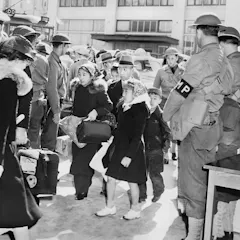
Asian Americans have drawn parallels between today’s attacks on Latinos and a historically exclusive immigration policy that favors some families over others.
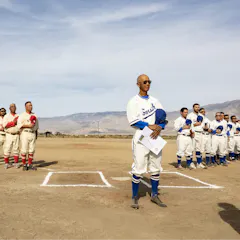
80 years after Japanese Americans were imprisoned at the Manzanar Relocation Center, descendants are returning to play the sport that gave prisoners hope and a sense of normalcy.

The US government locked up nearly 126,000 Japanese Americans from 1942 to 1945, but never kept comprehensive records of all the people subjected to this unjustified incarceration.

For all its praise, the film furthers the dominant narrative of the bombs as a morally fraught but necessary project, with American anxieties playing a starring role.
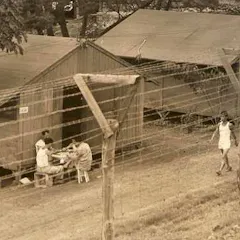
When US President Franklin D. Roosevelt signed Executive Order 9066, he paved the way for the incarceration of Japanese Americans on the mainland and Hawaii
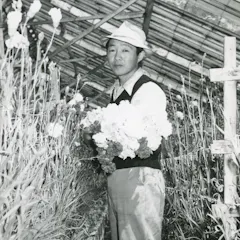
On Dec. 2, 1941, a publication date was set for Mori’s first book. Five days later, the Japanese bombed Pearl Harbor, upending the writer’s life and throwing the book’s publication into doubt.
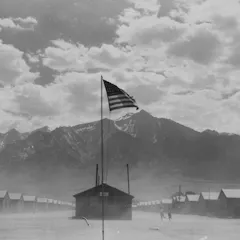
When US President Franklin D. Roosevelt signed Executive Order 9066, he caved to war hysteria and paved the way for the incarceration of Japanese Americans.
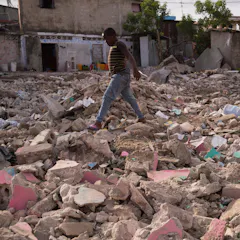
Plus, new research chronicling the experiences of Japanese Americans interned by the US government during the second world war. Listen to The Conversation Weekly podcast.

In the wake of 9/11, some called for rounding up whole groups of people viewed as potential threats to the nation. But Transportation Secretary Norman Mineta knew the U.S. had done that before.
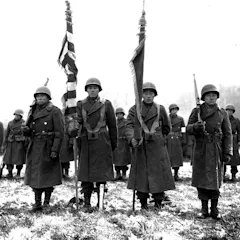
For AAPI History Month: Young Japanese American men who were incarcerated because they were presumed to be disloyal were considered loyal enough for compulsory military service.
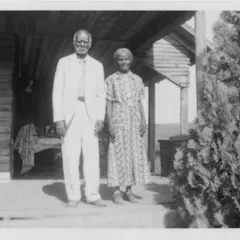
Old injustices don’t simply disappear with time – they tear a nation apart.
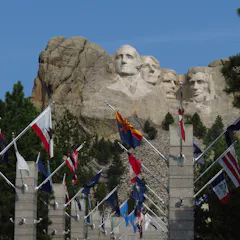
Patriotism means pride in country, but what are we proud of? A former national park ranger suggests that visiting historic sites can remind Americans of the heritage, good and bad, that they share.
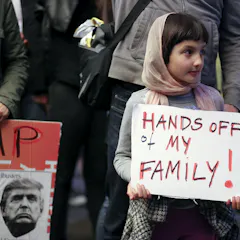
Children end up caught in the political crossfire.
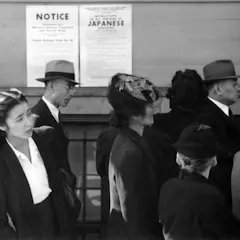
The idea of an American Muslim registry has gained traction in some circles, but the historical precedents are shaky at best.
If police officers are sent to museums to train observational skills, shouldn’t literary texts be used to teach empathy?
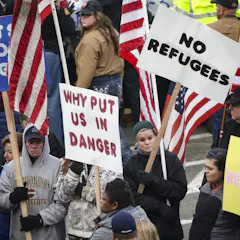
Many groups have been labeled ‘enemy’ in the American past. A literary scholar looks at the role literature and philosophy have played in dispelling fears and shifting public attitudes.
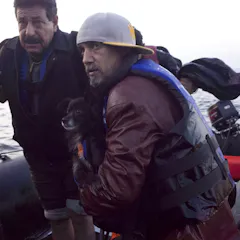
Afghan, Syrian and Eritrean refugees keep arriving on Europe’s shores, reputedly at an increasing rate. They attempt to traverse the Mediterranean by land and sea, presumably hastened by Putin’s bombing…
Top contributors
-

Adjunct Professor of History and Affiliated Faculty, USC Shinso Ito Center for Japanese Religions and Cultures, USC Dornsife College of Letters, Arts and Sciences
-
Professor of English, College of Liberal Arts Dean, Honors College, UMass Boston
-
Senior Research Fellow, University of Southampton
-
Professor of Political Science, Texas Tech University
-
Professor of Sociology, Brooklyn College
-
Assistant Professor of Gender, Sexuality, and Feminist Studies and Asian American Studies, Duke University
-
Professor of English, University of Idaho
-
Associate Professor and Archivist, Boise State University
-
Professor of History, Michigan State University
-
Professor of History and Environmental Studies, Bowdoin College
-
Professor of Public and International Affairs, former Director of the Center for Disaster Management, University of Pittsburgh
-
Alton Brooks Professor of Religion and Professor of American Studies & Ethnicity and East Asian Languages & Cultures, University of Southern California
-
Professor in The Division of Global Affairs and The Department of Political Science, Rutgers University - Newark
-
Tutor in International Relations and History, The University of Melbourne