

Incarcerated in rough barracks surrounded by barbed wire and armed soldiers, Japanese Americans made functional and beautiful items to ease their suffering.
Articles on Japanese internment camps
Displaying 1 - 20 of 25 articles
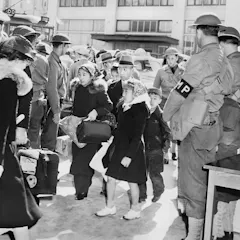
Asian Americans have drawn parallels between today’s attacks on Latinos and a historically exclusive immigration policy that favors some families over others.
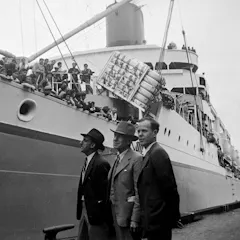
Canada’s expulsion of thousands of Japanese Canadians 80 years ago offers lessons in a world of sharpening borders, insecurity and talk of who does and does not belong in a national community.
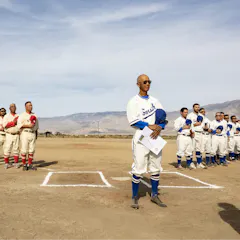
80 years after Japanese Americans were imprisoned at the Manzanar Relocation Center, descendants are returning to play the sport that gave prisoners hope and a sense of normalcy.

Americans of Japanese heritage have been protesting at recent Ice tactics.

Apologies can easily go awry if they’re not made in a certain way.
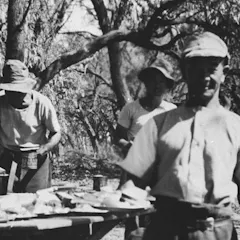
98% of Australia’s Japanese population were sent to internment camps during the second world war.

Political pressure is mounting on the federal government to launch a registry of foreign agents. But a history of racial discrimination is reason to be cautious.
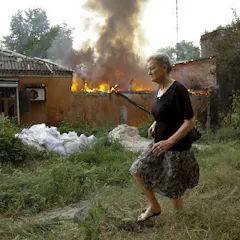
Russia and other countries and political regimes have a long history of forcing people to move, mostly for security and economic gains.
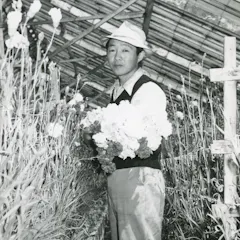
On Dec. 2, 1941, a publication date was set for Mori’s first book. Five days later, the Japanese bombed Pearl Harbor, upending the writer’s life and throwing the book’s publication into doubt.

In the wake of 9/11, some called for rounding up whole groups of people viewed as potential threats to the nation. But Transportation Secretary Norman Mineta knew the U.S. had done that before.
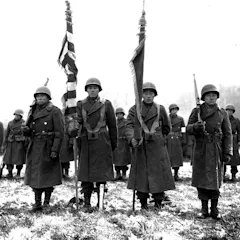
For AAPI History Month: Young Japanese American men who were incarcerated because they were presumed to be disloyal were considered loyal enough for compulsory military service.
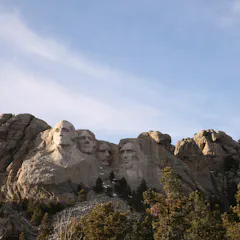
For some viewers, President Trump’s July 3 speech at Mount Rushmore represented love of country. Others saw it very differently.

Justice Neil Gorsuch joined the Supreme Court as a conservative. But his ruling in a major civil rights case is part of a pattern of justices setting aside ideology to address historic injustices.

Reflecting on the wartime treatment of two Japanese Australians (or Nikkei) raises the spectre of our racist past - and can prompt us to consider the vulnerabilities of Asian Australians today.
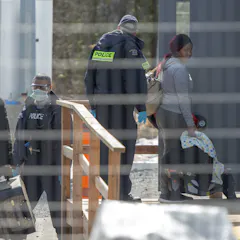
Canada has closed its borders to asylum-seekers and non-citizens because of the COVID-19 pandemic. Similar emergency measures over the years should teach us that now is not the time for nationalism.
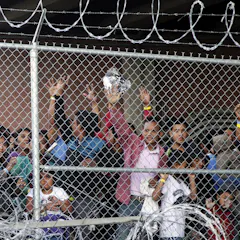
Concentration camps are by no means only synonymous with Nazi terror or totalitarianism. In fact, concentration camps have deep roots in the culture and politics of Anglo-American liberal democracies.
A new genre of video games lets players explore virtual environments that recreate actual places and real people’s lives and memories.
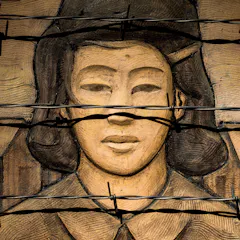
Social movement theory helps to explain why Japanese-Americans received reparations but the same will be much more challenging to provide for African-Americans.
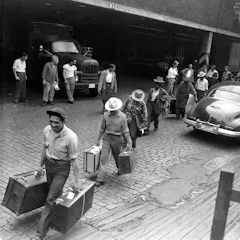
Trump has expanded and escalated the most punitive policies he inherited from his predecessors.
Top contributors
-

Adjunct Professor of History and Affiliated Faculty, USC Shinso Ito Center for Japanese Religions and Cultures, USC Dornsife College of Letters, Arts and Sciences
-
Professor, History and Director, Past Wrongs, Future Choices, University of Victoria
-
Professor of History, Director of Latin American Studies Program, Bowdoin College
-
Adjunct Lecturer, Creative Arts, Flinders University
-
Professor of Political Science, Anthropology, Public Policy and Law, USC Dornsife College of Letters, Arts and Sciences
-
Professor of Law, University of Alberta
-
Researcher, The University of Queensland
-
C. Michael Armstrong Professor of Applied Game Design, Miami University
-
Assistant Professor of Gender, Sexuality, and Feminist Studies and Asian American Studies, Duke University
-
Professor Emeritus, Department of Political Science, Wilfrid Laurier University
-
Associate Professor of History, Carleton University
-
Presidential Professor of Sociology and History, Graduate Center, City University of New York
-
Associate Professor and Archivist, Boise State University
-
Professor of Comparative Literature, Washington University in St. Louis
-
Professor of English, University of Idaho