

Some countries are calling for the elimination of a process known as “investor-state dispute settlement”.
Articles on ISDS
Displaying 1 - 20 of 35 articles
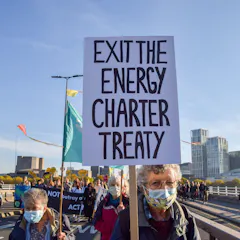
Kyla Tienhaara, an expert on investor state dispute settlement, talks to The Conversation Weekly about growing momentum against this secretive arbitration system.

To address the climate crisis, governments need to limit new fossil fuel developments. But foreign investors are often protected under trade and investment agreements.

Palmer sued Western Australia’s government in the High Court and lost. But an obscure clause in a little-known trade agreement is giving him a second chance
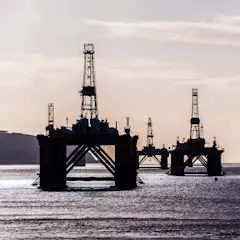
A transcript of an episode of The Conversation Weekly published on October 6, 2022.
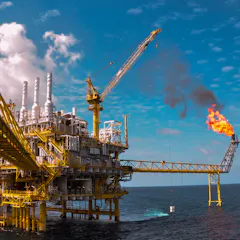
Experts are concerned that a legal mechanism called investor-state dispute settlement could affect countries’ moves to cut fossil fuel emissions. Listen to The Conversation Weekly.
Australia won’t release the text until after it is signed.
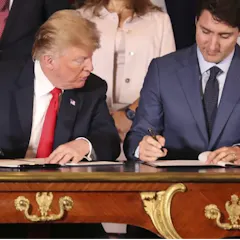
The Canada-U.S.-Mexico Free Trade Agreement, which came into force in July 2020, puts more emphasis on the environment and gives greater authority in Canada in the matter.

Foreign companies can get rights Australian companies can’t, so long as they are actually foreign.

Investor State Dispute Settlement Procedures open the prospect of legal cases it would cost Australia millions to defend.
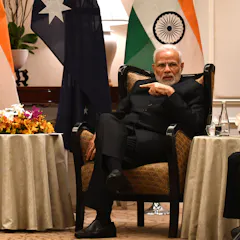
Australia was hoping to get broader access to Indian markets as part of a new trade deal that covers almost half of the world’s population.
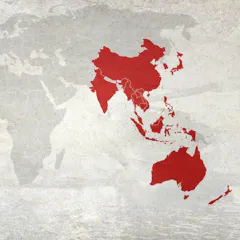
The biggest barrier to Australia and much of the rest of the world signing up to the world’s biggest trading bloc appears to have been removed.

Abolishing the secretive World Bank Tribunal known as the ISDS won’t solve all of the problems of global economic governance. But it seems a very good place to start.
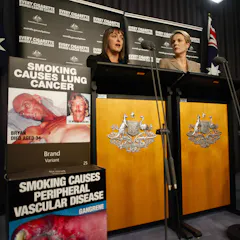
Australia comprehensively defeated the tobacco giant, but is left with a multi million dollar bill.
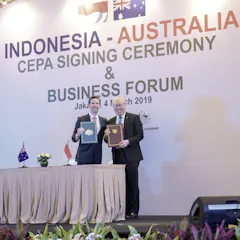
No commitments on environmental standards, but foreign corporations will shore up their rights to sue the Australian and Indonesian governments.

Three important aspects of international trade deals will limit the UK’s democratic control over trade.

The new TPP means fewer barriers for Australian exports, but there a number of loose ends – not least if the United States decides to rejoin.

Many provisions in the Trans-Pacific Partnership have been suspended after the United States pulled out. But there’s still much to debate about the regional free trade agreement.

Before CETA fully comes into effect, it must be ratified by each EU member state. Greece might have cause to stop it.
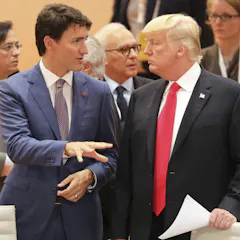
The US wants rid of NAFTA’s dispute settlement mechanism but for Canada it’s a red line issue.
Top contributors
-

Honorary research associate, University of Sydney
-
Canada Research Chair in Economy and Environment, Queen's University, Ontario
-
Host, The Conversation Weekly Podcast, The Conversation
-
Senior Lecturer in Law, University of Westminster
-
Lecturer in Law, Curtin University
-
Professor of Public Health, La Trobe University
-
PhD Candidate, School of Law, University of Nottingham
-
Associate Science Editor & Co-Host of The Conversation Weekly Podcast, The Conversation
-
Professor of Mathematics, California State University, Northridge
-
Professor of Comparative and Transnational Law, University of Sydney; University of Tokyo
-
Professor in International Commercial Law, SOAS, University of London
-
Fellow, Australian National University
-
School of Social Sciences, Monash University
-
Professor in International Relations / International Political Economy, UNSW
-
Senior Lecturer in HRM & Organisational Behaviour, University of Staffordshire