
NAFTA renegotiations may see provisions from the Trans-Pacific Partnership revive like zombies. We must remember their failures - on income inequality, labour and environmental protection.
Articles on ISDS
Displaying 21 - 35 of 35 articles

It’s likely that a future UK-EU trade deal will be subject to approval by all EU member states and their sub-national parliaments.
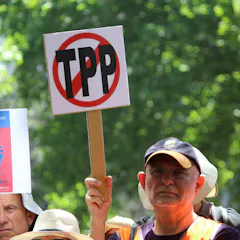
The TPP can’t go ahead in any form, so its time the Australian government lets it go.
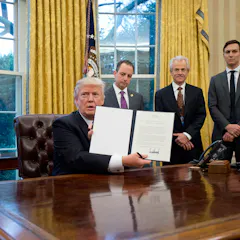
Trump formally pulled out of the Trans-Pacific Partnership and signaled his intention to begin renegotiating NAFTA. Here’s some context.
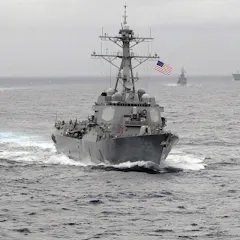
The main arguments in favor of the TPP were economic. But there’s another reason the Trump administration should rethink its promise to nix it: Its demise will weaken US national security.
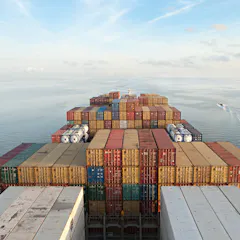
A landmark trade deal between the US and Europe has been left floundering. So what has killed progress?
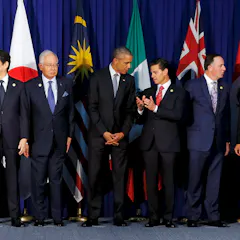
Countries in the Trans-Pacific Partnership signed the deal earlier this month, but changes can still be made to improve the mechanism that allows investors to sue states.

Australia’s plain packaging win over Philip Morris will kill the ISDS bogeyman.
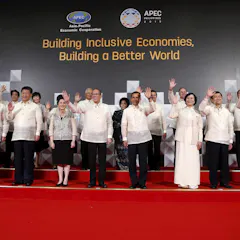
Opposition against Investor-State Dispute Settlement clauses seems likely to fall away as Asian economies flock to the TPP.

The experience of Canada, which agreed to an ISDS clause in its North American Free Trade agreement, should give pause to Australia.
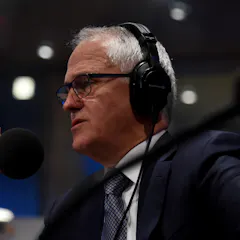
The Trans-Pacific Partnership may not be a done deal, but Australia cannot avoid the realities of the cut-throat business of international capital, trade and investment.
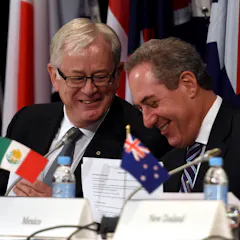
What can Australia expect from the Trans-Pacific Partnership? We asked experts about to nominate some winners and losers.

Despite arguments that a controversial clause in the Transpacific Partnership will not affect sovereignty, governments would be foolish to agreeing to it.

The latest part of the TPP to be leaked is its investment chapter. And like almost everything we know about the secretive negotiations for the agreement, it provides plenty of cause for concern.
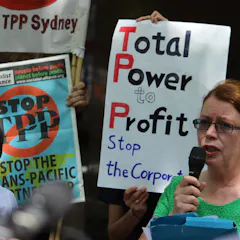
The secrecy around negotiations of the Transpacific Partnership have been painted as sinister. But could the reasons be about practicality?
Top contributors
-

Honorary research associate, University of Sydney
-
Canada Research Chair in Economy and Environment, Queen's University, Ontario
-
Host, The Conversation Weekly Podcast, The Conversation
-
Senior Lecturer in Law, University of Westminster
-
Lecturer in Law, Curtin University
-
Professor of Public Health, La Trobe University
-
PhD Candidate, School of Law, University of Nottingham
-
Associate Science Editor & Co-Host of The Conversation Weekly Podcast, The Conversation
-
Professor of Mathematics, California State University, Northridge
-
Professor of Comparative and Transnational Law, University of Sydney; University of Tokyo
-
Professor in International Commercial Law, SOAS, University of London
-
Fellow, Australian National University
-
School of Social Sciences, Monash University
-
Professor in International Relations / International Political Economy, UNSW
-
Senior Lecturer in HRM & Organisational Behaviour, University of Staffordshire