

Does a fair trial exist in the social media age? The Tasmanian Law Reform Institute has released recommendations around juries and their smart devices.
Articles on Internet
Displaying 261 - 280 of 728 articles

As the year winds down, we’ll get you up to speed. Plus, there’s no better way to kill a trend than to bring it up at the dinner table in front of your kids.

Bad customer service is actually good for companies’ bottom lines.

African countries are among the lowest internet speed but it has the most expensive communication and internet costs.
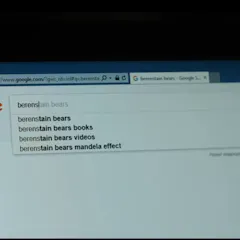
Real-life adherents to the Mandela Effect veer into conspiratorial thinking. But they do hit on an important truth: Our understanding of history is malleable.

Public and community-owned websites and apps that value morality over profit could revitalise online culture.

In 1999, ahead of World Trade Organisation protests, a group of Australian activists created the first open internet publishing platform. This technology is the basis of the internet we know today.

Can we make the web more inclusive or will our online reality always be a lawless wasteland of trolls and lies?

The father of the web wants to address issues including malicious content circulation, misinformation, and the polarisation of online debate. But the methods he is proposing aren’t great.

As smartphone uptake and connectivity grows in Africa, so does the often unhealthy trend of young people betting on sports using their phones.

Online videos of Hitler getting angry at things, based on a 2004 film scene, have found enduring appeal and recently featured in a Fair Work Commission case. Why the furor?

A breakdown of the infrastructure and operating costs, as well as the market impact of giving free full-fibre broadband to the whole country.

A recent federal court ruling lets big telecom companies censor the internet in ways that boost their own profits – but also allows local and state governments to outlaw censorship if they wish.

As new ways of working have spread throughout the workplace, a culture of lifelong learning is competing with the traditional practice of on-the-job training.

Some initiatives aim to develop more ethical and equitable models.

Many sites offer the ability to ‘opt out’ of targeted advertisements, but doing so isn’t easy. Simplifying and standardizing opt-outs would help improve privacy on the web.

Web browsers are introducing encryption technology that could stop governments spying on you – and catching criminals.
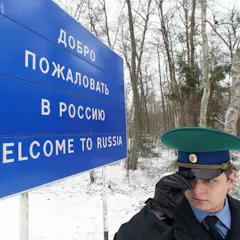
The Russian government would like to free itself from the global Internet. This push for “digital sovereignty” has raised technical scepticism and political concerns.

The first internet communication was underwhelming, thanks to a computer crash. But a lot has happened since then – including key decisions that helped build the internet of today.

A call for greater transparency.
Top contributors
-

Associate Professor, School of Engineering, RMIT University
-
Director of UWA Centre for Software Practice, The University of Western Australia
-
Professor of Cyber Security Practice, Edith Cowan University
-
Laureate Emeritus Professor, The University of Melbourne
-
Associate Professor in Telecommunications Engineering, Swinburne University of Technology
-
Researcher at Microsoft Research, Cambridge UK. Previously, The University of Queensland
-
Professor of Law, University of Newcastle
-
Professor and Neustadt Chair, Department of Agricultural Economics, Oklahoma State University
-
Professor of Electrical and Electronic Engineering and Deputy Dean Research at Faculty of Engineering and Information Technology, The University of Melbourne
-
Directeur de la Recherche et des Formations Doctorales, Directeur adjoint, Télécom SudParis – Institut Mines-Télécom
-
Lecturer and Teacher, Department of Politics and International Relations, Cardiff University
-
PhD; Lecturer in Computer Science and Engineering, UNSW
-
Associate Professor of Screen Media, Victoria University
-
Associate Professor, School of Law, University of Canberra
-
Adjunct Senior Lecturer, Applied Ethics and CyberSecurity, Griffith University