

While internet penetration is increasing in Nigeria, State Houses of Assembly have little or no online presence, this ought to change.
Articles on Internet
Displaying 221 - 240 of 728 articles

Wi-Fi has become a fundamental part of modern digital life, but its foundation is the same as the technology that allowed your great-grandparents to listen to their favorite radio programs.

Freedom of speech emerged as a concept after the invention of the printing press, and that’s worth revisiting in the context of social media and Trump’s presidency.

With the third national lockdown under way, how can E.M. Forster’s neglected masterpiece help us survive the next few months?

The vaccines’ cold storage requirements and shipment rules put small, rural communities at a disadvantage, but that’s only part of a long-running challenge.

New Zealand scores well against other countries — especially over its handling of the pandemic — but there are still areas that need improving.

Our study is the first to research the impact of online misinformation on biological invasions.

Remember what life was like before social media took over? Now that the election is over, it might be a good time to take back our lives.

The need for much-improved internet connectivity exists across Canada. Will the Ontario government’s recent announcement of $1 billion and the federal government’s announcement of the Universal Broadband Fund of $1.75 billion for improved broadband be enough to make a difference?
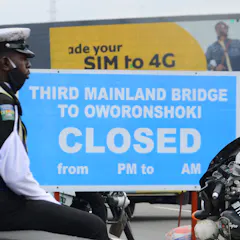
Has the digital revolution in Nigeria influenced crime-fighting and law enforcement?

Next year’s ‘spectrum auction’ will give telcos a chance to bid for access to high speed, millimetre-wave 5G. But big businesses are likely to be prioritised, not you.

Estonia has digitised 99% of its public services.

Millions of households are expected to gain access to upgraded internet connections, with speeds of up to one gigabit per second (if you’re willing to pay for the plan).

There could be diplomatic costs to the online UN general assembly.

Combating sexism and other forms of harassment in online videogames comes down to community standards.

A new standard for how videos are sent through the internet and read by your computer could make the digital world more inclusive, says media scholar Jason Schmitt.

Self-regulation by the technology industry has failed to keep people safe online. That’s a job for government.

Private mode browsing is a useful way to cover your online tracks. Just don’t read too much into the word ‘private.’
Research shows that governments, more often than not, shut down the internet to hide gross violations of human rights.

Hackers demonstrated they can take over Twitter’s technology infrastructure, a brazen move that hints at how such an attack could destabilize society.
Top contributors
-

Associate Professor, School of Engineering, RMIT University
-
Director of UWA Centre for Software Practice, The University of Western Australia
-
Professor of Cyber Security Practice, Edith Cowan University
-
Laureate Emeritus Professor, The University of Melbourne
-
Associate Professor in Telecommunications Engineering, Swinburne University of Technology
-
Researcher at Microsoft Research, Cambridge UK. Previously, The University of Queensland
-
Professor of Law, University of Newcastle
-
Professor and Neustadt Chair, Department of Agricultural Economics, Oklahoma State University
-
Professor of Electrical and Electronic Engineering and Deputy Dean Research at Faculty of Engineering and Information Technology, The University of Melbourne
-
Directeur de la Recherche et des Formations Doctorales, Directeur adjoint, Télécom SudParis – Institut Mines-Télécom
-
Lecturer and Teacher, Department of Politics and International Relations, Cardiff University
-
PhD; Lecturer in Computer Science and Engineering, UNSW
-
Associate Professor of Screen Media, Victoria University
-
Associate Professor, School of Law, University of Canberra
-
Adjunct Senior Lecturer, Applied Ethics and CyberSecurity, Griffith University