
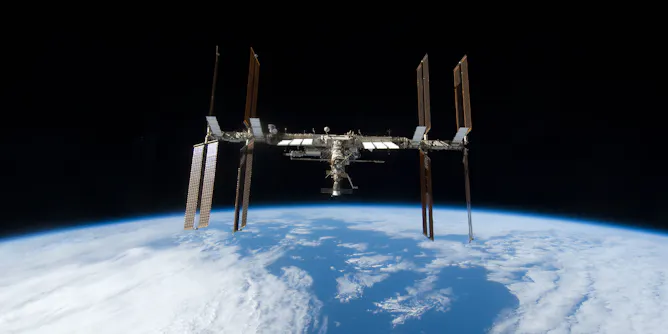
What happens to the International Space Station when tensions on Earth rise? A space policy expert explains how the ISS is run and how Russian aggression has threatened its operation in the past – and now.
Articles on International Space Station (ISS)
Displaying 41 - 60 of 137 articles
The plans to destroy a space station as large as the ISS have never been carried out before.
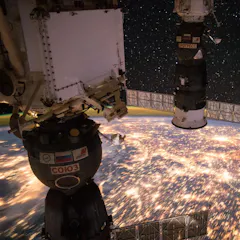
The students produced 33 experiment vials, which were boarded on the SpaceX Crew Dragon 24 and launched in December.
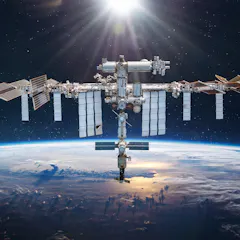
How will they bring the structure back safely? And where will the surviving components crash?
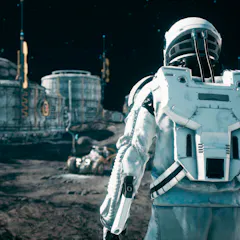
A space station on the Moon could be built out of lunar concrete.
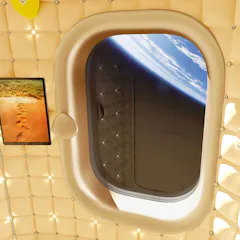
NASA is backing four commercial space station projects. The newcomers may find they have much to learn about how people really live in space.
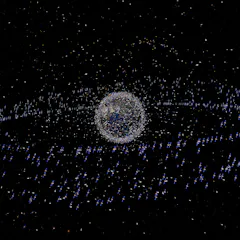
A Russian satellite has been destroyed in a missile strike, creating a vast amount of debris that joins the tens of thousands of pieces already in orbit around the Earth.
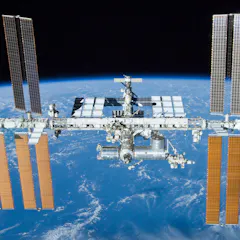
A close call for the International Space Station highlights the growing problem of space junk putting satellites at risk.
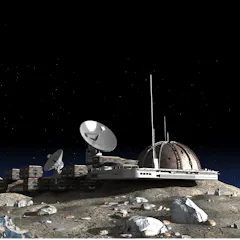
There are vast quantities of water ice on the moon that represent the potential for extraction and use in rocket fuel. But there are no practical reasons to mine this water.

As space exploration takes off, it will become increasingly important to study and understand sex, intimacy, desire and pleasure off-Earth.

China’s space programme is going from strength to strength.

In the coming decades, governments and private companies will set up permanent bases on the Moon and Mars. And at some point, the first galactic baby will be born.
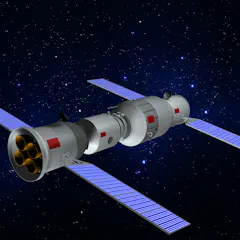
China’s leading role in the new space race could have a positive effect on geopolitics and science alike.
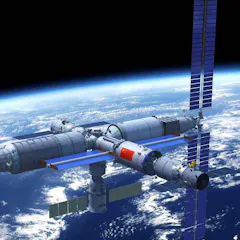
The Tiangong space station is set to become a second long-term habitat for humans in orbit around Earth.
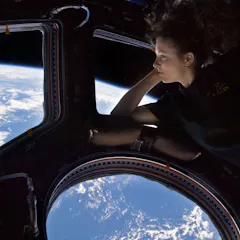
The first space tourist left Earth 20 years ago aboard a Russian rocket. Now, private companies like Jeff Bezos’ Blue Origin are offering trips to the stars for those who can pay.

The first space tourist left Earth 20 years ago aboard a Russian rocket. Now, private companies are on the cusp of offering trips off Earth for those who can pay.
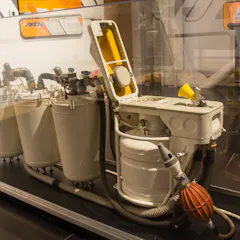
Going to the bathroom is much more complicated in space without any gravity. To solve this problem of tricky orbital potty breaks, NASA builds special toilets that work without gravity.
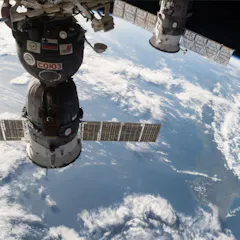
Over the coming decade, the arrival of constellations of small satellites will reshape the space industry. It constitutes a paradigm shift, particularly in terms of data gathering and processing.
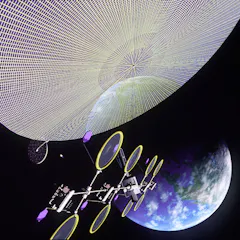
How solar power stations in orbit could become a reality in the coming decades.
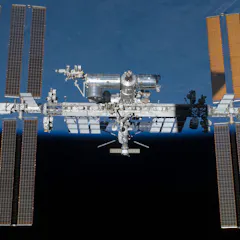
Humans have been living on the International Space Station for two full decades. So what comes next for this ailing technology, and what does it mean for future International ventures in space?
Top contributors
-

Professor of Strategy and Security Studies, Air University
-
Professor of Planetary and Space Sciences, The Open University
-
Senior Lecturer in Physics, Nottingham Trent University
-
Kevin Orrman-Rossiter is a Friend of The Conversation.
Sterrenkenner, History & Philosophy of Science, The University of Melbourne
-
Postdoctoral research associate, University of Oxford
-
Professor, Canada Research Chair in Space Robotics and Space Technology, Carleton University
-
Co-Director Space Technology and Industry Institute, Swinburne University of Technology
-
Associate Professor in Archaeology and Space Studies, Flinders University
-
Associate Professor in Astronomy, Monash University
-
Professor (Astrophysics), University of Southern Queensland
-
Assistant Professor of Space and International Relations, Johns Hopkins University
-
Professor of Art History, Archaeology and Space Studies, Chapman University
-
Professor of Aerospace Medicine and Rehabilitation, Northumbria University, Newcastle
-
PhD candidate in Computational Physics, University of Cambridge
-
Former Academic Research Fellow, Khalifa University