
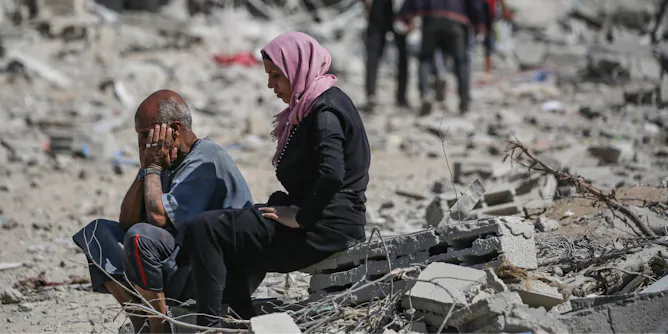
Horrific allegations of gang rape and reports of the targeting of reproductive facilities have alarmed the international community, but sadly, the strategy is not new.
Articles on International law
Displaying 61 - 80 of 532 articles

Conditional recognition of a Palestinian state by other countries is politically and legally questionable. A more straightforward statement from NZ would help.
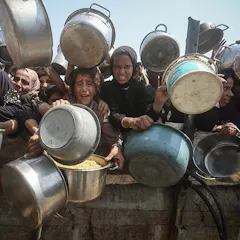
The wheels of international justice grind exceedingly slowly and will never be sufficient on their own to bring about lasting change.

As National Guard troops head to the streets of Washington, and likely civilian encounters, a new survey reveals service members’ understanding of the distinction between legal and illegal orders.

The cautious, conditional endorsements from Canada and the U.K. reflect the workings of a dated international system that governs the birth of states.

The UK has said it will recognise Palestine unless Israel agrees to a ceasefire in Gaza and humanitarian aid resumes. But this could set a dangerous legal precedent.

Countries have wide-ranging obligations to adequately tackle climate change, the International Court of Justice has found. Those who don’t could be legally liable.

The landmark ruling means Australia must reduce emissions in line with the best science, and regulate the fossil fuel industry to prevent further harm.

Advisory opinions are not legally binding, but from the world’s highest court they present an authoritative and persuasive position on states’ climate obligations.

Thirty years after Srebrenica, our legal definition of genocide is still far too rigid.
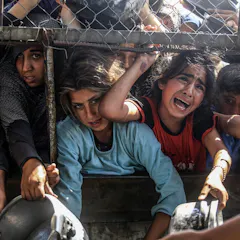
Israel’s plan to eventually move all Palestinians in Gaza into a camp in the south of the Strip is being widely denounced as tantamount to ethnic cleansing.

As Climate Change and Energy Minister Chris Bowen tours the Pacific this week, nations’ legal obligations to phase out fossil fuels are becoming undeniable.

After being attacked by both Israel and the US, Iran is likely to feel that it has no option to redouble its efforts to develop its own nuclear deterrent.

The US and Israel have adopted the most wide-ranging and robust interpretations of the right of self defence. Other nations may now follow their lead.
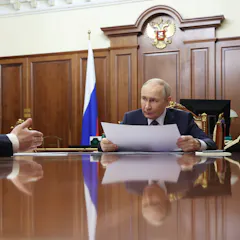
It’s unclear if the most senior Russian state officials can and will be able to be brought to trial for the crime of aggression.
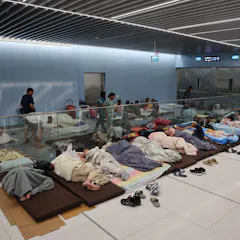
While the Australian government has frequently helped its citizens flee crises overseas, it is not legally obligated to do so. And repatriating citizens is complex.

On World Refugee Day, we call on the Canadian government to end the bureaucratic limbo causing family separation

This is not the first time Israel is advancing a broad interpretation of self-defence.

The world appears to be facing an unprecedented upending of the post-1945 international legal order.

This is a momentous development. But what are sanctions anyway, and what do they mean for Israel’s Itamar Ben-Gvir and Bezalel Smotrich?
Top contributors
-

Professor in Human Rights and International Law, University of Newcastle
-
Professor of International Law, Australian National University
-
Associate Professor (Law), Edith Cowan University
-
Course Co-ordinator, International Law Clinical Program, ANU College of Law, Australian National University
-
Associate Professor, The University of Western Australia
-
Associate Professor of Law, Member of Deakin Cyber and the Centre for Law as Protection, Deakin University, Deakin University
-
Senior Visiting Scholar with the Center for the Study of Genocide and Human Rights, Rutgers University
-
Adjunct Professor, Institute for Marine and Antarctic Studies, University of Tasmania
-
Challis Chair of International Law, Sydney Law School, University of Sydney
-
Professor of Law, University of Waikato
-
Associate Professor of Politics and Global Studies, Arizona State University
-
Scientia Professor and ARC Laureate Fellow, Kaldor Centre for International Refugee Law, UNSW
-
Professor of Law and International Peace Studies, University of Notre Dame
-
Associate Professor, Deakin Law School, Deakin University
-
Adjunct Professor in Law, The University of Western Australia