
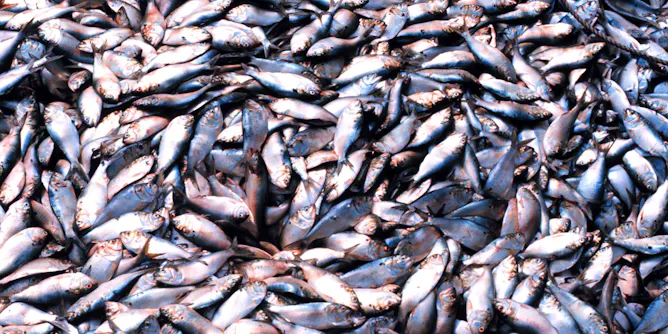
The world has global authorities for trade and security, but not for threats to the environment. It’s time the natural world got its own version of the World Trade Organisation or UN Security Council.
Articles on International law
Displaying 381 - 400 of 532 articles
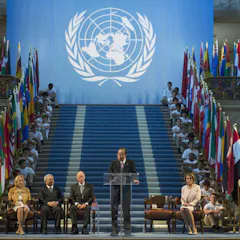
The ‘functional immunity’ granted to UN officials made good sense when the body was founded after World War II. But as its organisational functions have expanded, so has this immunity.
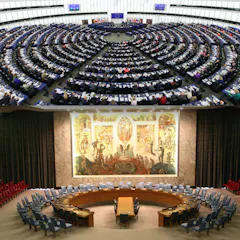
Few would advocate a withdrawal from the United Nations. But international law has a big impact on Britain too.

Machines that can target and kill people without human intervention or accountability pose a moral threat to the world.

Conservative MP David Davies has been telling anti-TTIP activists that a leave vote is how they can torpedo the deal.
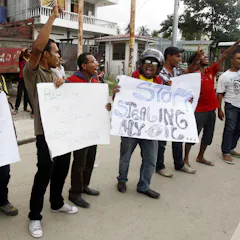
In terms of what is achievable, any foreign policy approach that does not account for strategic and historical realities is likely to fail.

A carbon tax on airline tickets might sound like a tricky sell, but many airlines already collect a similar levy to raise funds for developing world health initiatives.
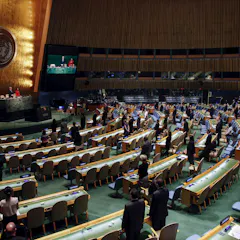
The urgent need to respond to ISIS has redefined the use of “self-defense” to include attacking a nonstate threat in another country. But what are the implications of this? change?
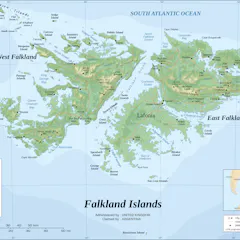
A UN committee has agreed with the science underpinning Falklands boundary claims, but without solving the sovereignty issue the dispute is no closer to a solution.

The next cancer breakthrough could be found in international waters – but who’s in charge of the high seas?
International investors will have to comply with new rules designed to stop tax avoidance by multinational companies.

A UN panel has called on the UK and Swedish governments to ensure Julian Assange’s human rights are respected and to compensate him for his time in ‘arbitrary’ detention.
Settlements are illegal on occupied territory. They undermine the widely acknowledged right of Palestine to statehood. Yet Israel violates international law with near impunity.
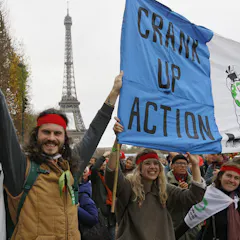
The Paris Agreement recognizes the reality of global environmental pacts: the private sector must lead transition to low-carbon technology and civil society must keep up the pressure to act.
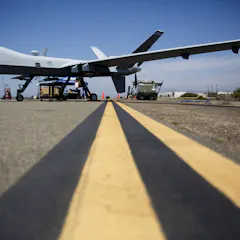
The British government’s position is that this was a legitimate act of self-defence in a war zone. But there are other issues to examine.
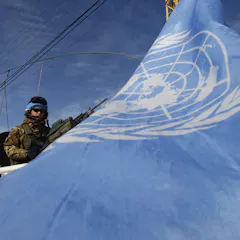
The UN has repeatedly failed to hold its personnel accountable for crimes committed in the field. But there are signs that could be changing at last.

The full text of the TPP trade deal is now public and offers some worrying lessons for how TTIP could turn out.
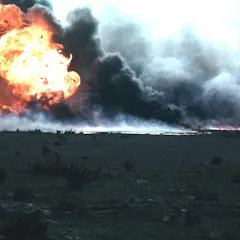
Acts perpetrated during the course of warfare have, through the ages, led to significant environmental destruction.
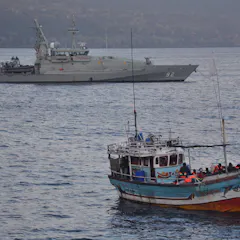
Amnesty International believes its evidence shows that Australia organised or directed the crew of an asylum seeker boat to commit the crime of people smuggling into Indonesia.
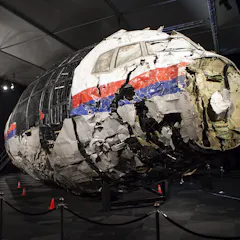
Aviation, which transformed travel and way of life in the 20th century, is being transformed in the 21st century and faces some difficult 21st-century problems.
Top contributors
-

Professor in Human Rights and International Law, University of Newcastle
-
Professor of International Law, Australian National University
-
Associate Professor (Law), Edith Cowan University
-
Course Co-ordinator, International Law Clinical Program, ANU College of Law, Australian National University
-
Associate Professor, The University of Western Australia
-
Associate Professor of Law, Member of Deakin Cyber and the Centre for Law as Protection, Deakin University, Deakin University
-
Senior Visiting Scholar with the Center for the Study of Genocide and Human Rights, Rutgers University
-
Adjunct Professor, Institute for Marine and Antarctic Studies, University of Tasmania
-
Challis Chair of International Law, Sydney Law School, University of Sydney
-
Professor of Law, University of Waikato
-
Associate Professor of Politics and Global Studies, Arizona State University
-
Scientia Professor and ARC Laureate Fellow, Kaldor Centre for International Refugee Law, UNSW
-
Professor of Law and International Peace Studies, University of Notre Dame
-
Associate Professor, Deakin Law School, Deakin University
-
Adjunct Professor in Law, The University of Western Australia