

An obscure Russian prince lays claim to being the first person to announce that humanity may destroy itself through its own technological advancement.
Articles on Interdisciplinarity
Displaying 301 - 320 of 652 articles
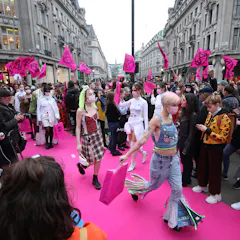
There is no solution to the unethical, unsustainable fashion industry – yet

Ultra-clear maps of individual toes were found in the brains of two foot painters – these are not found in typically developed humans.

The use of big data by companies, even when perfectly legal, can harm people.
The design of the global money game is the real antagonist in the fight against climate change. But the call to arms tends to be directed at the players who have had best luck with the dice.

Why do caseworkers and immigration judges not believe that asylum seekers are gay?

The only possible solution to the crisis, socialisation, is the one that the current government will not consider.

Some animals, like rats, learn linguistic patterns better than humans can.

From Strictly Come Dancing to the Tour de France ‘curses’ have rational explanations. Here, psychologists discuss why belief in them persists.

When asked to identify the most dangerous day of the year, we realised this research hadn’t been done.
Central planning may make an AI-supported comeback.

This selection of films shows the problem of extremism in its complexity, examining how real people can become radicalised.

From mobile phones to artificial wombs: what a breathtakingly visionary set of predictions from a century ago can teach us about our attempts to forecast the future today.

There are potential issues with any use of machine learning in policing. But if used in the right way, it could go a long way towards more effective policing.
We shouldn’t assume that discussion of bodily changes necessarily means progression towards a more equal society.
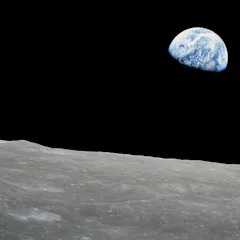
Realising the silence of outer space was what made us appreciate our precarious position down on this pale blue dot – so beginning our obsession with extinction.
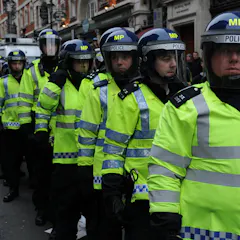
Police crackdown operations are likely to exacerbate the structural inequalities that can influence criminality in the first place.
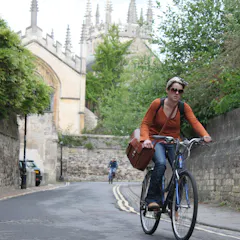
A substantial building programme is needed to rearrange our cities to benefit all types of journeys – not just commutes.

How and why animals develop as male or female is far more complex than we ever imagined.
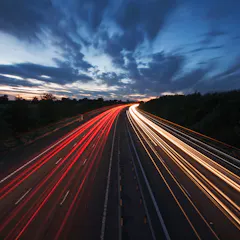
Those money-saving black boxes reveal a lot about the rules that govern our lives.
Top contributors
-

Principal Lecturer in Psychology, University of Brighton
-
Writer, University of Westminster
-
Professor of Natural Philosophy in the Department of Physics, University of York
-
Senior Lecturer in Psychology, Leeds Beckett University
-
Associate Professor in Marketing, Trinity College Dublin
-
Professor in Modern History and UKRI Future Leaders Fellow, King's College London
-
Senior Lecturer in Geography, University of Sheffield
-
Visiting Research Fellow in Philosophy, University of Hertfordshire
-
Assistant Director of the Global Systems Institute, University of Exeter
-
Lecturer in Peace Studies and International Development, University of Bradford
-
Professor of Ecology and Conservation, Newcastle University
-
Professor of Indian and Colonial History, University of Liverpool; Independent Social Research Foundation
-
Professor of Psychology, University of Leicester
-
Auguste Comte Chair in Social Epistemology, University of Warwick
-
Senior Lecturer in Global Health, The University of Western Australia