

What AI-narrated audiobooks tell us about reading and big tech.
Articles on Interdisciplinary thinking
Displaying 1 - 20 of 121 articles

Nights out dancing! How African and Caribbean music and dance have shaped British culture.

It’s quite common to see whole Indigenous families on bikes – including pets and tiny children.

Britain wanted to showcase its imperial power to the world, through official business in ancient palaces and socialising in the dazzling West End.

Liver King: scandal shows why more regulation is needed for TikTok and Instagram stars.

Theatre censorship laws stifled Black playwrights for more than 200 years – here’s what we found in the archive.

Razor wire, surveillance technologies and gated compounds – welcome to COP27.
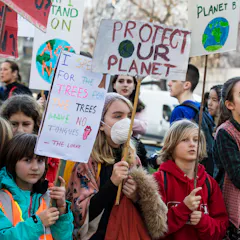
Given how much young people have achieved in the fight against climate crisis it’s crucial their voices are really heard at COP27.

Who will win the US midterms, the polls, or the gambling markets?

Some of the most innovative people in the world earn Nobel Prizes. Scholars of creativity identify what they have in common and what regular people can learn and emulate from their examples.

Talk of “breaking down the barriers” is all too often a cover for breaking down academic disciplines to create administrative flexibility.

Perhaps the best way to understand the reasons why people embark on these journeys is to put yourself in their shoes.

Anyone involved in the creation of a song is a songwriter.

What we can learn from squatters, climate protestors and desert hippies.

During pilgrimage walks, people often observe and appreciate simple things more keenly, feel the spiritual connection with their surroundings and gain new, enriching life perspectives.

The story can be traced back many centuries to a time of warfare between Christian European countries and the Muslim Ottoman Empire.
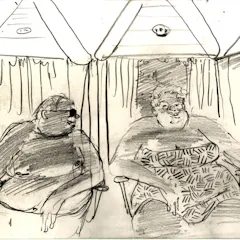
These ten drawing show the realities of life at the English seaside in 2021.

In my research, I’ve seen how people can feel a new sense of gratitude, meaning and purpose. They often take up new hobbies and careers. They become less materialistic and more altruistic.

Welcome to an entirely new understanding of the world.

More hours of teaching might benefit children’s recovery in the short term but put teachers under dangerous pressure.
Top contributors
-

Senior Lecturer in Psychology, Leeds Beckett University
-
Professor of Law, University College Cork; Independent Social Research Foundation
-
Professor of Technology Management and Circular Economy, Kingston University
-
Research Fellow in Applied Moral Philosophy, University of Oxford
-
Professor and Head of the Department of Psychology, University of Copenhagen
-
Principal Lecturer in Psychology, University of Brighton
-
Consultant Neonatologist and Professor of Ethics, University of Oxford
-
Chair of Public Health, University of Warwick
-
Mental Health Researcher, University of Southern Denmark
-
Senior Lecturer in Political Geography, Department of Geography, Newcastle University
-
Executive Director, Oxford Net Zero, University of Oxford
-
Professor of organisational theory & Director of the Centre for Social Ontology, Digital Chair., GEM; Independent Social Research Foundation
-
Professor of Physical Geography, University of Dundee
-
Visiting Fellow in Archaeology, Geography and Environmental Science, University of Reading
-
Associate Professor in Environmental and Spatial Equity, UCL