

The singer has now transcended celebrity.
Articles on Institutions
Displaying 1 - 20 of 22 articles

Writers have mined the region’s turbulent political history to explore how authoritarian rulers bend institutional leaders to their will.

African countries must work collectively to seize opportunities in new digital and green economies where the continent’s critical minerals are so important.

Setting up a unity government highlights that a positive turnaround is possible for South Africa, though it is far from guaranteed.

Rwanda’s preoccupation with security is at odds with its desire for unity.

The cost overruns of the ArriveCan app are exceptional, but the scandal is not unique in history. There are solutions available to prevent the excessive use of public funds.

Built in 1821 to house and provide productive employment for the New South Wales colony’s growing population of female convicts, the Parramatta Female Factory was also the site of countless horrors.

Children as young as ten don’t have access to Medicare if detained. And they’re dying of largely preventable diseases.

Why was Susanna Kaysen really hospitalised? Her memoir Girl, Interrupted turns 30 this year. It investigates whether she was ‘mad’, or medicalised for a ‘chaotic’ life that defied gender norms.

Ghana’s civil society has contributed to taming the power of a strong state.

Given the harmful consequences of trust erosion, leaders must consider how they can maintain trust. The two trust dimensions, knowledge and emotions, can provide a helpful guide.

In his new book, Nigeria Democracy Without Development: How To Fix It, international political economist Omano Edigheji explains why democracy has not led to development in Nigeria.

The development strategy based on foreign investment in natural resources projects has not delivered economic growth or security. What’s needed is an inclusive vision based on local realities.
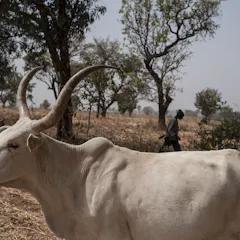
Institutional problems make it difficult to satisfy livestock and crop farmers’ interests, already in contest over agricultural resources.

Our government, suggest the authors, risks traumatizing its citizens with its failure to slow the spread of COVID-19.

A new survey looked at who young Russians trust.

Societies that are happier than others would be reflecting more confidence and trust in their institutions and economic systems.

The decolonisation debate in South Africa’s universities raises critical issues about the relationship between power, knowledge and learning.
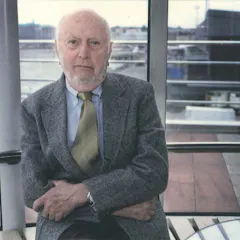
North’s work and life should be celebrated as it continues to inspire studies of economic history.

The circumstances may be unique, but the disgraced peer is part of a wider problem.
Top contributors
-

Philosopher, The University of Melbourne
-
Professor of Agricultural and Resource Economics, La Trobe University
-
Professor of Economics, School of Economics & Finance, Curtin University
-
Research Associate in Higher Education Policy and Planning, Ali Mazrui Centre for Higher Education Studies, University of Johannesburg
-
Sessional Lecturer, Curtin University
-
Professor of Agricultural and Regional Economics, Penn State
-
Anniversary Professor of Politics, University of York
-
RBC Professor in Responsible Organizations and Full Professor, Concordia University
-
Head, Justice Health Group, Curtin University
-
Professor of Psychology, University of Denver
-
Suicide Prevention Australia Postdoctoral Fellow, The University of Melbourne
-
Associate professor, Département des sciences comptables, Université du Québec à Montréal (UQAM)
-
Senior Researcher at the Centre for East European and International Studies and Associate Member of Nuffield College, University of Oxford
-
Principal Honorary Fellow, The University of Melbourne
-
Associate Professor of Economics, Simon Fraser University