

Despite the association of ‘Luddite’ with a naïve rejection of technology, the term and its origins are far richer and more complex than you might think.
Articles on Innovation
Displaying 101 - 120 of 670 articles

Countries around the world are racing to develop quantum technologies for computing, sensing and communication. Australia is trying not to get left behind.

Climate innovation prizes only make up a small amount of climate research funding but are very high-profile events.

To ensure the ‘complete transparency’ promised by Anthony Albanese, the new National Reconstruction Fund can learn from the Reserve Bank of Australia.

When OpenAI claims to be “developing technologies that empower everyone,” who is included in the term “everyone?” And in what context will this “power” be wielded?

AI was mentioned several times in the spring budget, but the science that might deliver the next generation of technologies was mostly absent.

Strong values and principles are key traits in effective business leaders – but they can come with tendencies to take fewer risks and be less proactive or innovative.

Canada’s innovation problem stems from an outdated research and development model. It is time to redesign the research department to include more social scientists and fewer technocrats.

Research about both social and technical aspects of work can guide critical thinking about when and how business leaders and MBA students might use generative AI.

To improve firm performance and promote fiscal economic growth, corporations should strengthen and implement an innovation strategy.

Polyurethane foams are the world’s sixth-most-produced plastic yet among the least recycled materials.

Humans often look to nature for the solutions to complex problems – here are five times where biological processes have inspired innovation.

As the year ends, how has New Zealand fared on global and domestic measurements, from social and economic freedoms to tackling poverty and homelessness?
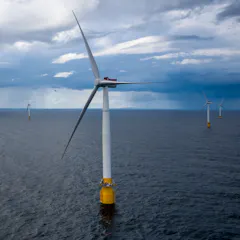
Some of the most powerful offshore wind is over water too deep for a standard wind turbine. Engineers found a way around the problem.
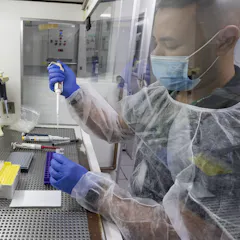
In open-source endowed research positions, professors release all of their intellectual property. Surveys of academics in the U.S. and Canada find most like the idea.

Graphene is superstrong and superconductive, and it has applications in everything from construction to electronics. But to date there have been almost no commercial uses of the material.

If post-secondary institutions want to continue to play a key role in innovation and entrepreneurship, they must transform for the better.

Internships and work-integrated learning for social sciences and humanities students can be part of how post-secondary institutions increase their capacities to contribute to social innovation.

African countries need to be more deliberate in developing space capabilities.

Some of the most innovative people in the world earn Nobel Prizes. Scholars of creativity identify what they have in common and what regular people can learn and emulate from their examples.
Top contributors
-

Emeritus Professor of Innovation, University of Technology Sydney
-
Director, Melbourne Institute of Applied Economic and Social Research, The University of Melbourne
-
Senior Lecturer and Researcher in Innovation and Digital Leadership, University of Brighton
-
Professor of Advanced Technology Transitions, Arizona State University
-
Innovator in Residence, University of Oxford and Emeritus Professor, School of Business, The University of Queensland
-
Professorial Fellow, University of Canberra
-
Professor of the Practice of International Development, Harvard Kennedy School
-
Professor and Founding Director of QUT Centre for the Digital Economy, Queensland University of Technology
-
Associate Professor of Public Policy and Women's Studies, University of Michigan
-
Visiting Professor, University of Technology Sydney
-
Directeur de l'agence Villes Innovations, Chercheur associé au laboratoire PACTE (Université de Grenoble), Co-fondateur du Laboratoire d’usages culture(s)-art-société (LUCAS), Université Grenoble Alpes (UGA)
-
Winthrop Professor, Entrepreneurship, Innovation, Marketing and Strategy, The University of Western Australia
-
Professor of Natural Philosophy in the Department of Physics, University of York
-
Founding Director, Institute for Sustainability, University of Surrey
-
Productivity Growth Program Director, Grattan Institute