

Businesses across the world are beginning to face the kind of complexity that entrepreneurs in African townships have navigated for years.
Articles on Informal economy
Displaying 1 - 20 of 55 articles
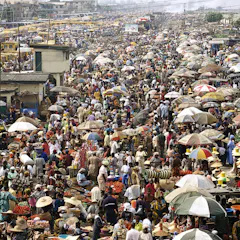
Floods regularly devastate Lagos’s informal workers, but traders and residents have built their own systems to adapt where the state has failed.

Africa does not lack household savings, but only a small share of these are placed in formal institutions.
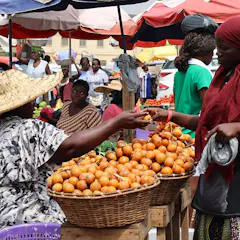
Supporting women in Ghana’s informal economy would strengthen local markets, reduce economic precarity and ensure more inclusive economic growth.
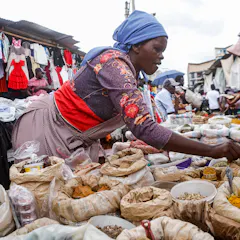
Technology can help countries with high levels of informal workers build stronger tax systems, if there are strong foundations and the right incentives.

Moto-taxi drivers remain informal workers in an unprotected labour market, while companies chase profits.
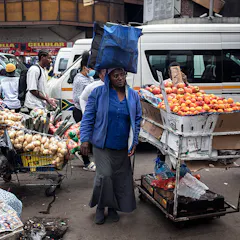
Informal trading is an integral part of the city of Johannesburg’s identity.

The government’s U-turn will disappoint many workers – and it’s not enough make life easier for employers.

Some small firms deliberately choose not to grow – and bring in more money for the country – because of the complexities.
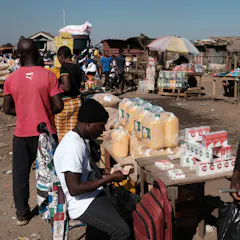
Economic crises since the 1990s led to a sharp rise in Zimbabwe’s informal economy, hence some call the country a nation of vendors.

The UK’s strict sanctions for welfare claimants can leave many women trapped in “off the books” work.
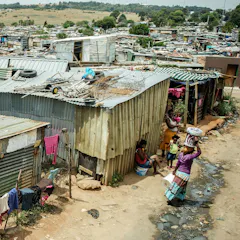
Rejecting precarious work signals dissatisfaction with a labour market where wage employment rarely offers security or social mobility.

Low rates of pay, often combined with buying their own equipment, can leave apprentices with no choice but to do cash-in-hand work.
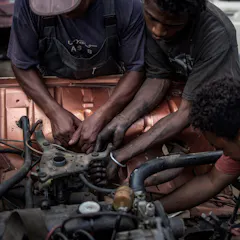
Identical informal businesses set up next to each other because they’ve created an informal welfare system.
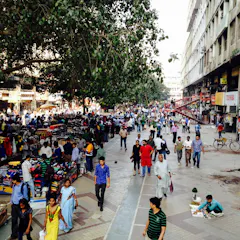
Contemporary characterisations of squatters and street vendors as a “nuisance” reproduces colonial urbanism ideas of hygiene and order.

China has a lot of vacant retail space, including many underused shopping malls. An urban policy scholar describes how the Chinese are rethinking what the mall is for.

Through acts of covert resistance, women have been driving change in family relationships, women’s sexuality and reproductive issues, and women’s cultural identities.
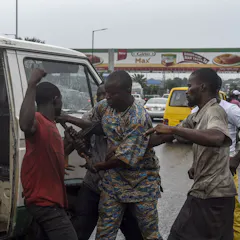
A new book focuses on the politics of road transport, the everyday corruption and the hard-living world of transport workers in Lagos, Nigeria.

Collectors of recyclable materials are omnipresent in developing countries such as Brazil, and their work has long been a critical part of waste management, disposal, and recycling.
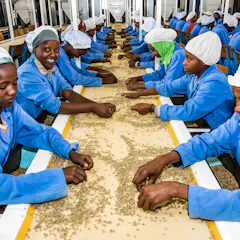
Asia’s much touted low-cost, export-oriented manufacturing model increases gender discrimination.
Top contributors
-

Director of Studies, Loughborough University
-
John Rennie Short is a Friend of The Conversation.
Professor Emeritus of Public Policy, University of Maryland, Baltimore County
-
Professor of Environmental Management & Sustainability, University of Nigeria
-
Visiting senior lecturer, University of the Witwatersrand
-
Professor of Entrepreneurship, Audencia
-
Professor of Strategy and International Management, University of Southampton
-
Associate Professor, Rhodes University
-
Senior Lecturer, Political Science, University of Nigeria
-
Professor of Political Science, Department of Political Science, University of Nigeria
-
Senior Research Fellow, International Food Policy Research Institute (IFPRI)
-
Distinguished Research Fellow, Human Sciences Research Council
-
Senior Research Fellow, Digital Media, Western Sydney University
-
Adjunct Fellow, University of Technology Sydney
-
Professor of Marketing, The University of Melbourne
-
Associate Professor, School of Archaeology and Anthropology, Australian National University