

The headlines paint a picture of a frightening flu season. While this season set in earlier than usual, it’s not necessarily more severe than previous years.
Articles on Influenza
Displaying 201 - 220 of 361 articles

Washing your hands helps protect against the flu. So it makes sense for governments to make hand sanitisers available in public places.
Headlines about this year’s flu season have been alarming. It’s true, we are having a serious season – but the data doesn’t indicate it’s the worst one we’ve ever had.

The flu vaccine is built on the strains expected to circulate in a given year. While the majority of strains circulating this year are matched in the vaccine, there’s one strain we didn’t predict.
The flu vaccine takes about two weeks to start working and only protects against influenza, so you can still get sick from other viruses after your flu shot.
How can a tiny flu virus make you feel so bad, all over? Here’s what’s behind your high temperature, muscle aches and other flu symptoms.
Children’s immune systems are more vulnerable to the flu; even kids who are otherwise healthy can develop complications. The best way to protect children is by having them vaccinated.
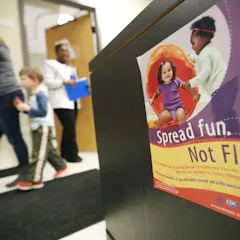
The 2018-2019 flu season was less deadly than the last. But the pattern of infection was unusual, thanks to the various strains circulating and the way flu shots work over time.
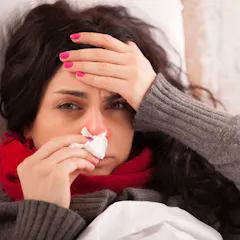
All too often, researchers around the world act in competition when trying to answer research questions in an emergency situation, such as outbreaks of the flu. The UK is trialling a new approach.
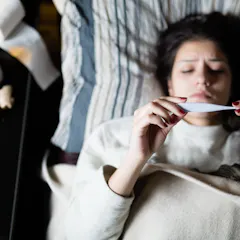
The 2018 flu season was mild, while 2017 was a particularly bad year. It’s impossible to predict what the 2019 flu season has in store, but we’ve seen more cases so far this year than usual.
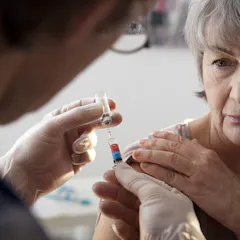
The adjuvanted flu vaccine is free for over-65s and offers better protection than the standard vaccine. Here’s what the research says.
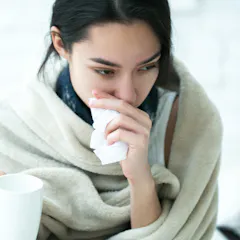
Protection wanes after four or five months, so for most people, it makes sense to get a flu shot in mid to late May or early June so you’re protected when the flu season peaks in August or September.
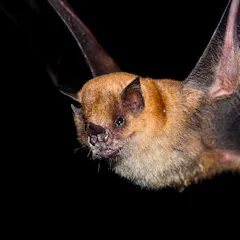
Scientists identify the risk of bat flu spreading to humans.

We commemorate the centenary of the end of WW1, but victims of a more deadly threat are rarely remembered. Let’s change that.
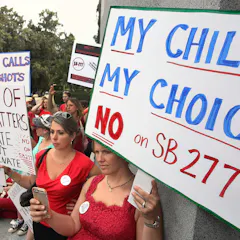
Vaccination rates for children in some parts of California are down, despite a law that narrowed exemptions. Here’s a look at why people refuse to listen to evidence when it comes to the flu vaccine.

Important research questions can almost always be answered better with a combination of methods – where both quantitive and qualitative data play a role.
Your risk of a heart attack increases 600 per cent within a week of catching the flu. The flu shot decreases that risk, whether you catch the flu or not.
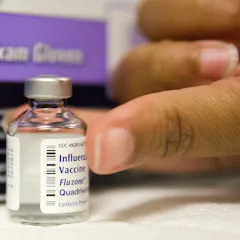
The flu shot is most effective if you receive it by the end of October. With 80,000 deaths from flu during last year’s flu season, a doctor explains why you should act now.
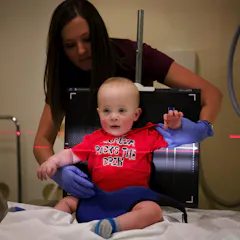
Regular hand washing is important not only to keep from getting the flu but also to prevent passing it to others, such as young children and seniors, who may be even more vulnerable. Here’s how.

Part of the problem was a mismatch between the influenza strains circulating and the vaccine available. Here’s how annual flu shots are formulated.
Top contributors
-

Professor of Infectious Diseases, Monash University
-
Professor of Global Biosecurity, NHMRC L3 Research Fellow, Head, Biosecurity Program, Kirby Institute, UNSW
-
Paediatrician, Infectious Diseases Physician and Clinical Microbiologist, The Kids Research Institute Australia, The University of Western Australia
-
Deputy Director, WHO Collaborating Centre for Reference and Research on Influenza
-
Hon Prof, Dept of Child & Adolescent Health, University of Sydney
-
Professor of Nursing, Purdue University
-
Lecturer, Biomedical and Life Sciences, Lancaster University
-
Medical Epidemiologist at the National Institute of Communicable Diseases and Lecturer at the School of Public Health, University of the Witwatersrand
-
Professor (Adjunct) in Infectious Diseases Epidemiology, Australian National University
-
Adjunct Associate Professor of Epidemiology, University of California, Los Angeles
-
Professor Emerita of Biology, Indiana University
-
Professor of Public Health, Bond University
-
Assistant Professor, Texas A&M University
-
Catedrático de Microbiología. Miembro de la Sociedad Española de Microbiología (SEM), Universidad de Navarra
-
Virologist, The University of Queensland