
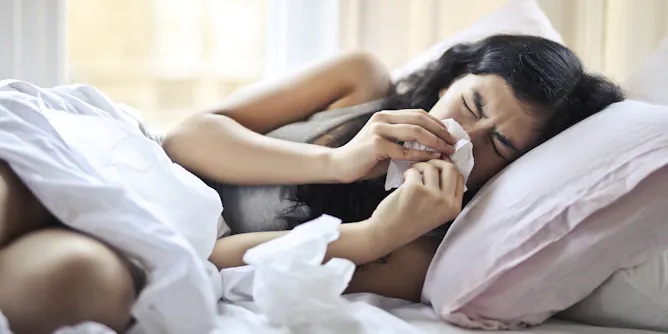
Resistant bacteria aren’t the only risk posed by overprescribing antibiotics. A more immediate risk is side-effects and reactions, which a new review shows are surprisingly frequent and often severe.
Articles on Infection
Displaying 81 - 100 of 153 articles

‘Normal’ body temperature has declined in urban, industrialized settings like the US and UK. Anthropologists find the trend extends to Indigenous people in the Bolivian Amazon – but why?

Widely adopted in the US when pandemic precautions kept people home, telehealth faces a challenge as insurance coverage changes, right when its popularity had surged.
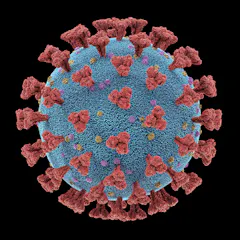
Scientists in the UK and Germany discovered a new doorway that the COVID-19 virus uses to infect human cells. This reveals new therapeutic possibilities for blocking the virus.
Over the approaching holidays, people around the world will want to travel to see friends and family. Getting tested for the coronavirus can make this safer, but testing alone is not a perfect answer.
New statistics show that people with dementia have been particularly vulnerable during the pandemic.

Patients suffering from severe COVID-19 may be experiencing a rogue antibody response similar to that seen in autoimmune diseases. The findings offer new approaches for COVID-19 therapy.

The 17th-century plague of Italy has lessons for today: Back then, too, people broke public health laws, but there were clergymen who intervened.

Our video shows aerosol emissions from singing a simple scale. No wonder singing in a choir can be risky.

The pandemic has exposed many of us to new statistical concepts, on the news, in everyday conversations and on social media. But how many are you getting wrong?
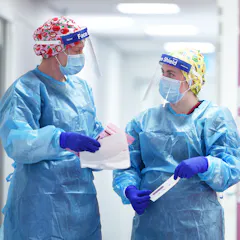
Some 70-80% of health-care workers testing positive to COVID-19 in Victoria’s second wave were infected at work, compared with 22% in the first wave.
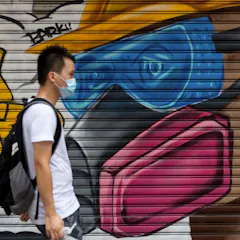
Reports describe a Hong Kong man who was reinfected with the coronavirus after returning from Europe. Does that mean he wasn’t immune after the first infection?
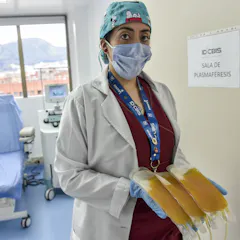
In the blood of COVID-19 survivors are antibodies that can defeat SARS-CoV-2. Researchers are testing whether these antibodies can be collected and injected into others to save them from the virus.

Aerosols of some FDA-approved food coloring could deactivate airborne viruses.
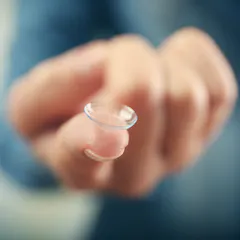
Simple hygiene goes a long way to avoid serious eye infections.

Research shows that children can become infected with the coronavirus and spread it to others. Though rare, some kids do become severely ill and a few have died from COVID-19.

It’s excellent this virus has been found early, but there is no evidence yet of human-to-human transmission.
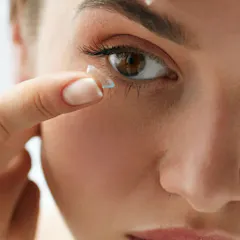
Contact lenses are safe to use during the pandemic as long as you follow strict hygiene recommendations, including frequent hand washing.
Pathogens typically face a trade-off between virulence and transmission. But that’s not the case with SARS-CoV-2.
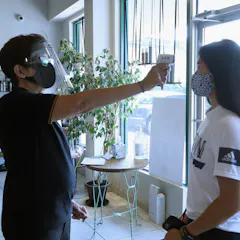
‘Normal’ body temperature varies from person to person by age, time of day, where it’s measured, and even menstrual cycle. External conditions also influence your thermometer reading.
Top contributors
-

Professor of Global Biosecurity, NHMRC L3 Research Fellow, Head, Biosecurity Program, Kirby Institute, UNSW
-
Professor of Emergency Medicine, University of New Mexico
-
Research Assistant Professor of Immunology, Tufts University
-
Professor of Nursing and Health Services Research, University of Newcastle
-
Professor of Microbiology and Immunology, Indiana University
-
Senior Lecturer, Infectious Diseases Epidemiology and Control, UNSW
-
Instructor of Human Immunology, Emory University
-
Clinical Assistant Professor of Immunology, University of South Carolina
-
Paediatrician and Infectious Diseases Specialist; Clinical Researcher, University of Sydney
-
Researcher, Griffith Institute for Drug Discovery, Griffith University
-
Adjunct Senior Research Fellow in Early Childhood Development, The University of Western Australia
-
Academic Specialist, Indigenous Eye Health Unit, The University of Melbourne
-
Academic Specialist, The University of Melbourne
-
Senior lecturer, UCL
-
Emeritus Fellow, University of Westminster