
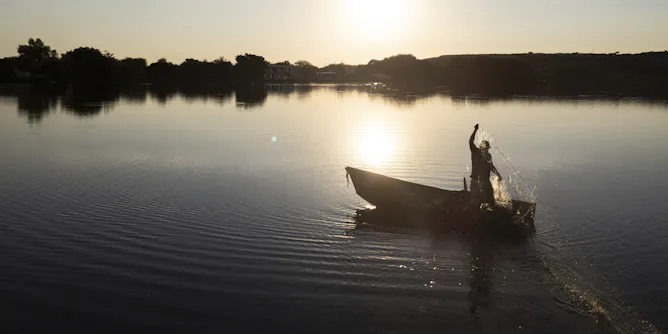
Nearly 30 per cent of the world’s population lives in coastal areas. A changing climate and biodiversity loss represent an unprecedented threat to these ecosystems.
Articles on Industrial fishing
Displaying all articles
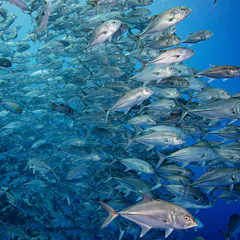
Satellite technology that can track ships even when they ‘go dark’ finds that those protected areas that fully ban industrial fishing are succeeding, even if others aren’t.
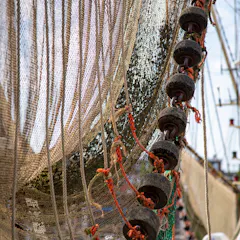
Industrial fishing has caused immense damage to ocean life, but given the right protection, the sea has miraculous powers of recovery.
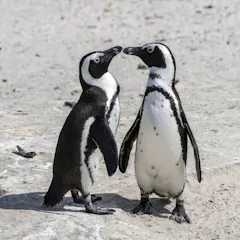
The African penguin has been declared critically endangered and could become extinct in the wild by 2035 unless commercial fishing in its breeding areas is limited.
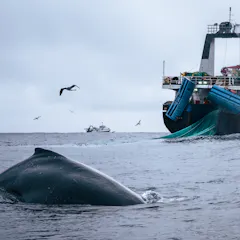
The Southern Ocean’s krill-rich waters attract multiple species of filter-feeding whales – and, increasingly, fishing boats.
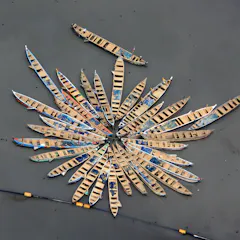
A new report estimates the impacts of big fishing businesses with a previous track record of unsustainability on the local economy, jobs and people’s welfare in five developing countries.
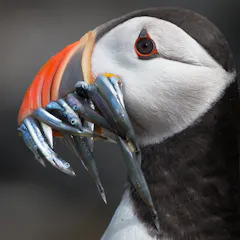
Many seabird colonies around UK coastlines struggle to breed because the sandeels they feed on have been overfished. The upcoming closure of sandeel fisheries will be good news for marine wildlife.
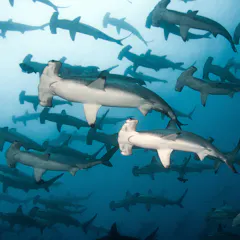
Scalloped hammerheads pose no risk to us – but we pose enormous risk to them. Our discovery of a large new aggregation gives us an opportunity to protect these animals.
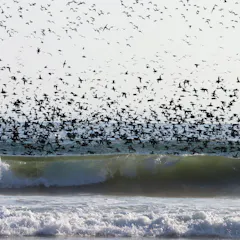
Seabirds journey vast distances across the Earth’s seascapes to find food and to breed. This means their biology, particularly their breeding success, can reveal what’s happening in our oceans.
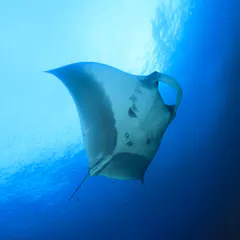
A high seas treaty could help rebuild populations – but time is running out.
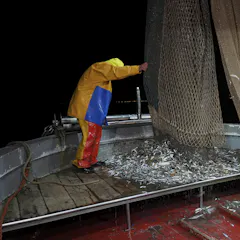
Everyone who cares about marine biodiversity, fish, fishers, coastal communities and fishing industry workers of today and tomorrow must push for the end of fisheries subsidies.
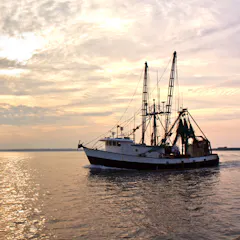
West Coast fisheries policy leaves the door open to speculative investors who see opportunity and can snap up fishing licences and quotas.
Top contributors
-

Director & Professor, Fisheries Economics Research Unit, University of British Columbia
-
Associate Professor, Department of Geography, Environment and Geomatics, University of Guelph
-
Wen Family Chair in Conservation, The University of Western Australia
-
Senior Research Associate in Marine Ecology, Lancaster University
-
Investigadora, Universidad de Deusto
-
Professor of Marine Ecology, University of Southampton
-
Affiliated Researcher, Fisheries Economics Research Unit, University of British Columbia
-
Adjunct associate, University of California, San Diego
-
Postdoctoral Research Fellow, The University of Western Australia
-
Postdoctoral Fellow, Chapman University
-
Research Scientist, Stanford University
-
Adjunct professor, Nelson Mandela University
-
Honorary Research Associate and Research Manager at SANCCOB, University of Cape Town
-
Professor emeritus, University of Bristol
-
Research Associate, Nelson Mandela University