
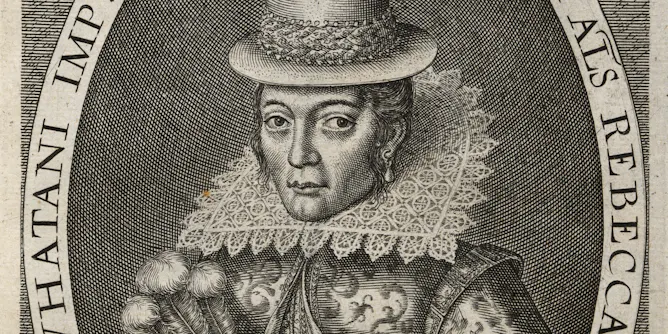
The English assumed people they colonized would convert to their way of life, including Protestant Christianity – an assumption reflected in Pocahontas’ portrait.
Articles on Indigenous Americans
Displaying all articles
Elaine Goodale and Charles Eastman’s 19th-century interracial marriage made them a media sensation. But tensions over gender, race and identity ultimately proved too hard to overcome.
Native American communities were elaborate consensus democracies, many of which had survived for generations because of careful attention to checking and balancing power.

Dogs have lived with Indigenous Americans since before they came to the continent together 10,000 years ago. A new analysis reveals the lineage of one 1800s ‘woolly dog’ from the Pacific Northwest.
Despite the perpetrators being tried and convicted, anti-Indigenous sentiment roiled the area for decades.
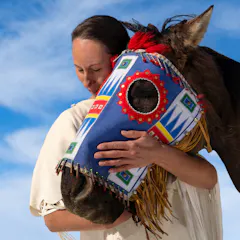
European colonists chronicled their version of how Indigenous peoples lived with horses. New collaborative research adds scientific detail to Indigenous narratives that tell a different story.
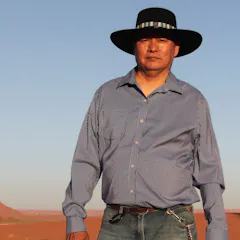
Unrelenting poverty, underemployment and historical trauma all contribute to the health challenges faced by Indigenous Americans.
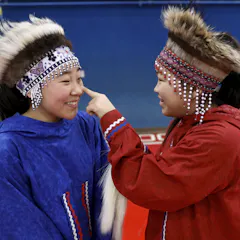
Native Americans who live in villages and on traditional lands have been undercounted by the U.S. Census for decades.
Top contributors
-

Assistant Professor and Curator of Archaeology, University of Colorado Boulder
-
Research Associate in Anthropology, Smithsonian Institution
-
Postdoctoral Researcher in Anthropobiology and Genomics, Université de Toulouse
-
Assistant Professor, Department of Family & Community Medicine, University of North Dakota
-
Curator of Archaeobotany and Archaeogenomics, National Museum of Natural History, Smithsonian Institution
-
Professor of Law and Adjunct Professor of Political Science, Wayne State University
-
Postdoctoral Research Fellow in Geology and Geophysics, University of Utah
-
Associate Professor of Indigenous Literatures, University of Dayton
-
Professor of History, University of North Carolina at Chapel Hill
-
Teaching Professor, Eliot-Pearson Department of Child Study and Human Development, Tufts University
-
Distinguished Professor and Professor of the Humanities, USC Dornsife College of Letters, Arts and Sciences