
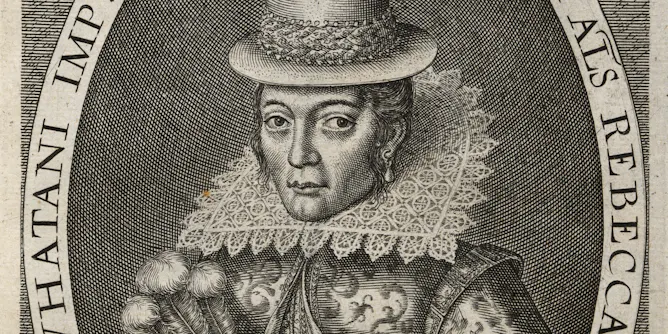
The English assumed people they colonized would convert to their way of life, including Protestant Christianity – an assumption reflected in Pocahontas’ portrait.
Articles on Colonial history
Displaying 1 - 20 of 38 articles

Strong social pressures shape how people respond to direct questions about skin colour.
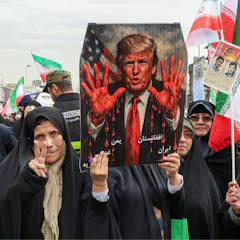
The concept of ‘civilisation’ emerged in the 18th century – and it has been cursed from the very start.
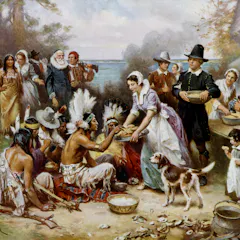
In some ways, Thanksgiving is a tradition that unites Americans. But the classic image of the Pilgrims obscures important parts of the country’s story.
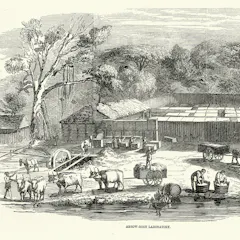
Colonial era records reveal the intersection of race and access to water in South Africa’s history.
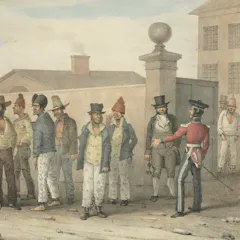
John Hirst’s body of work is an implicit but powerful defence of evidence-based history at a time when the truth is under attack.
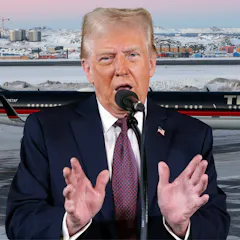
Donald Trump first flagged buying Greenland, whose colonial history spans centuries, during his first term. Yesterday, he said he wouldn’t rule out military force.
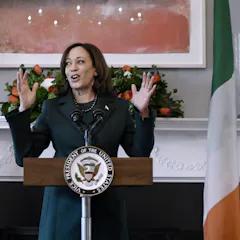
Presidential candidate’s potential ties to an Irish slave owner complicate narratives around colonial legacies and the proper place of Black Irish identity in history.

The Top End heads to the polls this Saturday. In a territory that has been both over-governed and neglected, there’s little on offer for Indigenous communities.
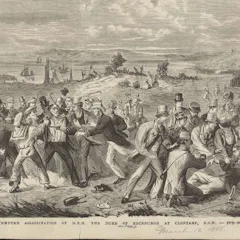
With a royal visit on the cards for later this year, it’s worth remembering the first one in 1867 – marred by violence, division and an escaped assassination attempt.

Operation Legacy highlights the repercussions faced when people with power determine what information is available to interpret events of the past.
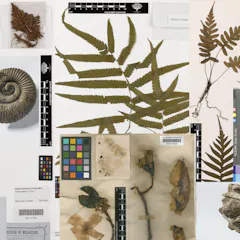
Truth-telling is at the heart of a new project re-examining an expedition in Queensland’s Cape York Peninsula. This research aims to address the absence of Aboriginal voices in this history.

A loan deal for the Asante artefacts offers an opportunity for these objects to return home.

Since its early history, Australia has seen the Pacific as a vast, empty region where foreign powers threatened its security. This focus has undermined our effectiveness in the region.
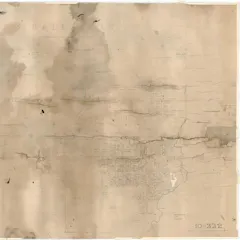
The river wasn’t merely a physical entity – it was a symbol of spiritual and cultural significance, serving as the life force which flows through Country.

Two food scientists, an entomologist, an anthropologist, a veterinarian and a historian walk into a bar (of chocolate) and tell bitter and sweet stories of this favorite treat.
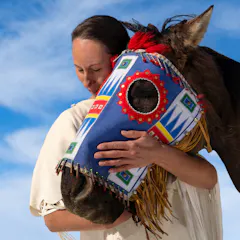
European colonists chronicled their version of how Indigenous peoples lived with horses. New collaborative research adds scientific detail to Indigenous narratives that tell a different story.
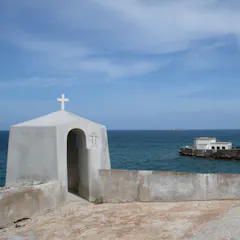
The Covid-19 pandemic has the potential to make tourism more sustainable in Africa, improving the lives of local communities rather than just catering to international visitors.

The common misconception among Canadians that Indigenous people do not pay any taxes perpetuates harmful stereotypes and hinders reconciliation.
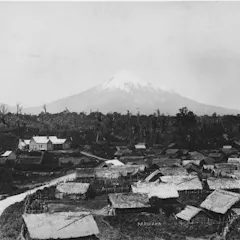
While tracing his own family’s journey from Ireland to Aotearoa New Zealand, Richard Shaw encountered how much ‘selective amnesia’ about the colonial past still shapes our lives today.
Top contributors
-

Associate Professor of Modern History, University of Oxford
-
Senior Research Fellow, adjunct, Flinders University
-
Associate professor of Sociology, University of the Witwatersrand
-
Honorary Fellow, School of Historical and Philosophical Studies, The University of Melbourne
-
Professor of Modern and Contemporary Literature, Newcastle University
-
Junior Research Fellow, History of the modern Middle East and North Africa, University of Oxford
-
Associate Professor Visual Communication, University of Technology Sydney
-
Professor in History, University of Tasmania
-
Research Scientist in Archaeology, South Australian Museum
-
Director of the Cornell Tree Ring Laboratory and Professor of Classical Archaeology, Cornell University
-
Postdoctoral Research Associate in History, The University of Melbourne
-
Clinical Assistant Professor of Veterinary Clinical Sciences, Oklahoma State University
-
Postdoctoral Researcher in Anthropobiology and Genomics, Université de Toulouse
-
Professor of Politics, Te Kunenga ki Pūrehuroa – Massey University
-
Vice Chancellor's Research Fellow, Northumbria University, Newcastle