
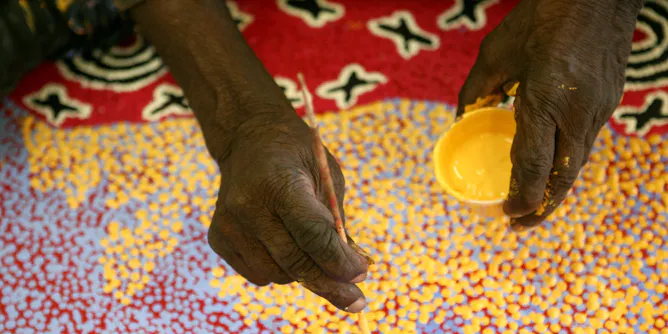
Public policy no longer requires the imprimatur of the Aboriginal people; Aboriginal participation in the decisions taken about their lives is negligible.
Articles on Indigenous affairs
Displaying 61 - 80 of 115 articles
Serious policy focus on Indigenous affairs has been notably absent during the early weeks of the long election campaign.
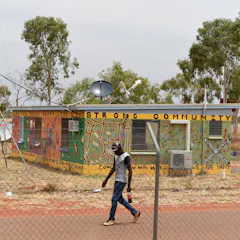
In some Indigenous communities, the ratio of programs to people served is possibly the highest in the world. Somehow, for many, Closing the Gap remains an elusive goal. A rethink is needed.
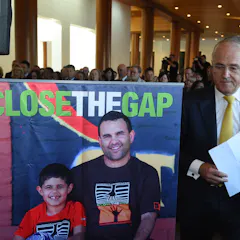
Across Indigenous Australia, innovation is occurring locally, under the radar of government policies and support. We can look to this innovation and stop fixating on finding the elusive policy solution.

Debates around blackface and Indigenous health share similar characteristics that reveal aspects of Australian society when it comes to race.
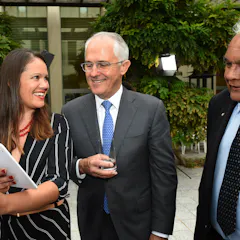
The formation of the Close the Gap Campaign in March 2006 has provided ongoing focus and scrutiny on the health inequalities faced by Indigenous Australians.
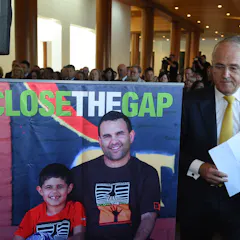
Though commendable as a means of keeping Indigenous disadvantage on the policy agenda, the annual Closing the Gap report has come to reflect a lot of what is wrong with Indigenous affairs.

Police have become the default frontline response to Aboriginal people with mental and cognitive disabilities, setting this group up for a lifetime of ‘management’ by the criminal justice system.
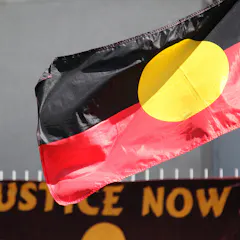
Australia’s high rates of imprisonment and re-imprisonment of Aboriginal people with mental and cognitive disabilities is not only shameful, it is entirely predictable and preventable.
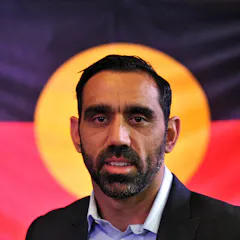
For at least some Australians, it seems that Indigenous culture is acceptable only as an object of consumption for tourists visiting the remote north.
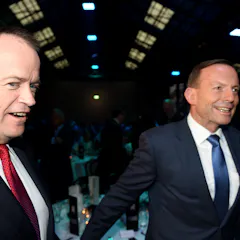
The parliamentary committee’s report highlights the deep division between those who want to advance Indigenous recognition through minimal constitutional change and those who seek more substantive reform.
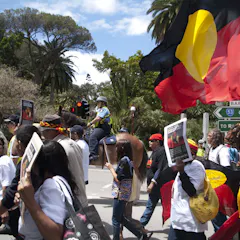
A new generation of Indigenous youth is being separated from their families and culture – this time by the force of criminal law that ignores the proven alternative of community-based justice.
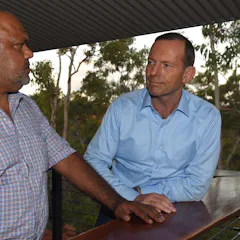
Proposals for constitutional recognition of Indigenous people are gaining momentum but also raising legal concerns. Here is a form of words to create an advisory council that overcomes those concerns.
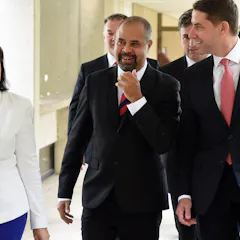
Three north Queensland MPs representing just 3% of the state’s population will wield huge power in Queensland’s parliament when it resumes on Tuesday.
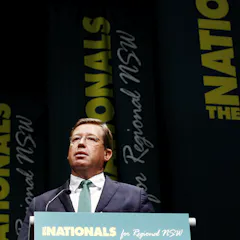
NSW Nationals’ leader Troy Grant has broken new ground by speaking Wiradjuri in parliament and at his party’s election launch – and it reflects a growing Indigenous language revival in NSW.
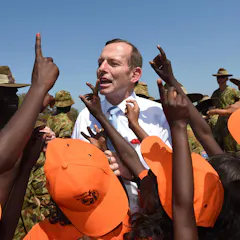
The furore over Tony Abbott’s ‘lifestyle choices’ comments both sidelines and highlights the lack of real discussion on Indigenous policy in Australia.
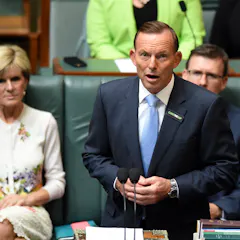
The latest Closing the Gap report, tabled in federal parliament on Wednesday, shows poor progress on improving the situation of Indigenous Australians on many key indicators. Only two of the targets set…
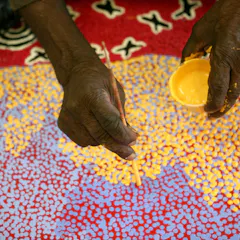
In recent years, Tangentyere Council Research Hub has undertaken data collection in Alice Springs town camps as part of a longitudinal study of income management. The final report of around 300 pages was…
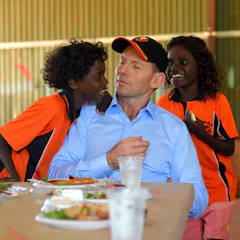
Prime Minister Tony Abbott made a bold move in September when he ran the country for four days from a tent at Gulkula in far northeast Arnhem Land in remote Australia. While there, he observed that although…
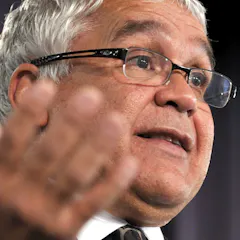
Deep funding cuts and uncertainty about government plans have created one of the largest-scale upheavals in Aboriginal and Torres Strait Islander affairs. That is Aboriginal and Torres Strait Islander…
Top contributors
-

Professorial Fellow, University of Canberra
-
Senior Lecturer in Social Research and Policy, UNSW
-
Associate Professor, Faculty of Law & Justice, UNSW
-
Associate Professor, Macquarie University
-
Senior Lecturer In Public Policy, School of Social and Political Sciences, The University of Melbourne
-
Chancellor, University of Canberra
-
ARC DECRA Fellow, Australian National University
-
Professorial Fellow, Jumbunna IHL, University of Technology Sydney
-
Executive Director, The University of Melbourne
-
Professor Emerita of Criminology, UNSW
-
Senior Research Fellow, Deakin University
-
PhD Candidate in Social Work and Criminology, UNSW
-
Senior Lecturer (Geographic Information Systems), Fenner School of Environment and Society, Australian National University
-
Advisor, Author and Researcher, The University of Queensland
-
Assistant researcher, University of Sydney