
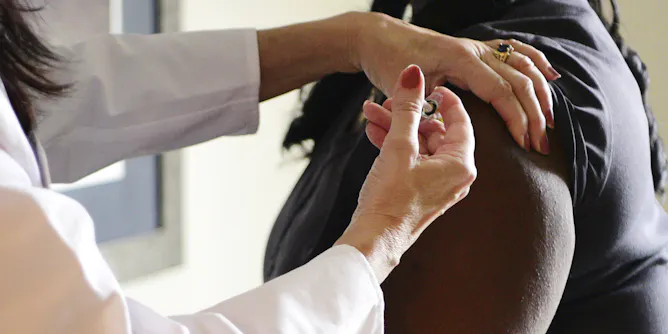
A group of 28 vaccine researchers said we might have a vaccine by late-2021, though it could take until well into 2022.
Articles on Immunology
Displaying 81 - 100 of 123 articles
Older coronavirus patients face grimmer outlooks. A virologist explains the aging-related changes in how immune systems work that are to blame.
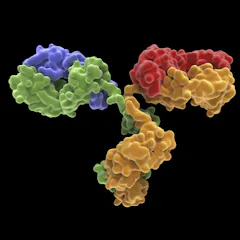
Antibodies are great for neutralizing viruses. But they are big and bulky. Antibody engineers are now creating smaller synthetic antibody-like molecules that may be better for fighting COVID-19.
Herd immunity has entered the everyday language, but it is a much misunderstood term.

An unprecedented level of research has gone into understanding the novel coronavirus. Here’s what we still don’t know.
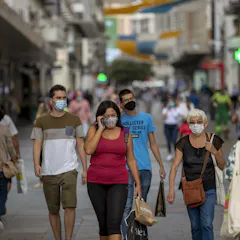
Wearing face masks may allow a tiny number of viral particles to slip through, possibly allowing our body to gain some sort of immunity.
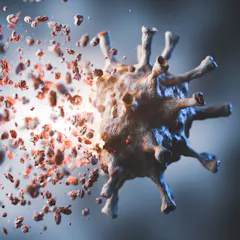
Not all vaccines will work so well in all people. That’s why we need large-scale clinical trials to test candidate vaccines in thousands of people.
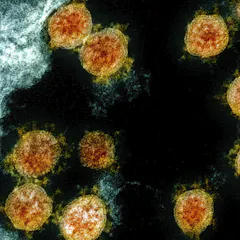
This is just one person. Is he the exception? Is he the rule? We don’t know yet for sure. But reinfection is definitely possible.

Some people’s blood can mount an immune response against SARS-CoV-2, even if those blood samples were taken from before the COVID-19 pandemic started.

The race is on to develop a vaccine for the COVID-19 coronavirus. Australian researchers are leading several major clinical trials that might help bring an end to the deadly disease.
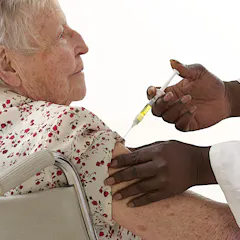
Immunosenescence — the decline of immune system function with age — means that vaccines are not as effective in older adults, the demographic most susceptible to many diseases, including COVID-19.
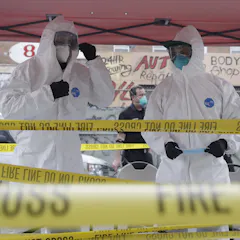
If immunity is short-lived, we will be in an ongoing cycle of endless reinfection.

Here’s what we know about immunity to COVID-19, and what that means for getting life back to normal.

Immunity passports have been touted as a way to reopen the economy. But there are serious concerns they’ll create an incentive to intentionally contract the coronavirus.
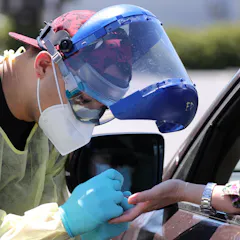
Nearly two million antibody tests imported into Australia can’t be used to diagnose COVID-19. But it’s difficult to make an antibody test that is specific and sensitive enough.

As many as 80% of those infected with coronavirus don’t show symptoms. The reasons why are likely to come down to how your immune system responds to the virus.
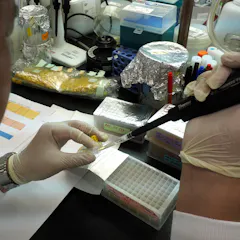
A test that detects antibodies against the coronavirus behind COVID-19 would reveal those people who have already encountered the virus - and therefore who might be ok to resume normal life.
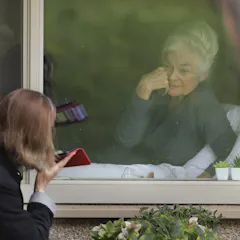
Different demographics are more or less vulnerable to serious complications from the coronavirus. A virologist explains the aging-related changes in how immune systems work that are to blame.

If your child has accidentally eaten something you thought they were allergic to, but doesn’t have a response, they may have grown out of their food allergy. Here’s the safest way to check.
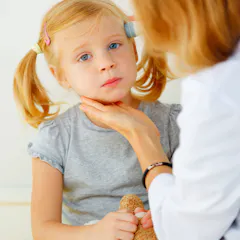
A rare type of inflammatory disease that causes repeated bouts of high temperatures can run in families. Here’s what we know so far.
Top contributors
-

Professor, School of Biomedical Sciences and Pharmacy, University of Newcastle
-
Research Fellow, Institute for Molecular Bioscience, The University of Queensland
-
Program Director, Infectious Diseases and Immunology, Menzies Health Institute, Griffith University
-
Instructor of Human Immunology, Emory University
-
Associate Professor of Immunology and Microbiology, University of Colorado Anschutz
-
Distinguished Professor, Professor of Immunology, RMIT University
-
Ph.D. Student in Microbiology and Immunology, Vanderbilt Vaccine Center, Vanderbilt University
-
Clinical Research Fellow in Viral Immunology and Veterinary Surgeon, University of Cambridge
-
Vice-Chancellor's Research Fellow, School of Health and Biomedical Sciences, RMIT University
-
Associate Professor of Microbiology, Immunology & Pathology, Colorado State University
-
Ph.D. Candidate in Chemical & Physical Biology, Vanderbilt Vaccine Center, Vanderbilt University
-
Professor of Immunology, RMIT University
-
Research Assistant Professor of Immunology, Tufts University
-
Associate Professor of Viral Immunology, Department of Pathobiology, University of Guelph
-
Laboratory Head, The Peter Doherty Institute for Infection and Immunity