

The excitement over the announcement of a space agency for Australia has now quietened. So it’s time to work out what we want, and how to get there.
Articles on IAC2017
Displaying all articles
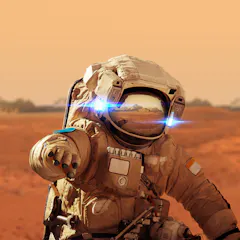
Sending humans to Mars is a 5-10 year project goal for several global operators right now. It’s expensive - but Elon Musk unveiled his new commercial plan today.

Space inspires, and the establishment of a Space Agency in Australia is well positioned to drive engagement in STEM.
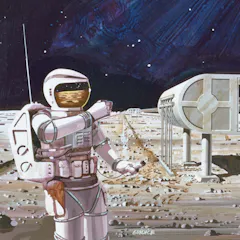
Space terrorism and testing of space tourists are theoretical problems today. But let’s have conversations right now to make sure they don’t become real problems in the future.
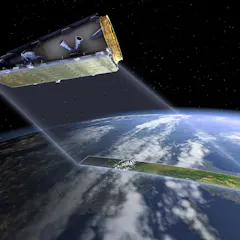
Australia will be able to guide the Earth observation satellite “NovaSAR” as it passes over our region - giving us a new level of control over the data we need to solve local problems.
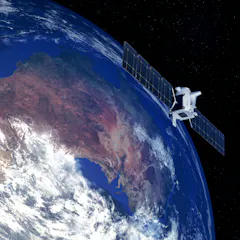
Australia’s space sector responded positively to today’s federal government commitment to a space agency. Our experts explain what must come next.
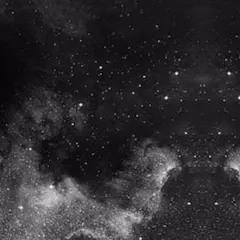
Protecting culturally significant spacecraft enables people on Earth to feel connected to space as the common heritage of humanity.
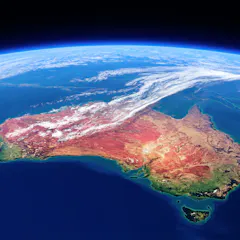
Australia was a significant global space player during the 1950s and 1960s. Now we’re one of only two OECD countries not to have a space agency. What happened?
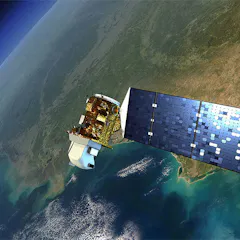
Weather forecasting, bushfire management, power and water supply: Australia relies on earth observations to the tune of A$5 billion a year. But we have very little control over the data we get.
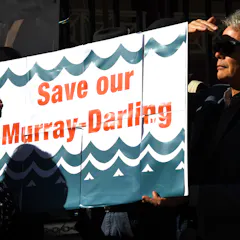
There are local, practical implications linked to failed advancement of infrastructure projects that rely on expertise in space. Protecting Australia’s water is just one example.
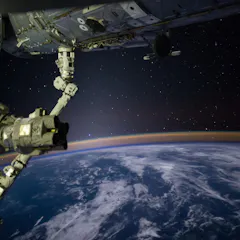
Who is responsible for space debris? What laws should apply to humans living on another planet? Who has rights to mine asteroids? The Outer Space Treaty needs an update to address such questions.
Top contributors
-

Adjunct Professor, University of Southern Queensland
-
Lecturer in space and military law and strategy, UNSW
-
Andrew Dempster is a Friend of The Conversation.
Director, Australian Centre for Space Engineering Research; Professor, School of Electrical Engineering and Telecommunications, UNSW
-
Professor of Geography, Director - Remote Sensing Research Centre, Chair - Earth Observation Australia, The University of Queensland
-
Emeritus Professor of International Law, Western Sydney University
-
Military Space Bioethicist, UNSW
-
Professor of Science Communication and Astrobiology, UNSW
-
Postdoctoral Researcher in Planetary and Space Science, Adelaide University
-
PhD candidate, UNSW
-
Associate Professor in Archaeology and Space Studies, Flinders University
-
Alliance 21 Fellow (Space) at the United States Studies Centre, University of Sydney
-
Principal Research Scientist, CSIRO