
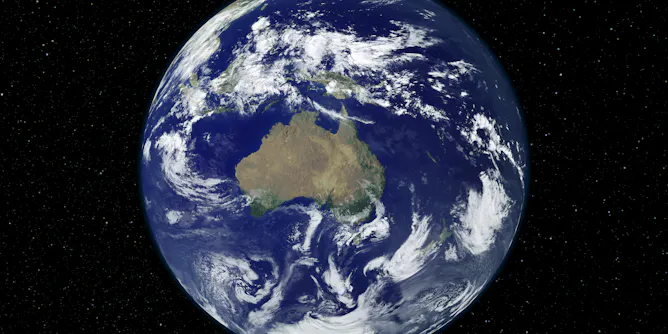
Every single day, space technology impacts our lives. But a new report reveals gaps between what Australians think and what they know about space.
Articles on Space Agency
Displaying all articles

As more countries look to space, experts argue that it’s worth asking why we want to go at all, and who should lead the charge.
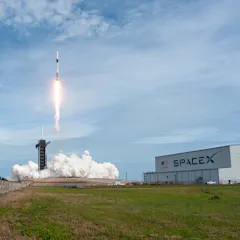
About 770 Australian entities are already developing space-related infrastructure, most of which are privately owned.
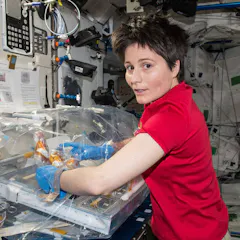
On Earth the flame from a struck match looks like an inverted teardrop shape and is orange. In microgravity, that same flame is spherical and blue. Heat transfer is different with minimal gravity.
This are looking up when it comes to launching things into space from Australia. The rules on what can be launched are currently under review and open for comment.
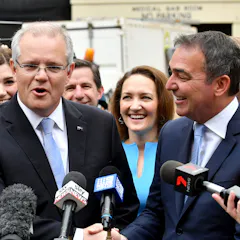
The headquarters of the Australian Space Agency will be in Adelaide. So how did we get to this point? Here are ten essential reads to fill you in.
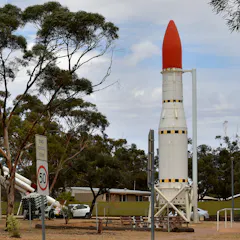
We’ve launched rockets from Woomera in South Australia, but in reality Australia could support multiple launch sites. And the closer to the equator, typically the better.

Young people are the most vulnerable as industry and the labour market undergo radical change, but meeting this challenge could just be a matter of plugging existing gaps.
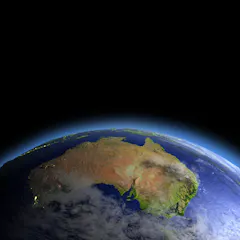
New jobs and investment for Australia’s growing space industry are promised with the backing of the new space agency. It’s hoped that all states and territories will benefit from a national approach.
So long as small satellites are in low Earth orbit – and most likely they will be – the Earth’s “vacuum cleaner” will clean them up.
$41M over four years is about the minimum viable amount to start towards important goals for an Australian space agency.
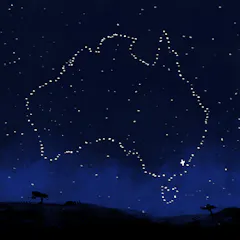
Funding for Australia’s Space Agency is expected to be announced at Tuesday’s federal budget. It’s been a long campaign to get an agency up and running and The Conversation has followed the journey.

What will Australia’s space agency look like? Two experts agree it needs deliberate investment from government, and that it should facilitate participation across states and territories.
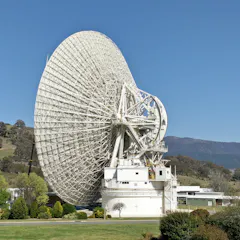
Space is becoming cheaper, more attractive to investors and increasingly important in our data-rich economy. It’s time Australia mapped a path forward.
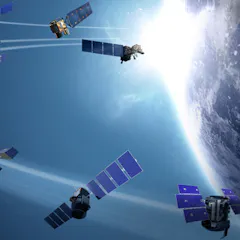
By taking on the role as leader in space traffic management, Australia can gain international power and exploit commercial opportunities.
The excitement over the announcement of a space agency for Australia has now quietened. So it’s time to work out what we want, and how to get there.
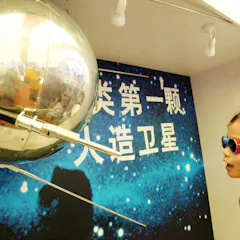
Our fascination with space shows no signs of slowing down, 60 years after the Soviet Union launched the world’s first satellite, Sputnik.
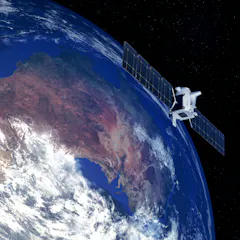
Australia’s space sector responded positively to today’s federal government commitment to a space agency. Our experts explain what must come next.
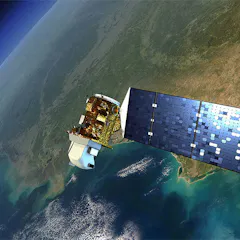
Weather forecasting, bushfire management, power and water supply: Australia relies on earth observations to the tune of A$5 billion a year. But we have very little control over the data we get.
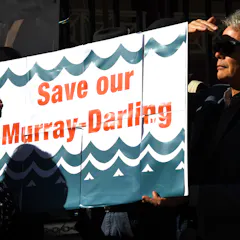
There are local, practical implications linked to failed advancement of infrastructure projects that rely on expertise in space. Protecting Australia’s water is just one example.
Top contributors
-
 Andrew Dempster is a Friend of The Conversation.
Director, Australian Centre for Space Engineering Research; Professor, School of Electrical Engineering and Telecommunications, UNSW
-
Alliance 21 Fellow (Space) at the United States Studies Centre, University of Sydney
-
Lecturer in space and military law and strategy, UNSW
-
Professor, Adelaide University
-
Senior Lecturer, The University of Queensland
-
Research Fellow, The University of Melbourne
-
Chief Executive Officer, Australasian Centre for Space Governance; Associate Expert, National Security College, Australian National University
-
ARC Laureate Fellow and Winthrop Research Professor at the International Centre for Radio Astronomy Research, UWA., The University of Western Australia
-
Lecturer in astronomy, Adelaide University
-
Associate Professor - Physics, RMIT University
-
Associate Professor in Archaeology and Space Studies, Flinders University
-
Adjunct Professor, University of British Columbia
-
Assistant Professor of Space and Society, Arizona State University
-
Teaching Associate in Philosophy, School of History, Philosophy and Digital Humanities, University of Sheffield
-
Associate Professor, School of Arts and Media, UNSW