
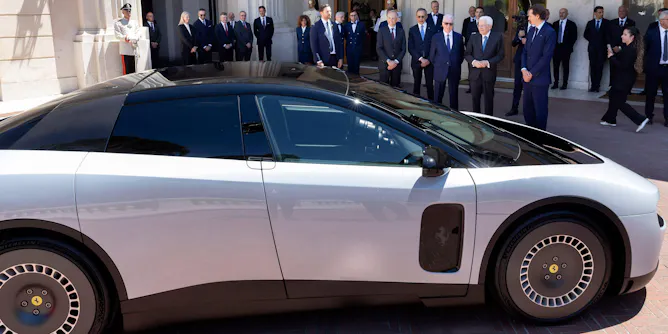
The critical question is not whether the Luce succeeds as a product, but whether it succeeds as a Ferrari.
Articles on Hydrogen fuel
Displaying 1 - 20 of 35 articles
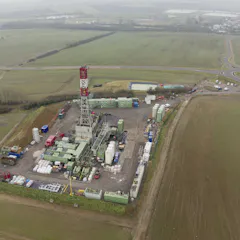
Hydrogen demand around the world is projected to grow significantly by 2050. Some of that supply could come from nature itself.
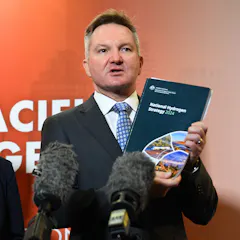
Australia’s new National Hydrogen Strategy, released on Friday, signals Australia’s bold ambitions to the world - but much remains unclear.
Fortescue has long taken first mover risks to drive attention and action in the renewable hydrogen market. This week’s news is a setback, but shouldn’t be seen as a death knell for the nascent industry.
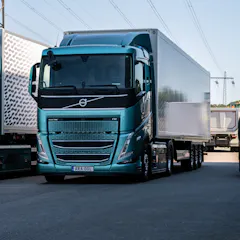
Modelling shows a shift to electric trucks is the better, faster option for cutting transport emissions under most plausible scenarios in Australia’s energy transition.
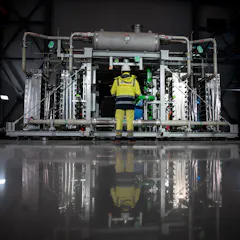
There are two approaches to producing low-emission hydrogen, and public acceptance (or rejection) of each method will be important for hydrogen and its place in the energy transition.
A new study estimates a reduction in emissions of only 35-45% of pre-COVID levels by 2050. Lighter vehicles and faster uptake of electric vehicles can dramatically improve progress towards net zero.
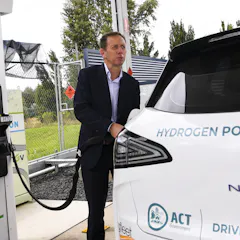
Australia’s emerging green hydrogen industry requires a secure supply of high-quality water. Competing demands for this scarce resource mean careful planning is needed to meet all water users’ needs.
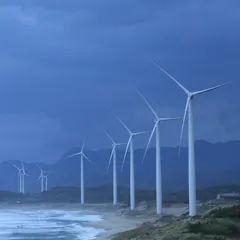
New research finds Japan has 14 times more solar and offshore wind energy potential than needed to supply all its current electricity demand. It doesn’t need Australia.
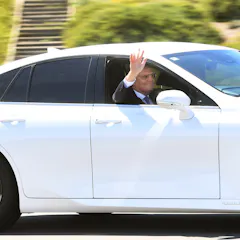
We need to rapidly reduce global emissions before 2030. Developing hydrogen for low-emissions road transport won’t happen fast enough.
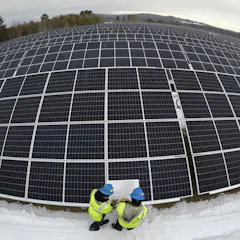
The US is generating more electricity than ever from wind and solar power – but often it’s not needed at the time it’s produced. Advanced energy storage technologies make that power available 24/7.
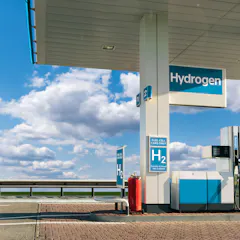
Hydrogen could replace fossil fuels, but it’s only as clean as the techniques used to produce it. Almost all production comes from high-carbon sources, but new investments could change that.

Carbon emissions from maritime shipping and port activities are on the rise. But city ports are finding ways to reduce their carbon footprints and reconnect with nearby cities.
If Australia pushes ahead with producing fossil fuels, we may lock in a new high-emissions energy system, or one that’s uncompetitive. Clearly, green hydrogen is the best way forward.
Hydrogen is hailed as a new clean fuel, but little attention has been paid to the potential environmental challenges presented by the energy shift.
Research into income trusts shows that they once helped increase investments in oil and gas. They could do so again — but this time targeted towards low-carbon technologies.

The world runs on energy, so finding low-emission alternatives to fossil fuels is crucial. Wind and solar are cheap and abundant but can’t do everything. But hydrogen fuel could complete the picture.

More than a century since humans learned to fly, we need to revolutionise how we stay up there.

Phosphorene nanoribbons are like tagliatelle, but carry the potential to boost battery capacity by 50%.
Ever watched a space shuttle launch? The fuel used to thrust these huge structures away from Earth’s gravitational pull is hydrogen. Hydrogen could also be used as a household energy source.
Top contributors
-

Adjunct Professor of Transport, University of Technology Sydney
-
Professor of Transport Technology and Sustainability, Swinburne University of Technology
-
Professor, School of Engineering, RMIT University
-
Teaching and Research Fellow, University of Birmingham
-
Director of Energy Lancaster and Professor of Physical Chemistry, Lancaster University
-
Emeritus Professor, Centre for Automotive Management, Loughborough University
-
Professor and Head of School of Civil Engineering, The University of Queensland
-
Maître de Conférences, Université de Lorraine
-
Ph.D. Candidate in Chemical Engineering, University of California, Riverside
-
Professor Global Energy and Resources, UCL
-
Senior Lecturer in Electrical Energy Systems, University of Birmingham
-
Maitre de conférences en informatique Laboratoire Perseus Metz, Université de Lorraine
-
Professor of Energy Systems, UCL
-
Executive Director of the Center for Railway Research and Education, Michigan State University
-
Former Visiting Fellow, SPRU, University of Sussex Business School, University of Sussex