

Star Trek has endured because it repeatedly returns to a universal question: what does it mean to be human?
Articles on humanity
Displaying all articles

When we’re awake, our imaginations are quite different. But what about our dreams?

In his first encyclical, Pope Leo XIV has called for much closer regulation of AI technology, particularly in military settings.
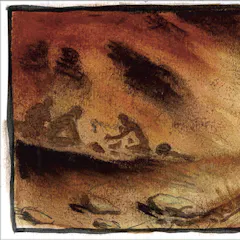
A recent article published and widely read in Science revealed that Neanderthal men preferred “Sapiens” women, but it fails to tell the whole story.
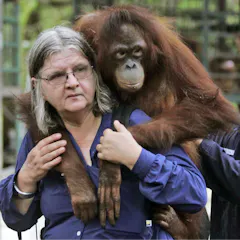
With Jane Goodall and Dian Fossey, Galdikas changed the face of science and opened the world’s eyes to how similar humans are to orangutans and other primates.

All five African countries surveyed – Nigeria, Egypt, Kenya, South Africa and Tanzania – were ranked in the top six most forgiving nations.
The 2,500 questions that make up the exam are specifically designed to probe the outer limits of what today’s AI systems cannot do.
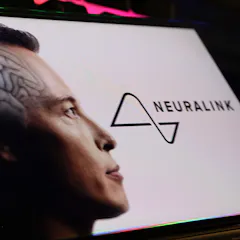
The technoscientific ambition to improve human beings, as promoted by transhumanists, is the ultimate expression of the political refusal to change our world.

In The Decline and Fall of the Human Empire, science writer Henry Gee considers how long we’ve got, and how we can extend our time on Earth.
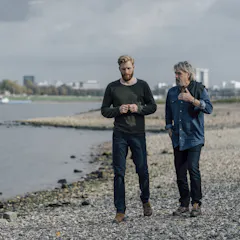
Conversations don’t immediately change people’s minds, but they can eventually. And in the meantime, they help forge real connections across a diverse and complex society.
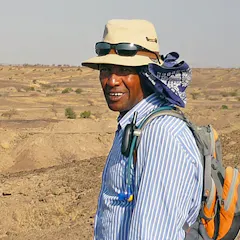
On the 50th anniversary of the discovery of ancient hominin Lucy, a leading Ethiopian scientist on why we need to ‘decolonise’ paleo research – and what it’s like to find the oldest human ancestor.

Using films like “The Matrix,” a sociology course examines how factors beyond our control shape the world we live in − in fact and in an imagined future.

Political scientists have begun to investigate ways AI can help people understand politics better and get more voices into the public sphere.
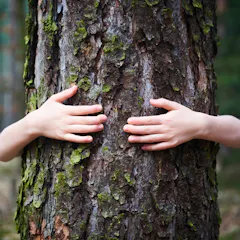
Is it possible to measure sustainable development? Can we go beyond merely embracing virtuous principles and put the concept into use?
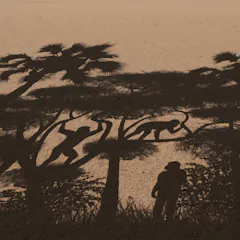
New research shows our oldest ancestors were able to walk as well as evolve in trees.

People with aphantasia, when asked to form an image in their minds, will report they cannot “see” anything.
Insights of neuroscientist Ian McGilchrist, philosopher Nel Noddings and physicist Ursula Franklin help centre students and our collective future in debates about education and technology.
Top contributors
-

Paléoanthropologue, Université de Poitiers
-
PhD Student, Neuroscience, The University of Queensland
-
Professor, School of Psychology, The University of Queensland
-
Maîtres de conférences en paléoanthropologie, Université de Poitiers
-
Assistant Professor of Political Science, Purdue University
-
Mission Paléoanthropologique Franco-Tchadienne, Université de N'Djamena (Tchad)
-
Pr. Paléontologie, Université de Poitiers
-
Enseignante chercheure en paléontologie, Université de N'Djamena (Tchad)
-
Agente de transfert de connaissances pour le Centre de recherche sur la boréalie (CREB), Université du Québec à Chicoutimi (UQAC)
-
PhD candidate - Faculty of Education, Simon Fraser University
-
Paléontologue, Université de N'Djamena (Tchad)
-
Paléontologue, Kyoto University
-
Assistant Professor of Political Science, Purdue University
-
Professor - Industrial ecology and climate change mitigation, Université du Québec à Chicoutimi (UQAC)
-
Professeur titulaire Chaire en éco-conseil spécialiste des changements climatiques, Université du Québec à Chicoutimi (UQAC)